
Bariloche is one of the most popular and impressive cities in Argentine Patagonia. Its full name is San Carlos de Bariloche, and it sits on the shore of Lake Nahuel Huapi, surrounded by mountains, forests and Andean landscapes. For many travelers, Bariloche is one of the strongest gateways into Patagonia.
The city has two very clear sides. On one hand, there is a tourist center with chocolate shops, restaurants, souvenir stores and stone-and-wood architecture. On the other hand, just a few kilometers away, the lakes, forests, mountain roads and viewpoints begin. For this reason, Bariloche should not be judged only by its city center.
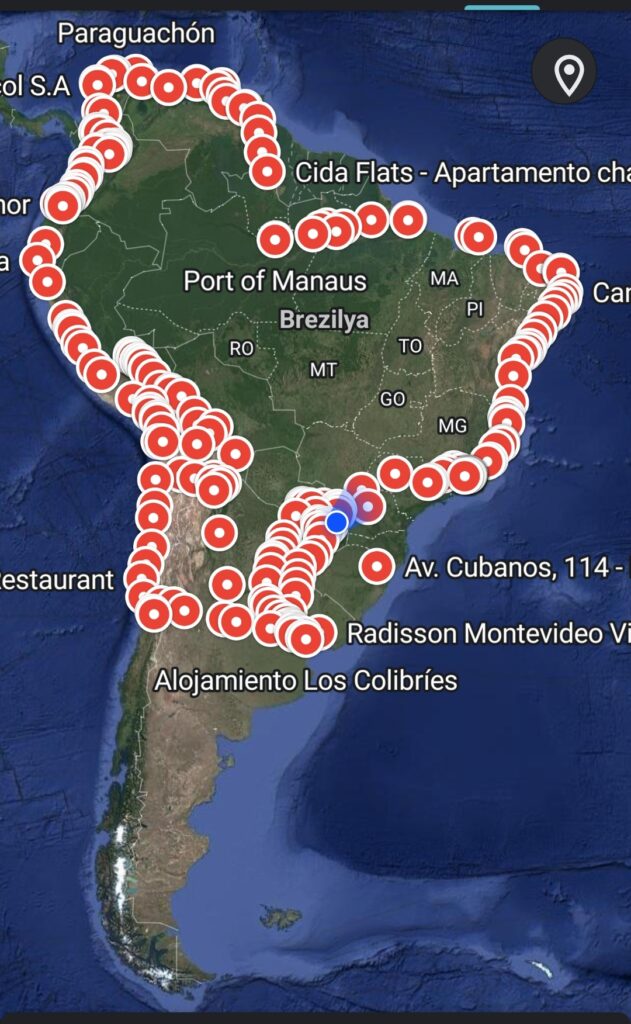
This guide was prepared to help you plan Bariloche properly: what to see in the center, how to do Circuito Chico, when to go up Cerro Campanario, how to visit Nahuel Huapi National Park, where to stay, what to eat, how many days to spend and how to extend the route toward Villa La Angostura, El Bolsón or northern Patagonia. To understand the spirit of our South America journey, visit our home page, read About Us or visit our English blog.

Image: DuffmanCC, Wikimedia Commons.
Contents
- Bariloche overview
- History and city identity
- Lakes, mountains and Northern Patagonia geography
- How to get to Bariloche
- Transport inside Bariloche
- Where to stay
- Things to see in Bariloche city center
- Circuito Chico
- Cerro Campanario
- Nahuel Huapi National Park
- Cerro Catedral
- Things to see near Bariloche
- What to eat in Bariloche
- Chocolate and cafes
- Budget
- When to go
- Safety, weather and nature
- How many days to spend
- Suggested routes
- Practical information
- Final notes
Bariloche overview
Bariloche is located in Río Negro Province, in Argentina’s lake district. It has strong tourism infrastructure, flights, accommodation, restaurants, travel agencies, car rentals and activities throughout the year.
Its main advantage is that it gives access to nature without losing urban comfort. You can walk through the center in the morning, have coffee or chocolate, and spend the afternoon at a viewpoint, forest trail or lakeside beach.
History and city identity
Bariloche’s identity was shaped by Indigenous history, Argentine expansion into Patagonia, European migration, national park development and mountain tourism. The stone-and-wood architecture gives parts of the city an alpine look.
This image can make Bariloche feel very touristy, but its true strength lies in the surrounding nature. Lake Nahuel Huapi, Circuito Chico, Cerro Campanario, Cerro Catedral and the routes toward Villa La Angostura and El Bolsón make it an excellent base for exploring Northern Patagonia.
Lakes, mountains and Northern Patagonia geography
Bariloche sits beside Lake Nahuel Huapi, in a region of lakes, mountains, forests, peninsulas and islands. The landscape changes quickly: in a short distance, you can move from the city center to a mountain road, a lakeside beach or a panoramic viewpoint.
Patagonian weather is changeable. A sunny day can quickly become windy, cold or rainy. Even in summer, layered clothing is a good idea.
How to get to Bariloche
By plane
The most practical way to arrive is by plane. There are flights from Buenos Aires and other Argentine cities. The airport is not far from the center and can be reached by taxi, transfer, public transport or rental car.
By bus
Argentina has long-distance buses, but distances are large. From Buenos Aires, the bus trip is very long. From other Patagonian cities, it can be a more reasonable option.
With your own vehicle
Having a car is a major advantage in Bariloche. It gives you freedom to explore Circuito Chico, viewpoints, Colonia Suiza, Villa La Angostura, El Bolsón and other lake routes.
Transport inside Bariloche
The city center is walkable. Centro Cívico, Mitre Street, the lakeside and many chocolate shops are close to each other.
For the surrounding areas, public transport reaches several popular places, but schedules may limit flexibility. If you want to explore viewpoints and scenic roads at your own pace, a car is the best option.
Where to stay
For a first visit, staying in the center is practical. You will be close to restaurants, transport, agencies, supermarkets and the lake. This is especially useful if you do not have a car.
If you want more peace and views, look west of the center, near the lake or toward Circuito Chico. These areas feel more natural, but usually require a vehicle.
In winter, skiers may prefer accommodation near Cerro Catedral. During high season, book ahead.
Things to see in Bariloche city center
Centro Cívico
Centro Cívico is the symbolic heart of Bariloche. Its stone-and-wood architecture, location by the lake and tourist atmosphere make it a good first stop.
Lake Nahuel Huapi
The shore of Lake Nahuel Huapi is essential to the Bariloche experience. Walking by the water, feeling the wind, looking at the mountains and watching sunset are simple but memorable plans.
.jpg)
Image: Wikimedia Commons.
Mitre Street
Mitre Street is the most touristy area of the center. It has chocolate shops, restaurants, souvenir stores and constant movement.
Bariloche Cathedral
The cathedral is close to the lake and is one of the city center’s notable buildings. It is worth including in a relaxed walk.
Circuito Chico
Circuito Chico is the classic route for a first visit to Bariloche. It combines lakes, forests, viewpoints, the Llao Llao area, Colonia Suiza and Cerro Campanario.
You can do it by car, organized tour, bicycle or a mix of public transport and walking. By car it is easier, because you can stop at different viewpoints and set your own pace.
Cerro Campanario
Cerro Campanario is one of Bariloche’s most famous viewpoints. From the top, you can see lakes, islands, forests, mountains and the Llao Llao area. On a clear day, it is one of the best views in the region.
You can go up by chairlift or on foot. Before going, check weather and opening times. For updated tourism information, use the Bariloche Tourism Cerro Campanario page.
Nahuel Huapi National Park
Nahuel Huapi National Park is one of Argentina’s most important national parks. It protects lakes, forests, mountains, steppe and a wide variety of Patagonian landscapes.
From Bariloche, you can do hikes, boat trips, viewpoints and scenic routes inside the park. Before heading out, check weather, alerts, trail status and park rules.
Cerro Catedral
Cerro Catedral is the most important ski area near Bariloche. In winter it is popular for skiing and snow activities. In summer, it can also be visited for views and mountain routes.
If you go in winter, check road status, snow conditions, chains, parking and lift operation.
Things to see near Bariloche
Colonia Suiza
Colonia Suiza is a small stop within Circuito Chico, known for its market, food and tourist atmosphere.
Villa La Angostura
Villa La Angostura is an excellent day trip or overnight route from Bariloche. It has a calmer atmosphere, lakes, forests and access to Los Arrayanes National Park.
Los Arrayanes
The arrayan forest is one of the region’s most distinctive landscapes. It can be visited by boat trips or walking routes depending on your plan.
El Bolsón
El Bolsón is a natural continuation south of Bariloche. It has an artisan market, hikes, local beer and a more alternative spirit.
What to eat in Bariloche
Bariloche is known for Patagonian meats, trout, lamb, fondue, craft beer, sweets, fine fruits and chocolate. Prices in the center can be high, especially in high season.
Buying food for a picnic and enjoying it by the lake or during Circuito Chico is also a great idea.
Chocolate and cafes
Bariloche is one of Argentina’s chocolate capitals. Mitre Street and nearby areas have many chocolate shops. Some are large and very touristy, but they are part of the classic Bariloche experience.
In winter, hot chocolate is almost mandatory. In summer, ice cream and cafes are good breaks during city walks.
Budget
Bariloche can be expensive, especially in summer and winter. Accommodation, restaurants, car rental, skiing and excursions can raise costs.
To save money, book early, choose accommodation with a kitchen, use public transport when possible and combine paid activities with free walks.
When to go
Bariloche can be visited year-round. Summer is ideal for lakes, hikes and scenic routes. Winter turns the city into a snow and ski destination. Autumn brings beautiful colors, while spring can be more changeable.
Safety, weather and nature
Bariloche is a tourist city and generally comfortable to visit. In crowded areas, keep an eye on your bag, phone and documents.
In nature, weather is the main issue. Bring layers, water, comfortable shoes and avoid starting long hikes too late.
- Carry a windproof and waterproof outer layer.
- Check the forecast before mountain and lake routes.
- Do not leave valuables visible inside a parked vehicle.
- Use marked trails and respect park notices.
- Carry water and food on longer routes.
- In winter, check road conditions and snow-chain requirements.
- Allow extra time because Patagonian weather can change quickly.
How many days to spend
With 2 days, you can see the center and do Circuito Chico. With 4 days, the experience becomes much more complete. With 5 or 6 days, you can add Villa La Angostura, Cerro Catedral, Colonia Suiza or El Bolsón.
Suggested routes
2 days
Day 1: Centro Cívico, Lake Nahuel Huapi, Mitre Street and chocolate shops.
Day 2: Circuito Chico, Cerro Campanario and Colonia Suiza.
4 days
Day 1: City center and lake.
Day 2: Circuito Chico and Cerro Campanario.
Day 3: Nahuel Huapi National Park or a boat trip.
Day 4: Cerro Catedral or Villa La Angostura.
6 days
Days 1-3: Bariloche, Circuito Chico, Cerro Campanario and Nahuel Huapi.
Day 4: Villa La Angostura or Los Arrayanes.
Day 5: El Bolsón.
Day 6: Continue toward Esquel or Trevelin.
Practical information
Bariloche has strong tourism infrastructure, but high season can bring crowds, traffic and higher prices. Around Circuito Chico and Cerro Campanario, planning visits outside peak hours makes the route more comfortable.
For current park conditions, check the official Nahuel Huapi National Park website. For Cerro Campanario, use the official Bariloche tourism page.
To continue planning in the same language, read our Patagonia travel guide for Esquel, Trevelin and El Bolson and our Bariloche journey. You can also learn more about the people behind the route on our About Us page.
Final notes
Bariloche can be very touristy, but when planned well, it becomes a powerful nature base. Its combination of lake, mountains, chocolate, scenic roads and national parks makes it one of the most important stops in Northern Patagonia.
It should not be seen only as a transit city. With time, good weather and a flexible route, Bariloche can become one of the most memorable experiences of a journey through southern Argentina.
Follow us
You can also follow our journey on social media for short videos, photos and moments from the road.
- YouTube Shorts: Watch our short travel videos
- Instagram: Photos and road moments
- Facebook: Our Facebook page