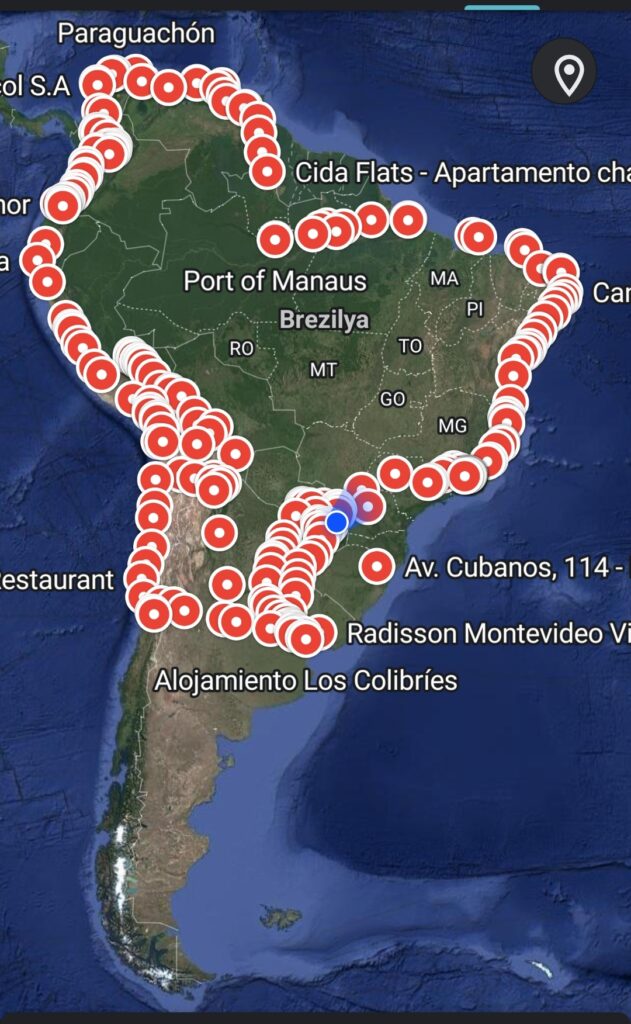

For the other routes of our South America journey, you can visit our English homepage and our English blog page and you can read our story on the about us page .
1. Setting Off: Traveling from La Paz to Titicaca with the Peugeot 408
On the morning we left the sharp air of La Paz, at more than 3,600 meters above sea level, the chaos of the city slowly faded behind us. The engine of our Peugeot 408 was running a little more tensely because of the thin air, but the excitement of setting off gave us strength. As we moved toward Lake Titicaca, the roads winding between Bolivia’s red earth and steep mountains seemed almost deliberately designed to carry a person into another world.
Copacabana is also a cultural line stretching toward the Peruvian border. This lake, the shared heart of both countries, has hosted both the Incas and the Aymara people throughout history; legends, prayers, losses and hopes have always taken shape around these waters.
In the middle of the road, we reached the Strait of Tiquina. The scene we saw there offered a moment far outside the modern world: a primitive raft made of a few planks lined up side by side and set onto the water. Cars drove onto this raft one by one, and a boat with almost negligible engine power carried them to the opposite shore. Our Peugeot 408 also climbed onto that wooden world with the same humility, swayed gently and began to glide over the waters of Titicaca.
At that moment, we once again understood that people can keep moving forward without needing great things.
After this short but magical crossing, the rhythm of the road toward Copacabana quickened. The mountains drew closer to the blue of the lake, the sun shone more brightly, and a deep feeling of journey slowly began to take root inside us.
Toward evening, we arrived in Copacabana.
2. Arrival in Copacabana: A Silence at 3,841 Meters
The moment we entered the town is still very vivid in our memory.
Lake Titicaca reflected the sky like a giant mirror, while the mountains stood like silent sentinels along the edge of that mirror. The altitude is 3,841 meters… Here, even breathing has a different rhythm. You feel your steps becoming lighter, but your heart grows heavier, because you are involuntarily enchanted by the view.
That evening we settled into a hotel and rested. As the sun set, the light over the lake trembled like a thin veil.
That was exactly the moment when Copacabana made us feel that it was not just a geography, but a state of mind.
3. Copacabana Town Center: Stone Streets, Markets and the Cathedral
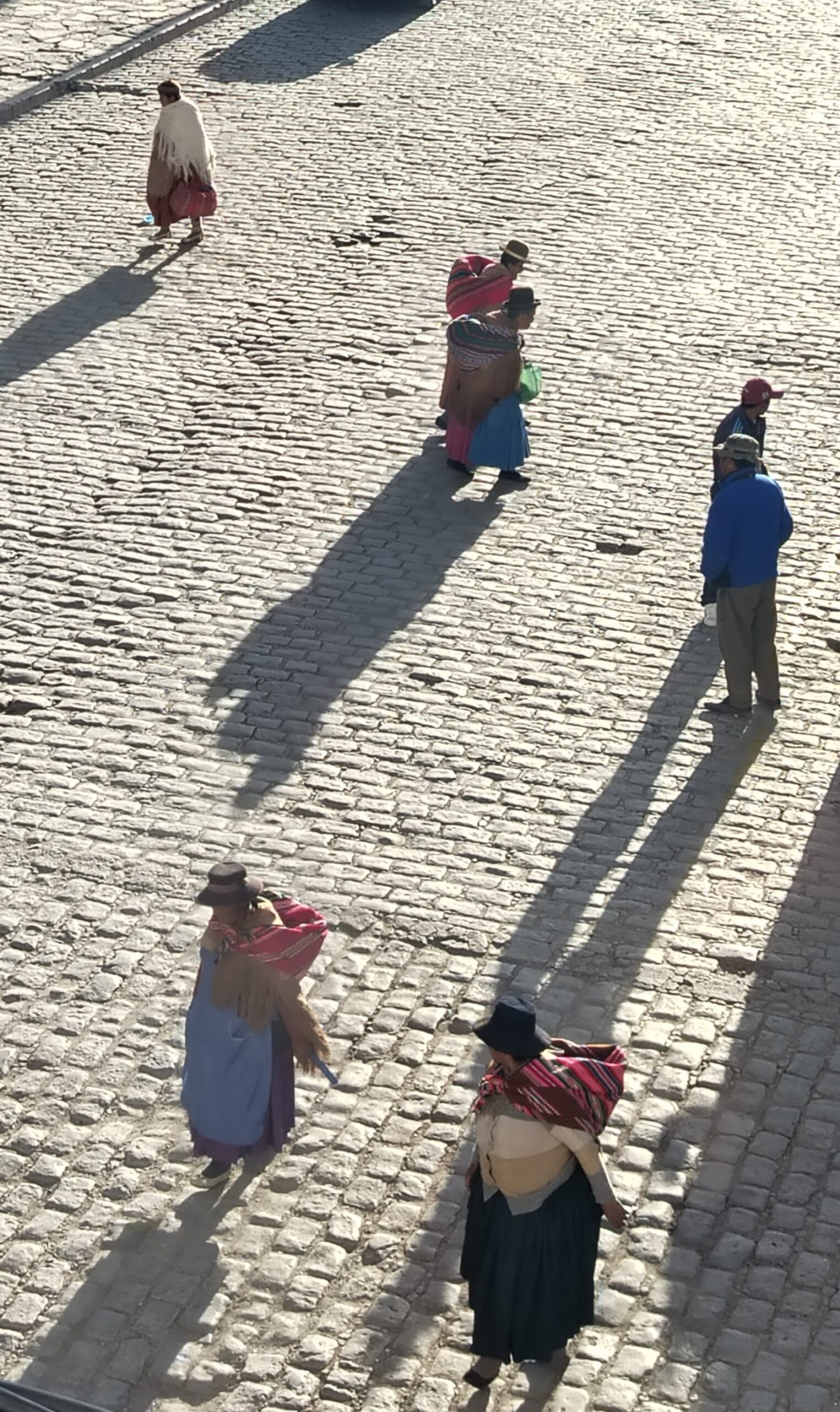
The next morning we walked to the town center. The stone-paved streets stretched the morning sun into long shadows, and the shadows of people walking through the streets almost turned into moving stories.
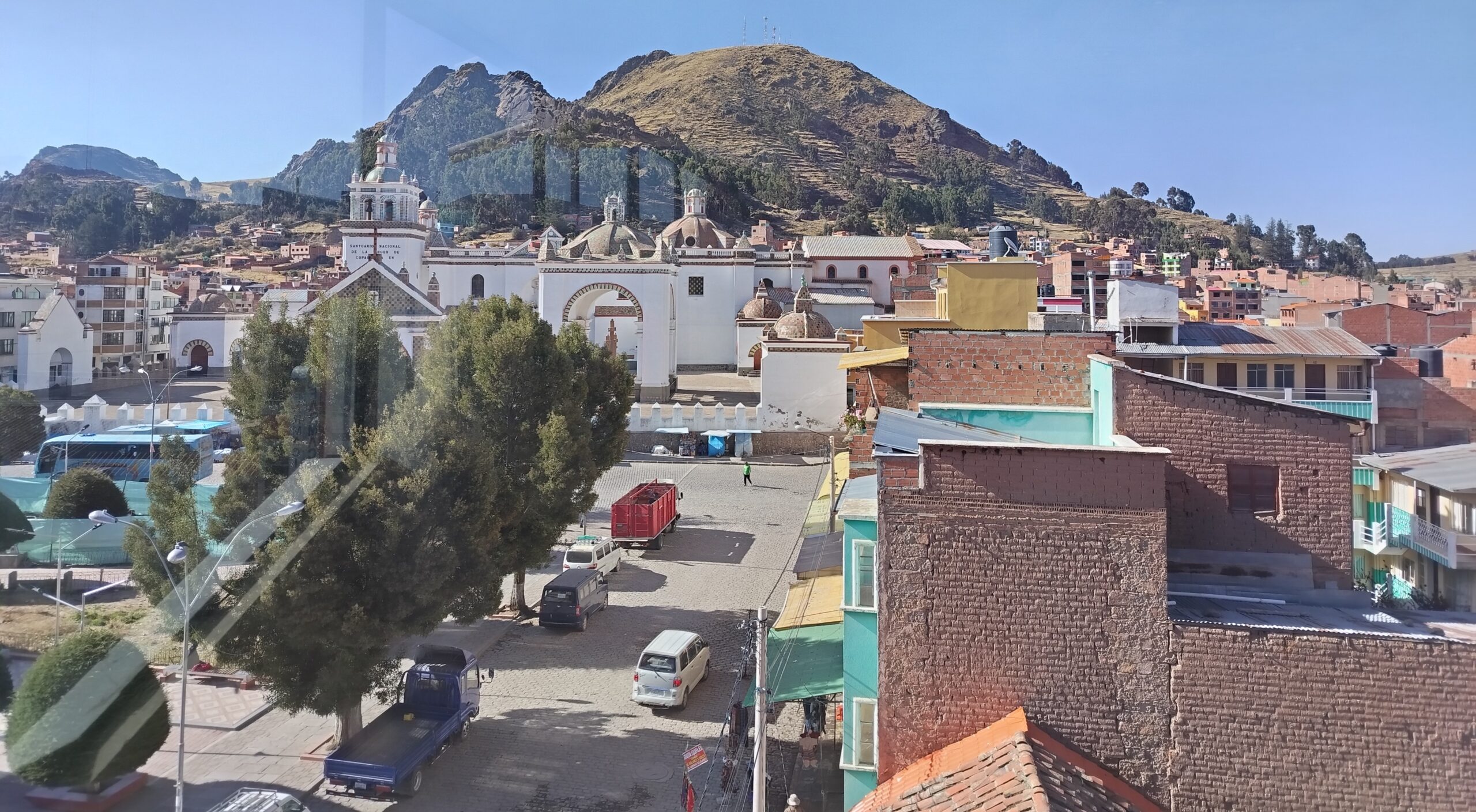
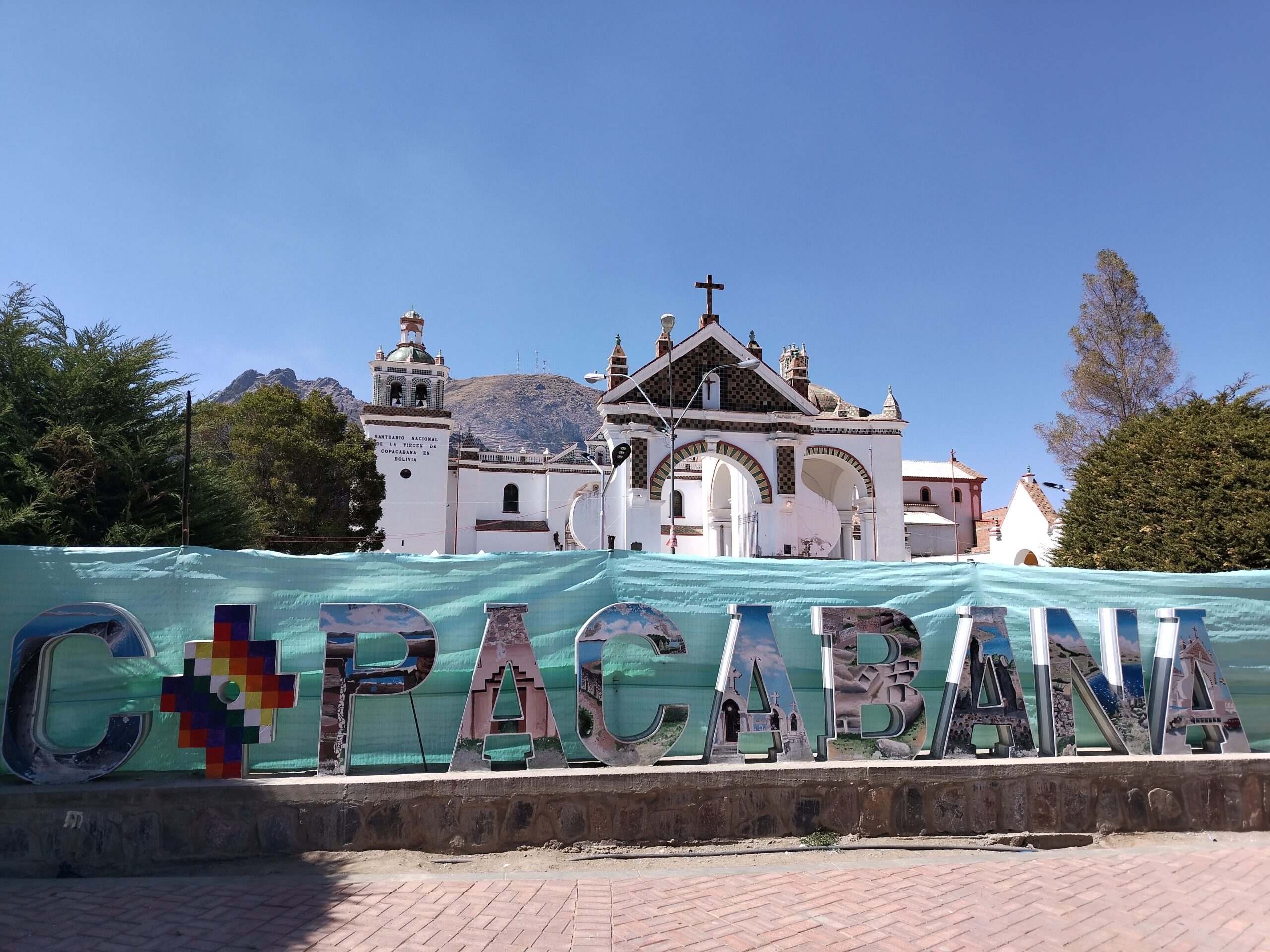
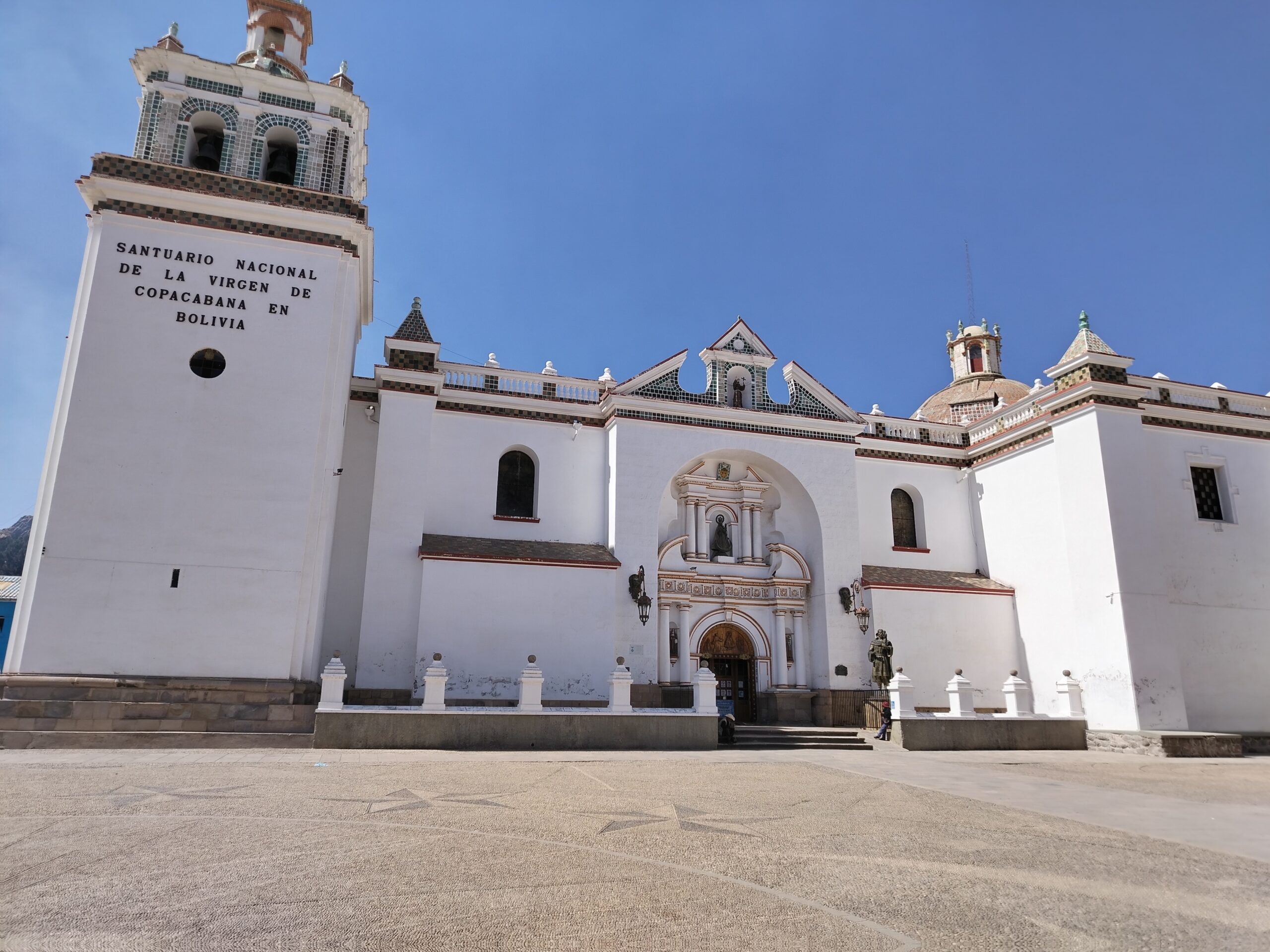
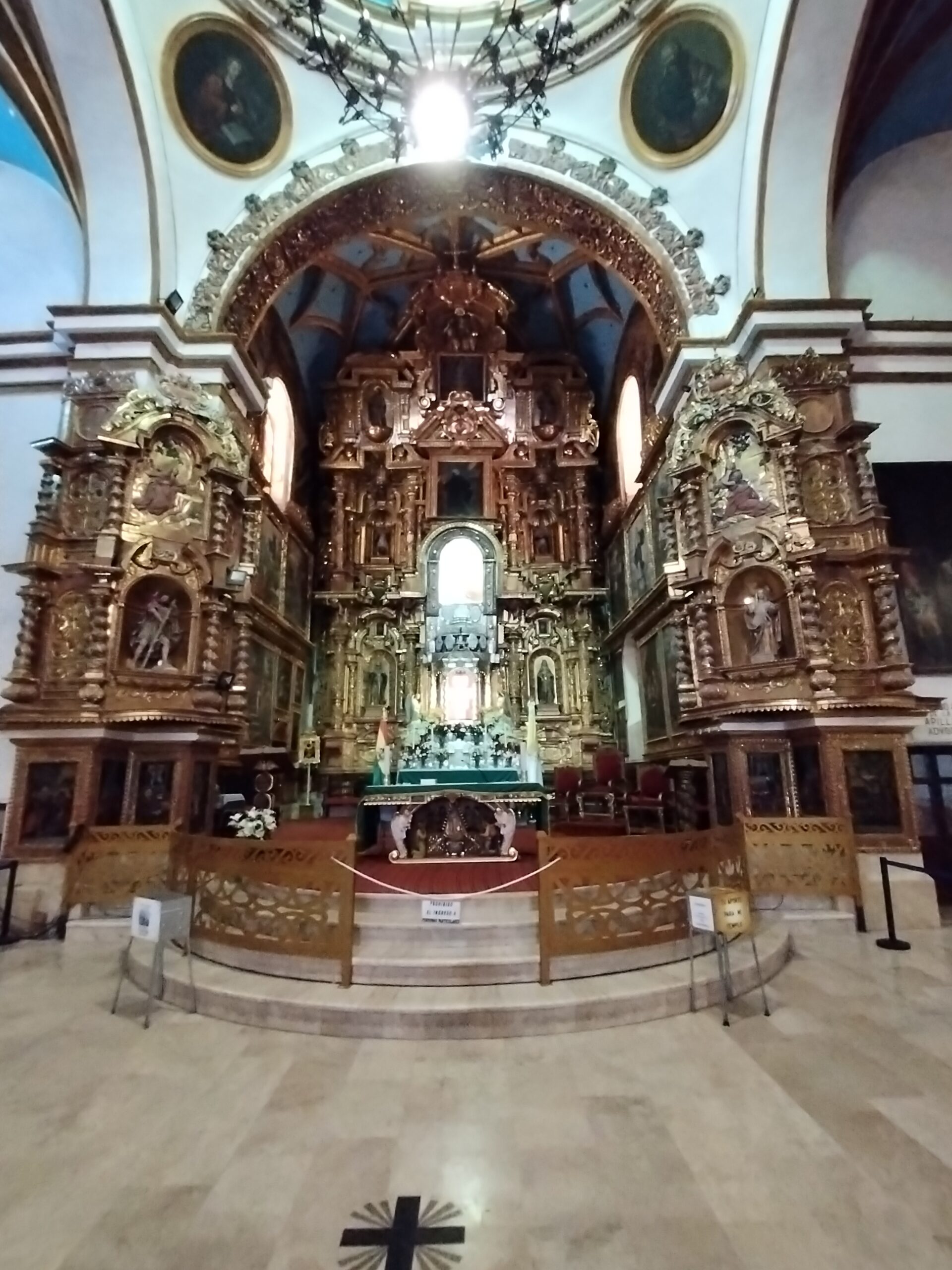
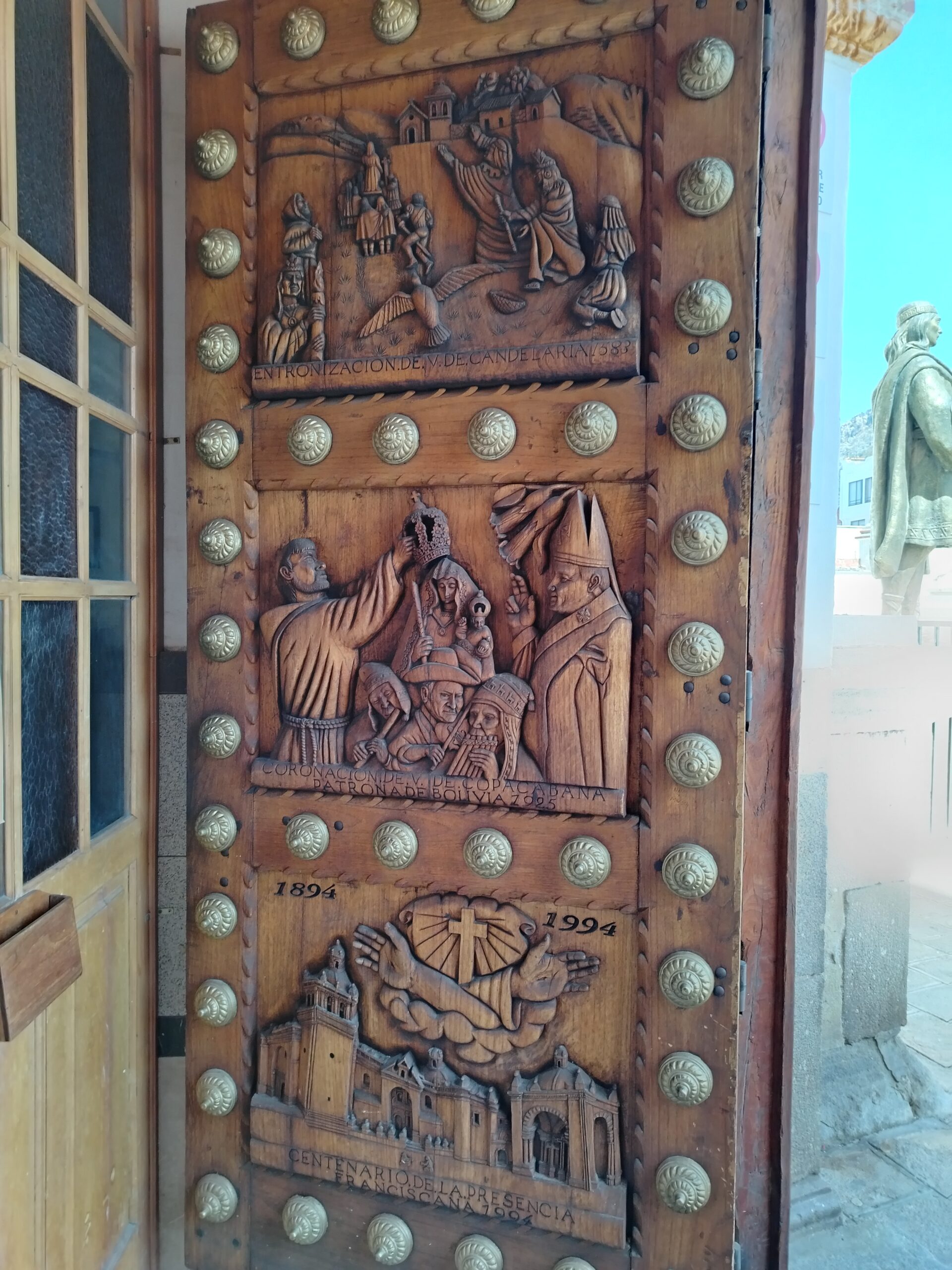
In the center of Copacabana stands the Basilica of Our Lady of Copacabana in all its splendor. With its white walls, red details and a blend of Moorish and Spanish architecture, it is the most dominant structure in the town.
When we entered, the huge gilded altar seemed to carry the weight of prayers offered for hundreds of years.
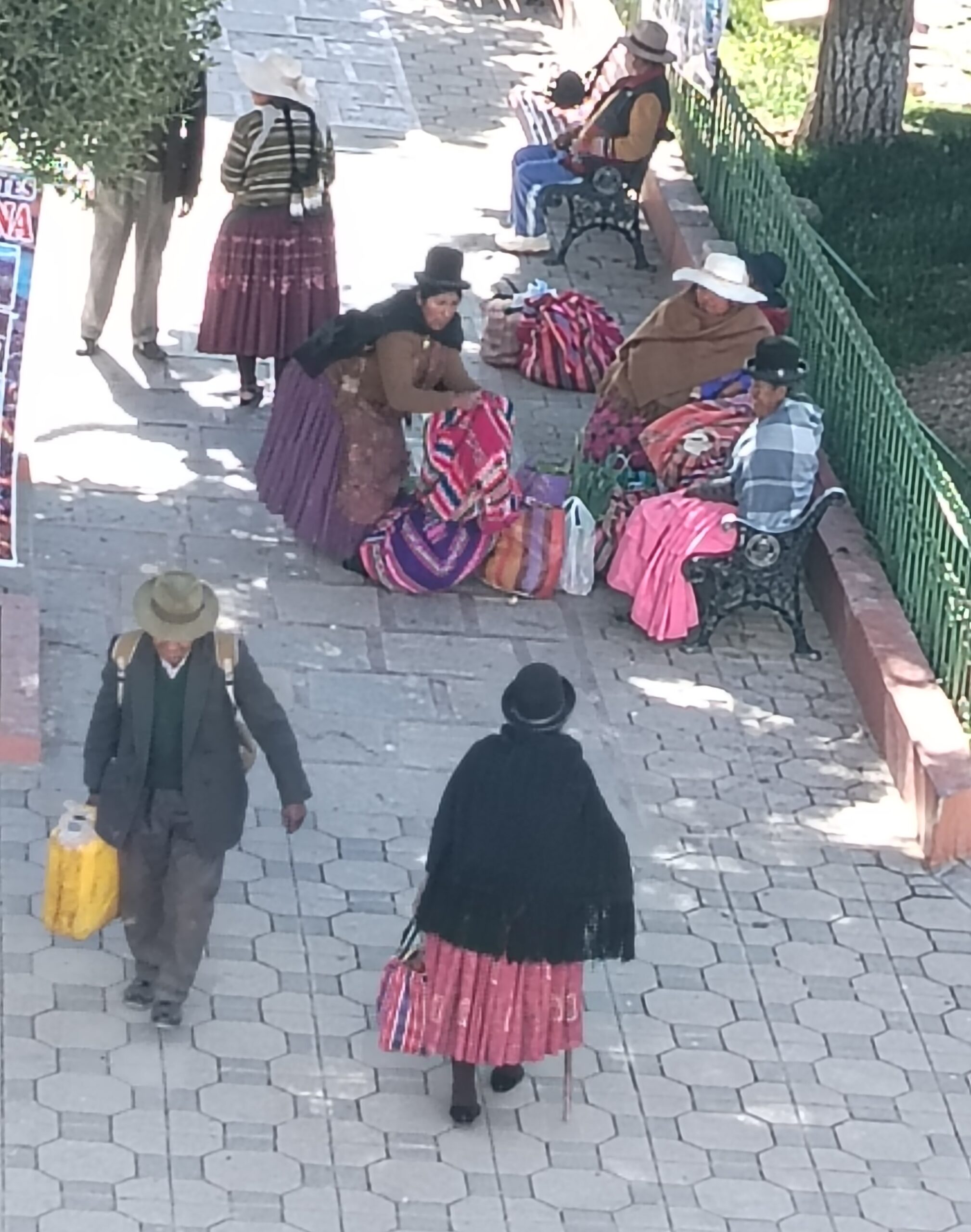
The market in the town center was a true explosion of color and life. Women sold vegetables on colorful cloths spread on the ground, children ran around, and elderly men sat in the shade chatting. Everyone had their own world, but somehow everyone’s world came together in this square.
Copacabana town center and cathedral gallery (EN)
4. The World of Aymara Women: Pollera Skirts and Stories Carried on the Back
The truest carriers of Copacabana’s spirit are, without doubt, the women.
While photographing them, we clearly felt that they were not merely an element of beauty or culture, but figures carrying the weight, pride and grace of centuries.
Aymara women:
- They wear layered skirts called polleras.
- They often wear a bowler hat on their heads.
- On their backs, they carry either a load or a baby in a colorful woven cloth called an aguayo.
- Their walk is slow but dignified.
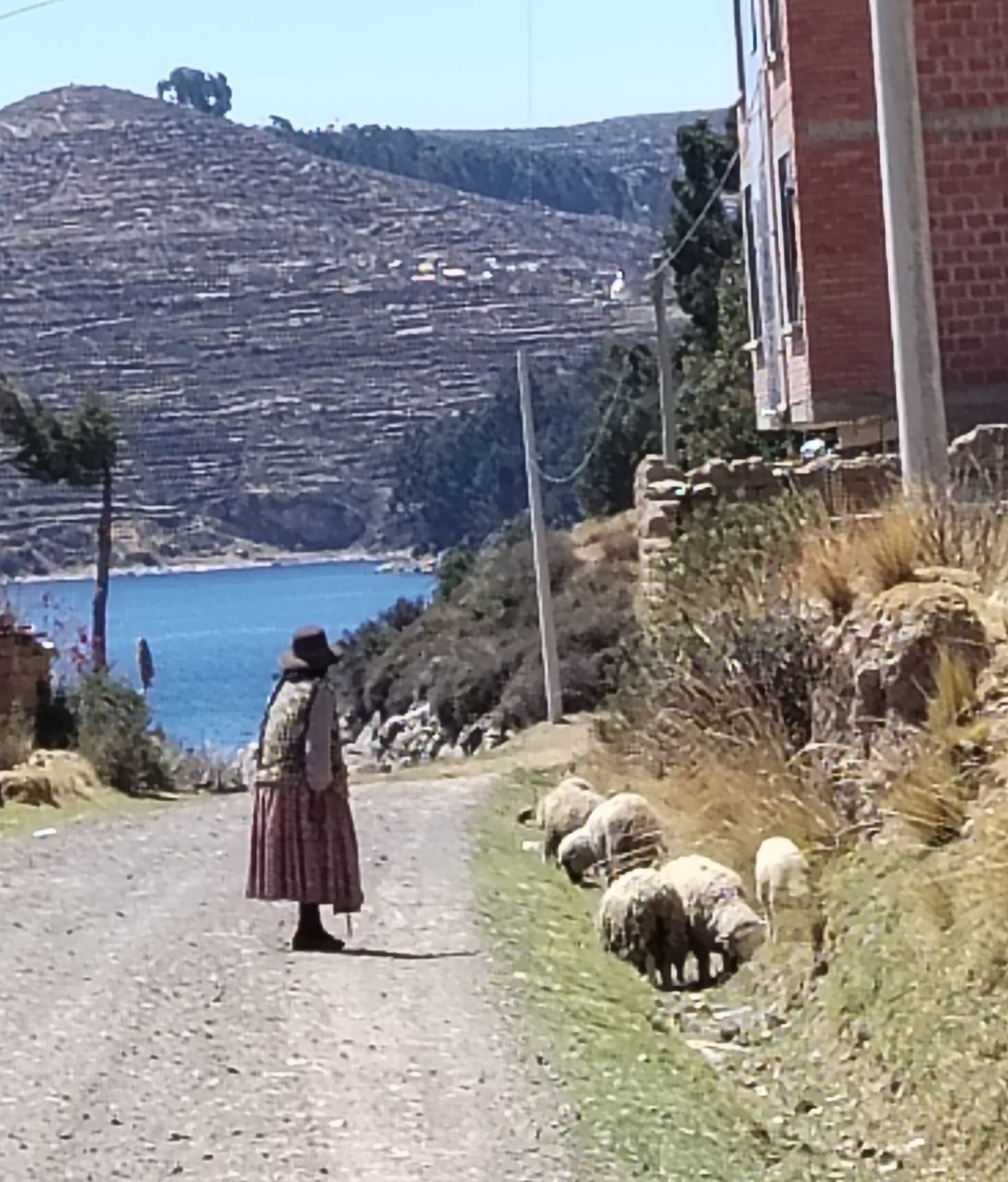
- We saw a woman herding sheep by the lake; a whole lifetime seemed to rest at the end of the staff in her hand.
These women are true representatives of Aymara culture not only through their clothing, but also through the deep patience etched into the lines of their faces.
Watching them was like witnessing the past of a society.
5. The Costanera Walk and the Endless Blue of the Lake
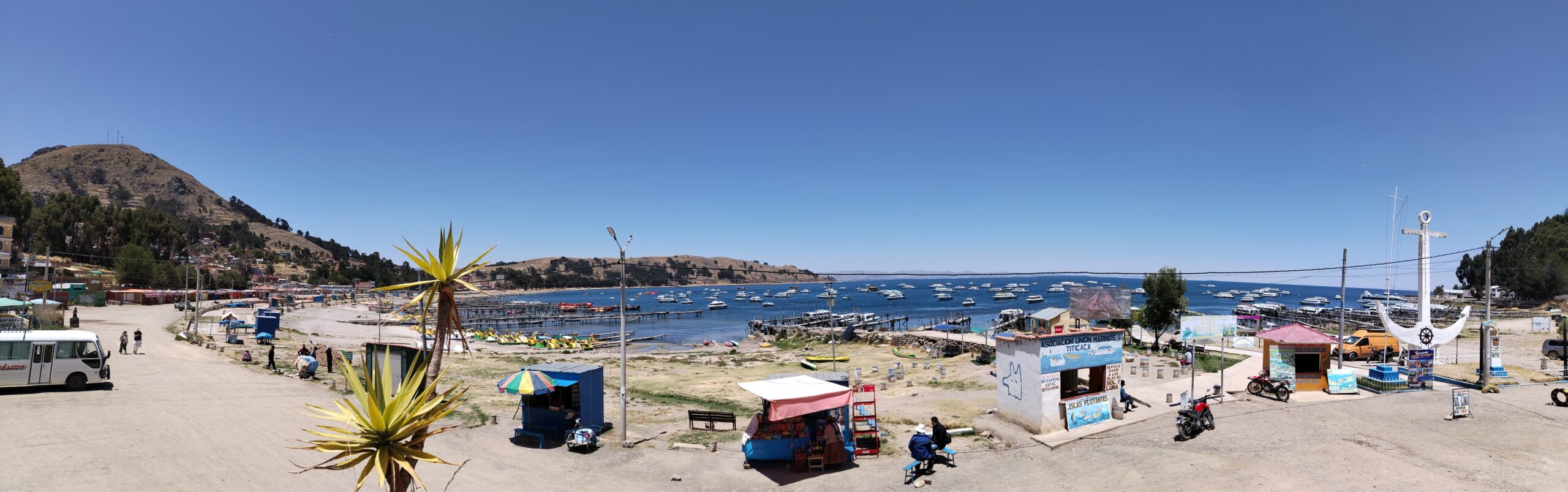
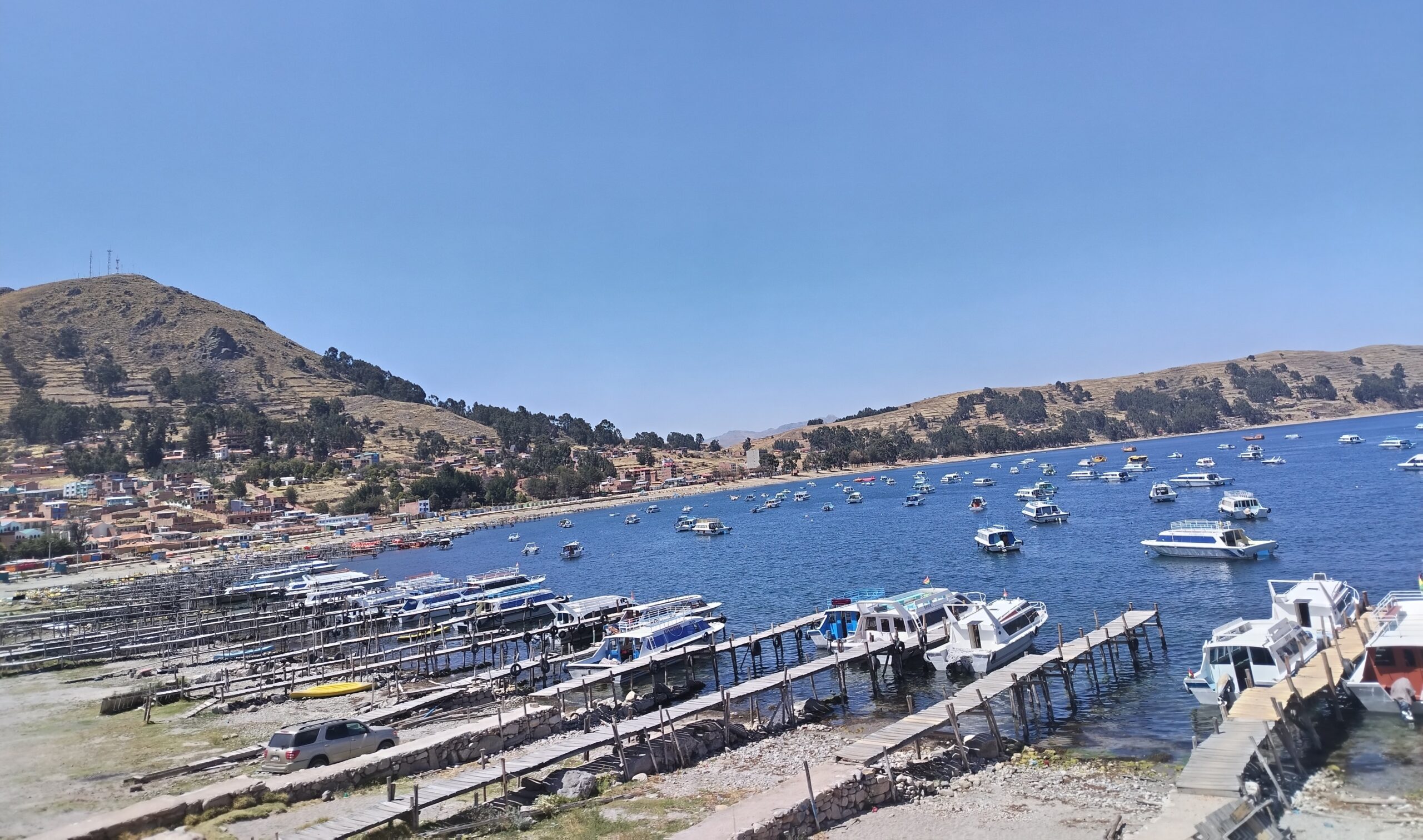
The Costanera, the waterfront promenade, is Copacabana’s liveliest and at the same time most peaceful area.
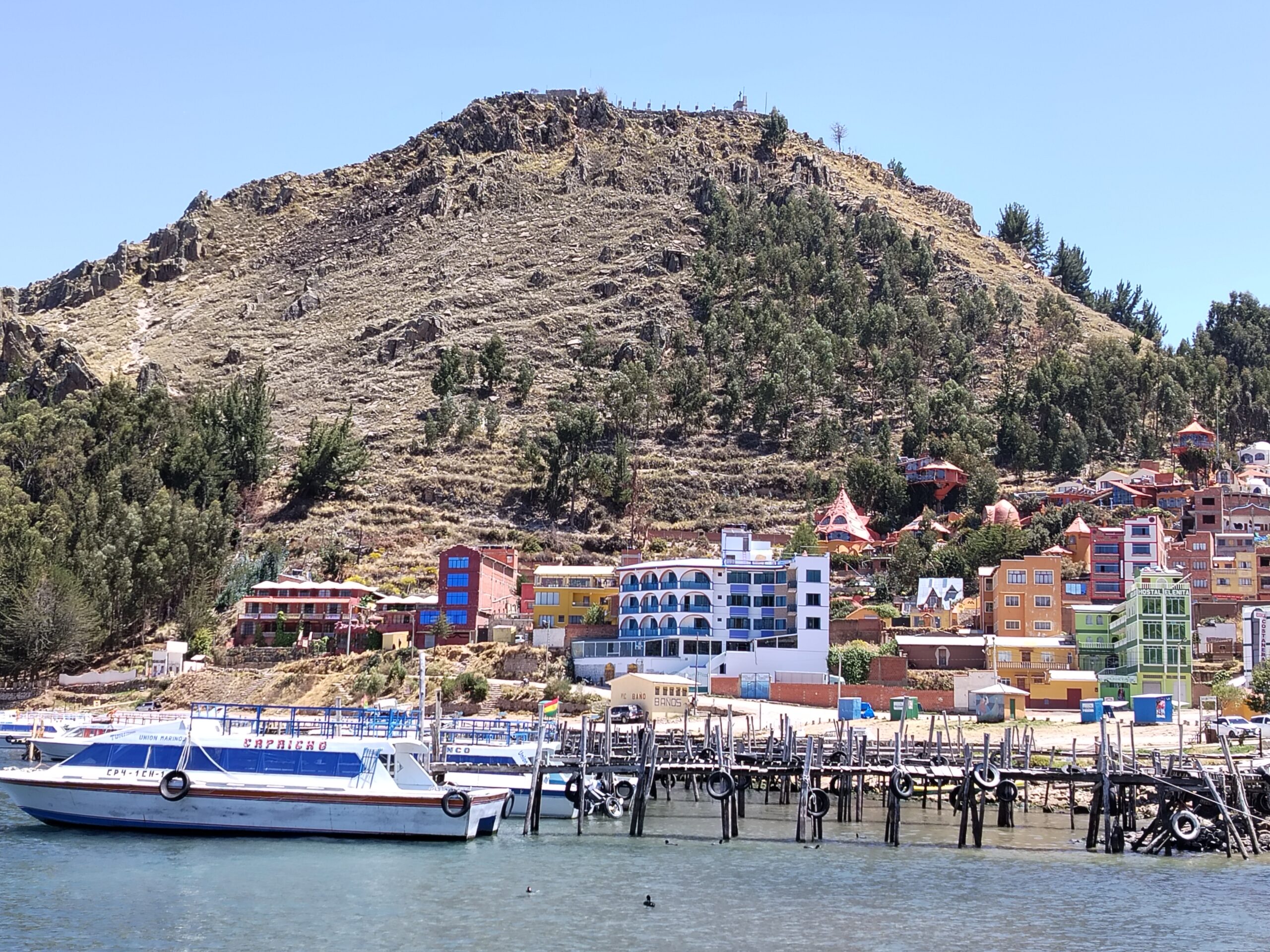
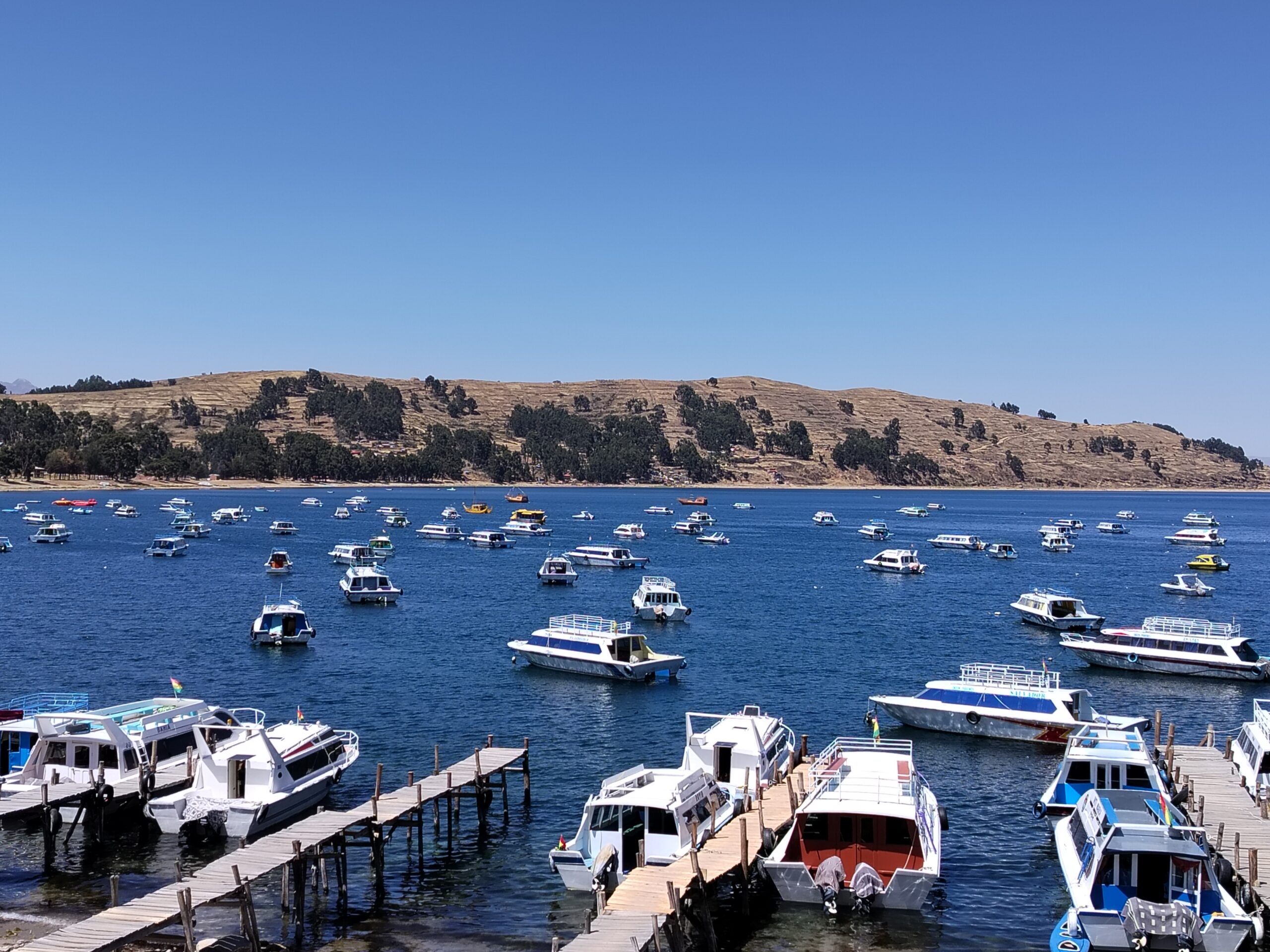
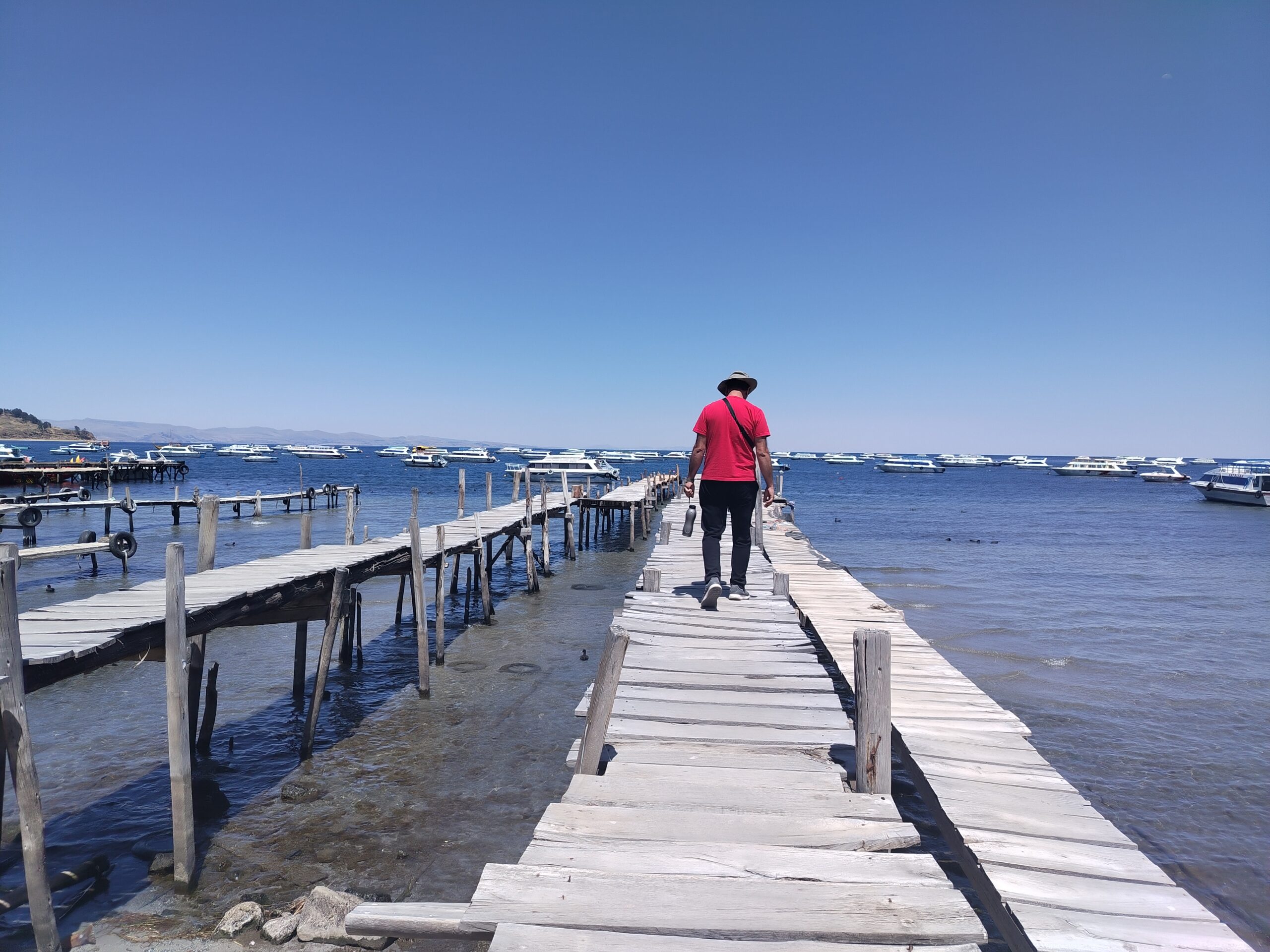
Piers stretched toward the lake, and boats rocked gently on the water. Blue, blue everywhere… There was almost no boundary between the sky and the water.
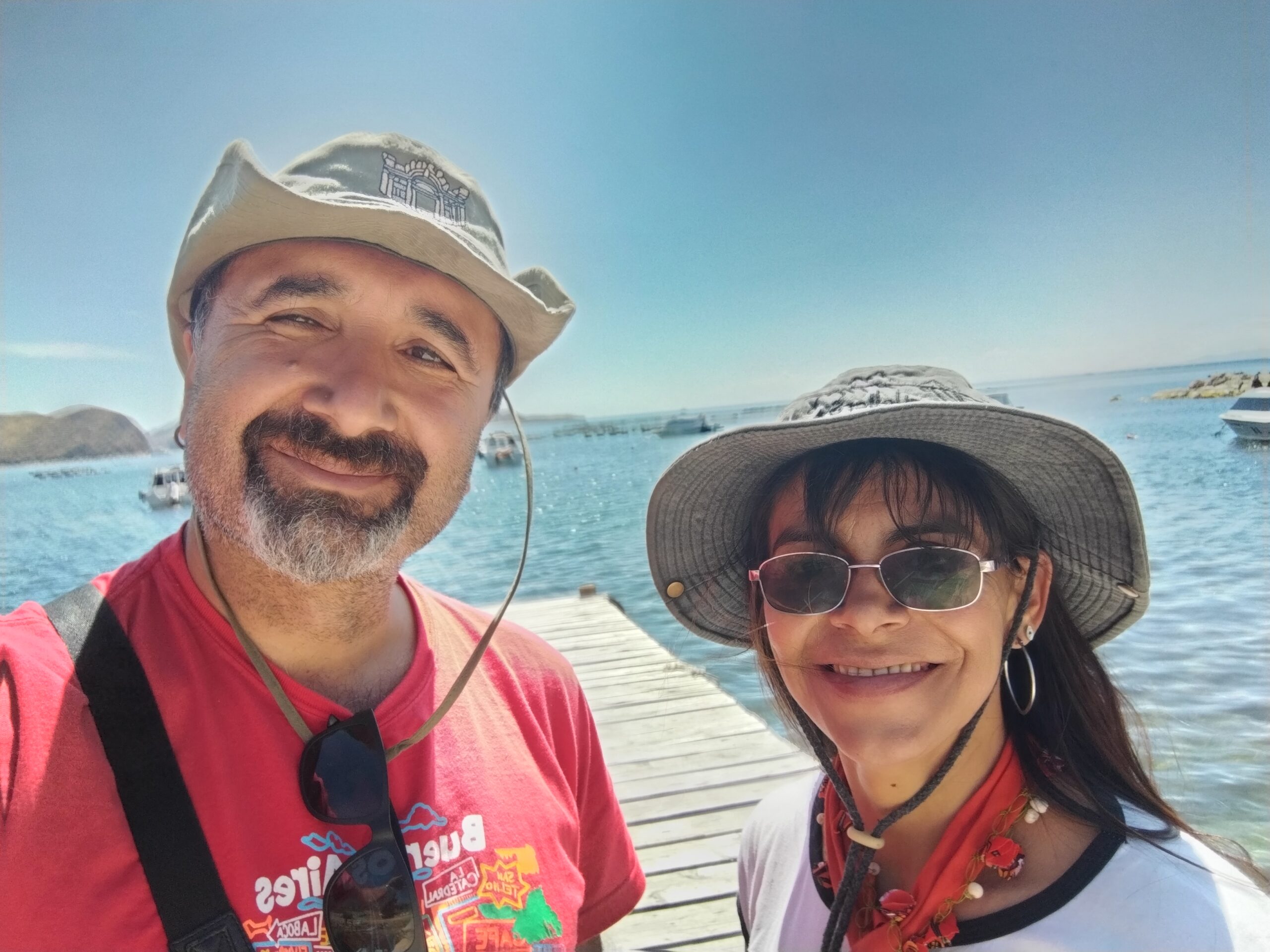
Happiness on both of our faces, the infinity of the lake behind us… It perfectly expressed the embracing energy of Copacabana.
When we sat by the lake, even the gentle sound of the waves merged with the silence of the high altitude and turned almost into a state of meditation.
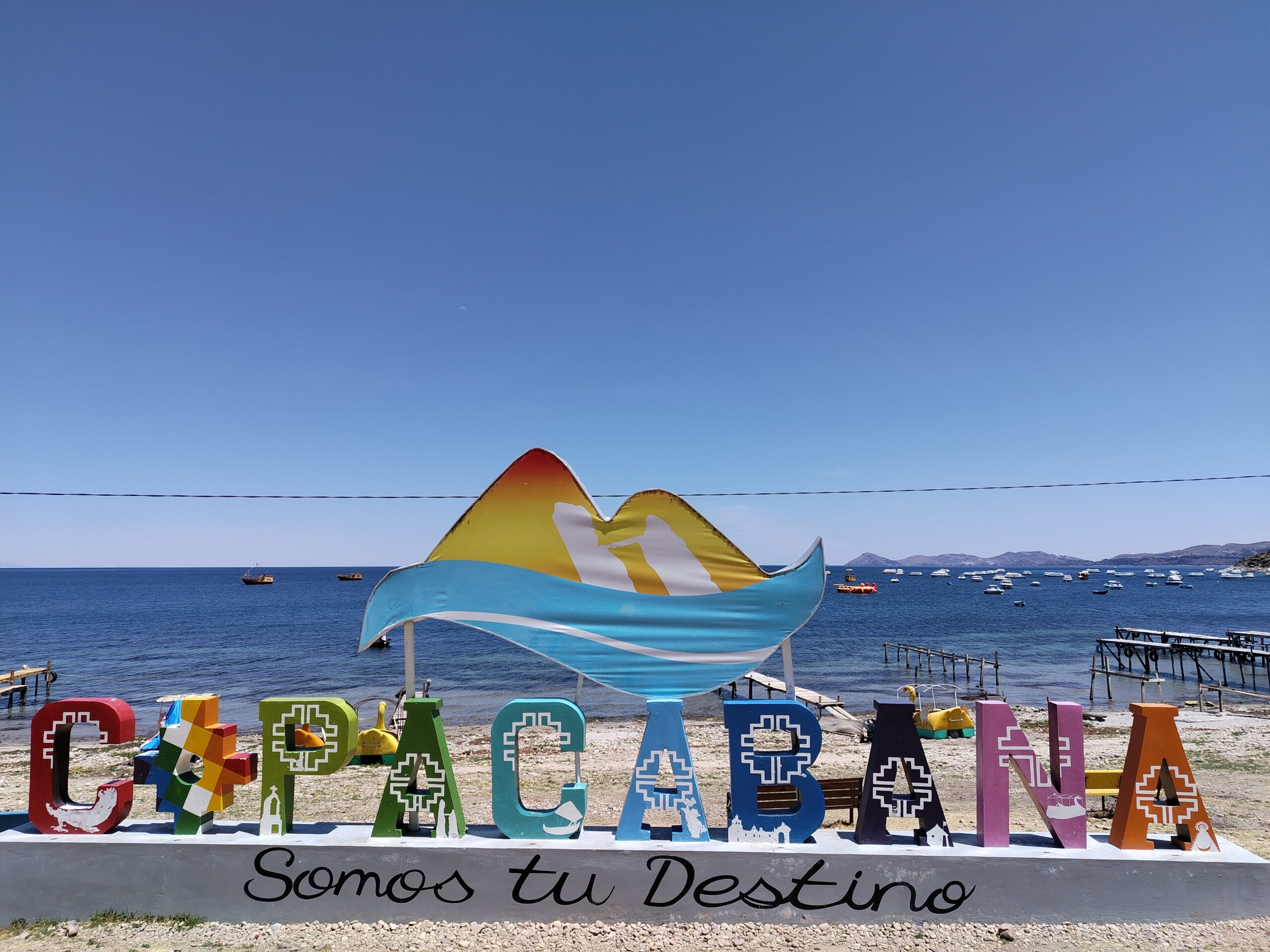
Copacabana Shoreline – Gallery (EN)
6. Traces of Inca Mythology: The Sun and Moon Statues
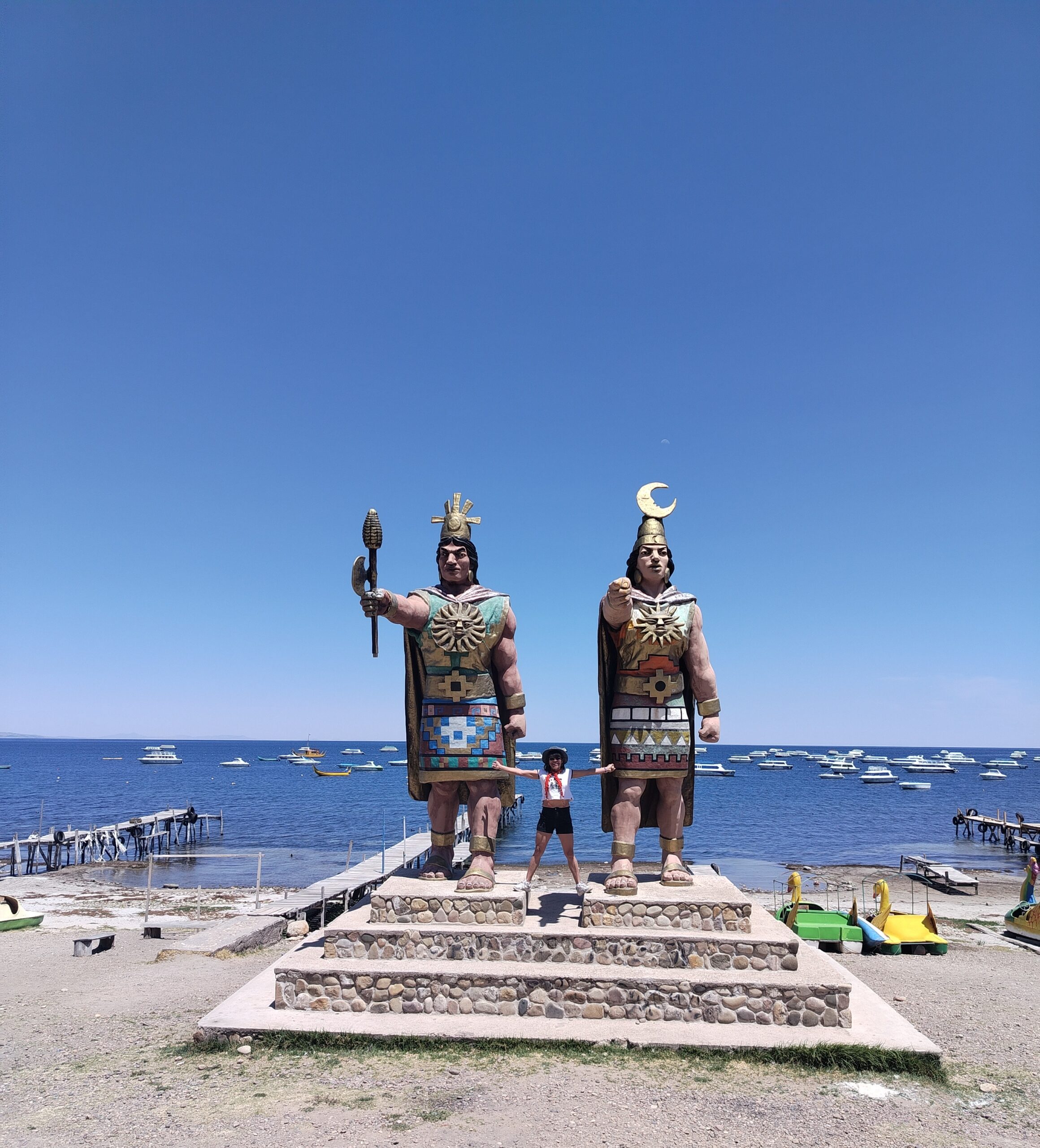
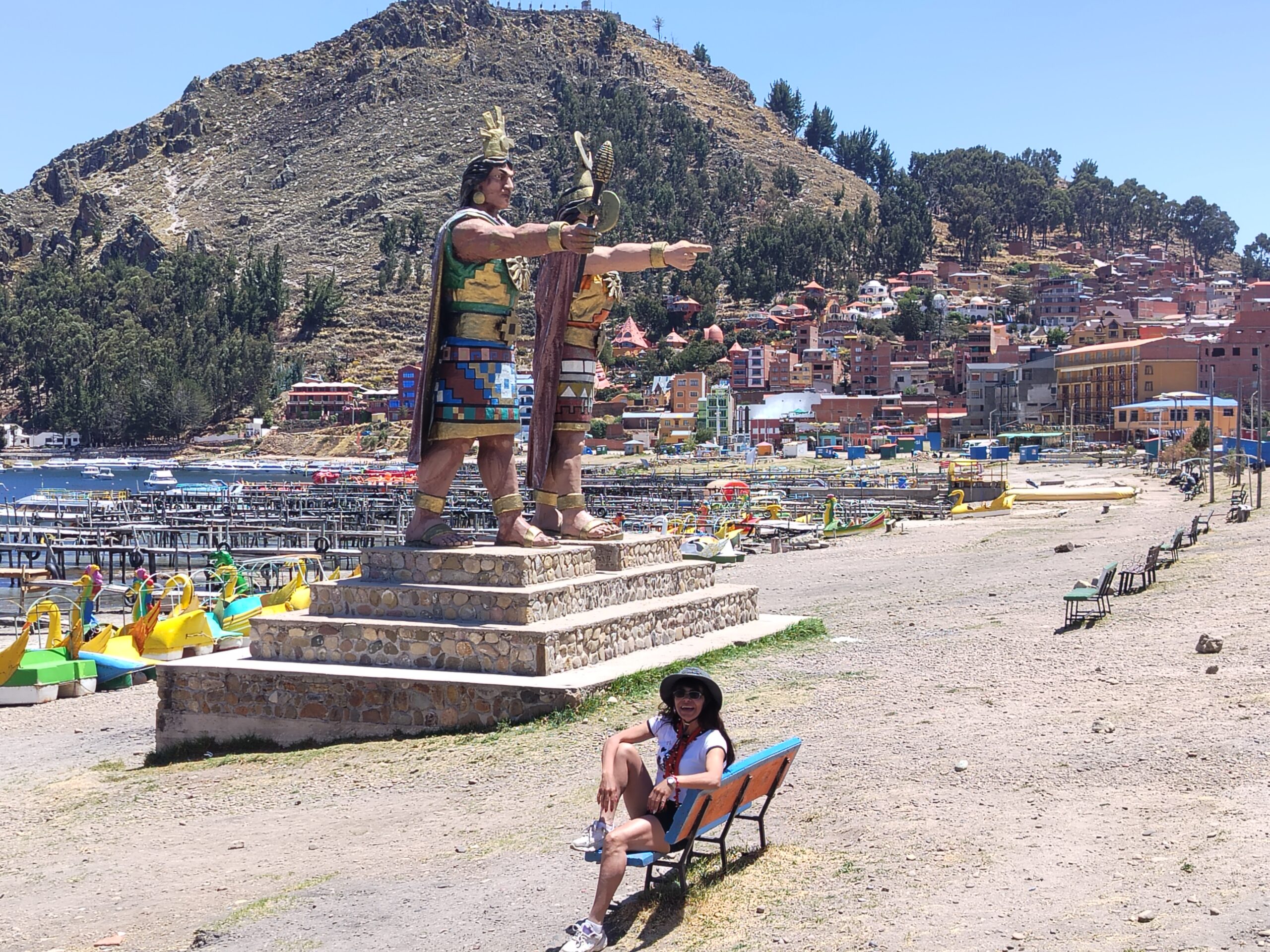
As we continued along the shore, two giant statues appeared before us:
On one side, the lord of the Sun; on the other, the guardian of the Moon.
In Inca mythology, these two figures represent the balance of the universe. The Sun (Inti) symbolizes life and power, while the Moon (Mama Killa) symbolizes time and femininity.
The smallness of the people standing in front of the statues created a striking contrast with the greatness of the mythology.
Inca Sun and Moon Statues
7. Journey to Playa Blanca: On the Shores of Isla del Sol and Isla de Luna
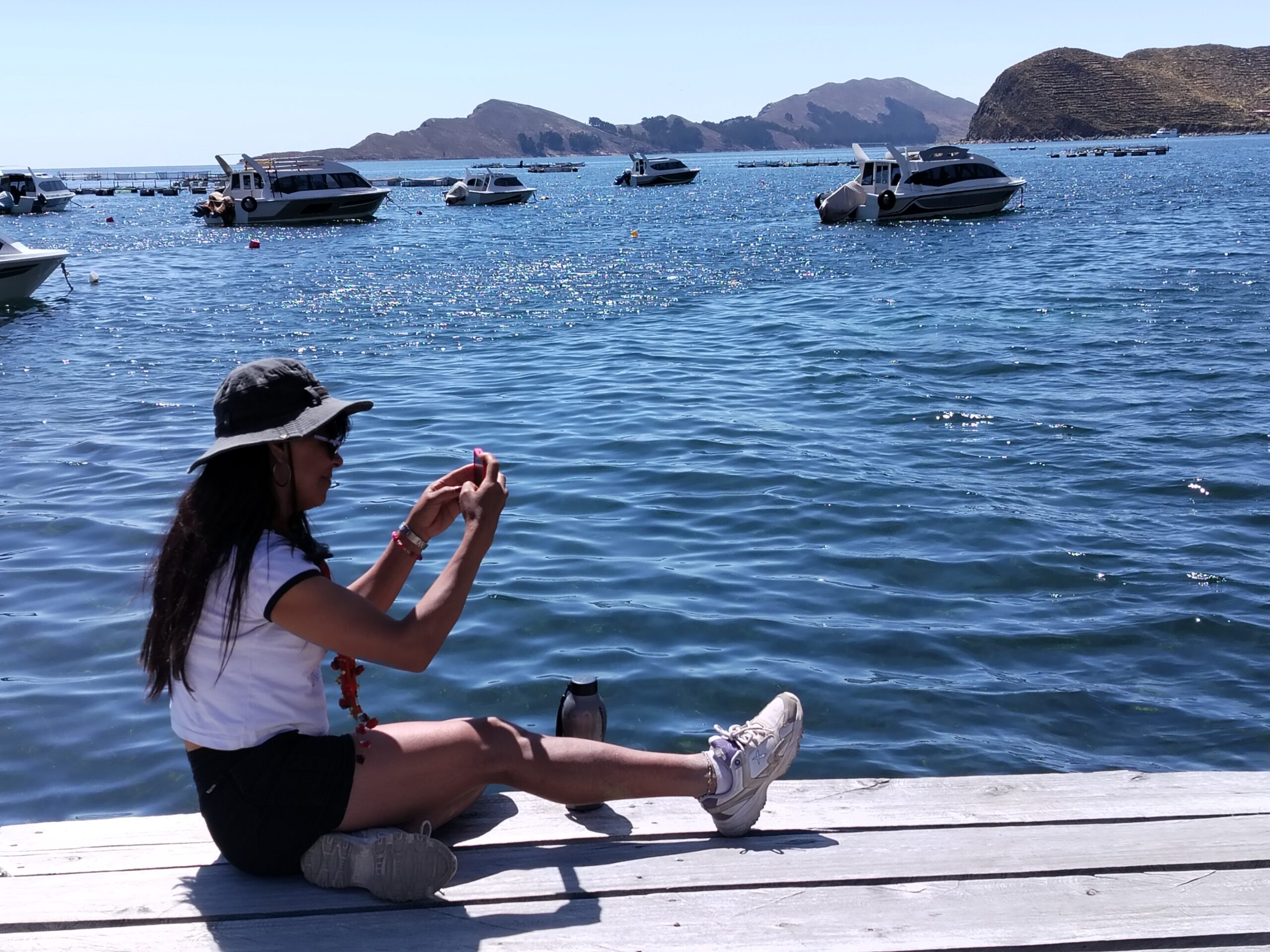
When we left Copacabana and drove toward the tip of the peninsula, our route took us to a small, quiet village called Playa Blanca. This is one of the closest points from which you can see Isla del Sol and Isla de la Luna.
The dirt roads inside the village, the humble piers by the lake and the shore where green and blue blended into each other carried you into a place where time seemed to move in slow motion.
We walked around the village and took photos on the shore; the thin cold carried by the wind to our faces and the silence of the lake added a hidden poem to our journey.
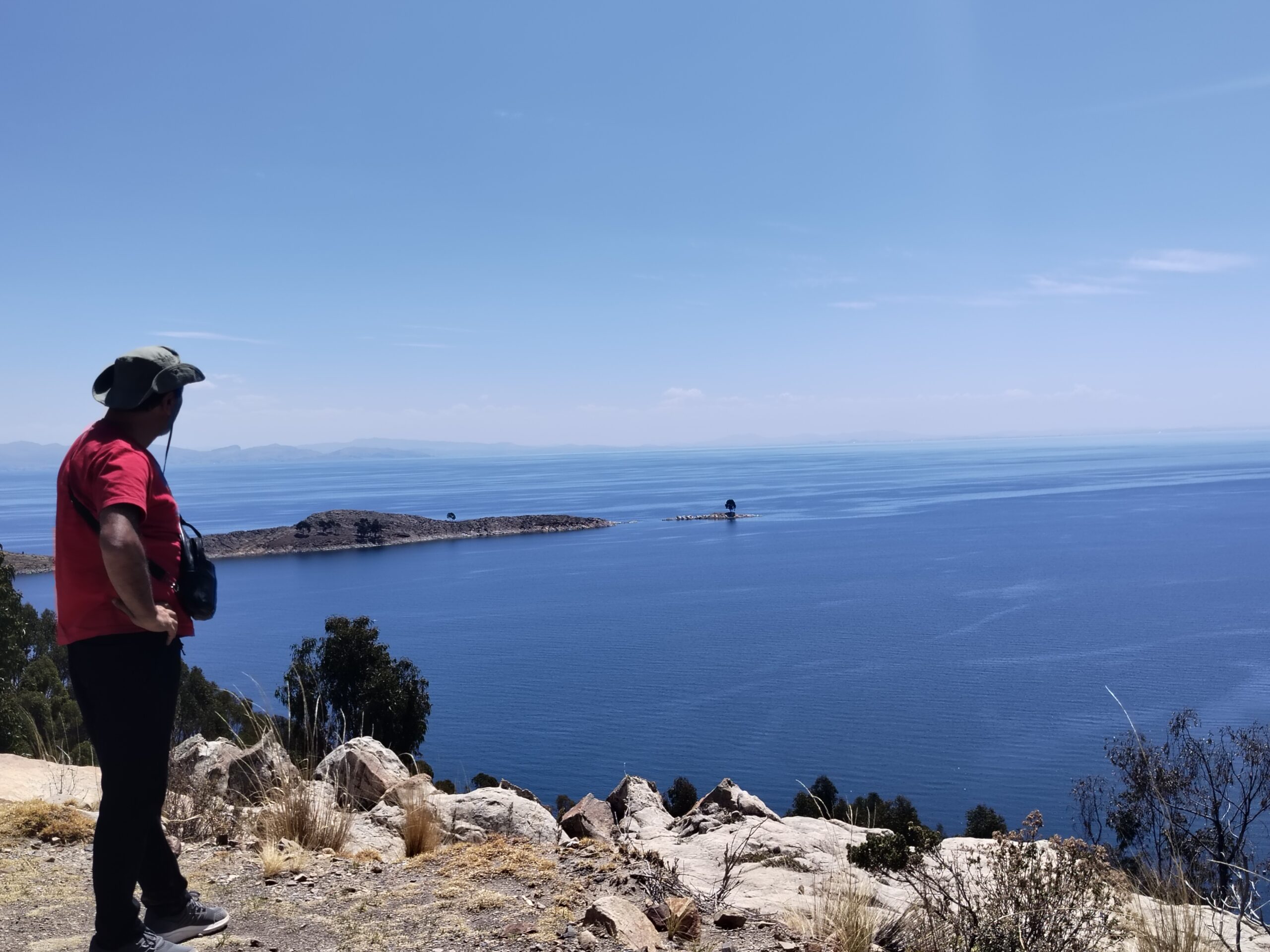
The most interesting point in the view just off Playa Blanca was the Arbol Solitario, the lonely tree, standing on a tiny piece of land in the middle of the lake.
This solitary tree looked like a silent sage merged with itself.
A life standing alone in the vast blue of the lake… At times, it seemed to describe even the loneliness inside a person.
Thanks to the clear air of the high altitude, the silhouettes of the islands were clearly visible on the horizon.
Although we did not set foot on the islands, the wide view offered by Playa Blanca was more than enough to understand the size and depth of Titicaca.
8. Totora Islets: A Culture Living on Reeds
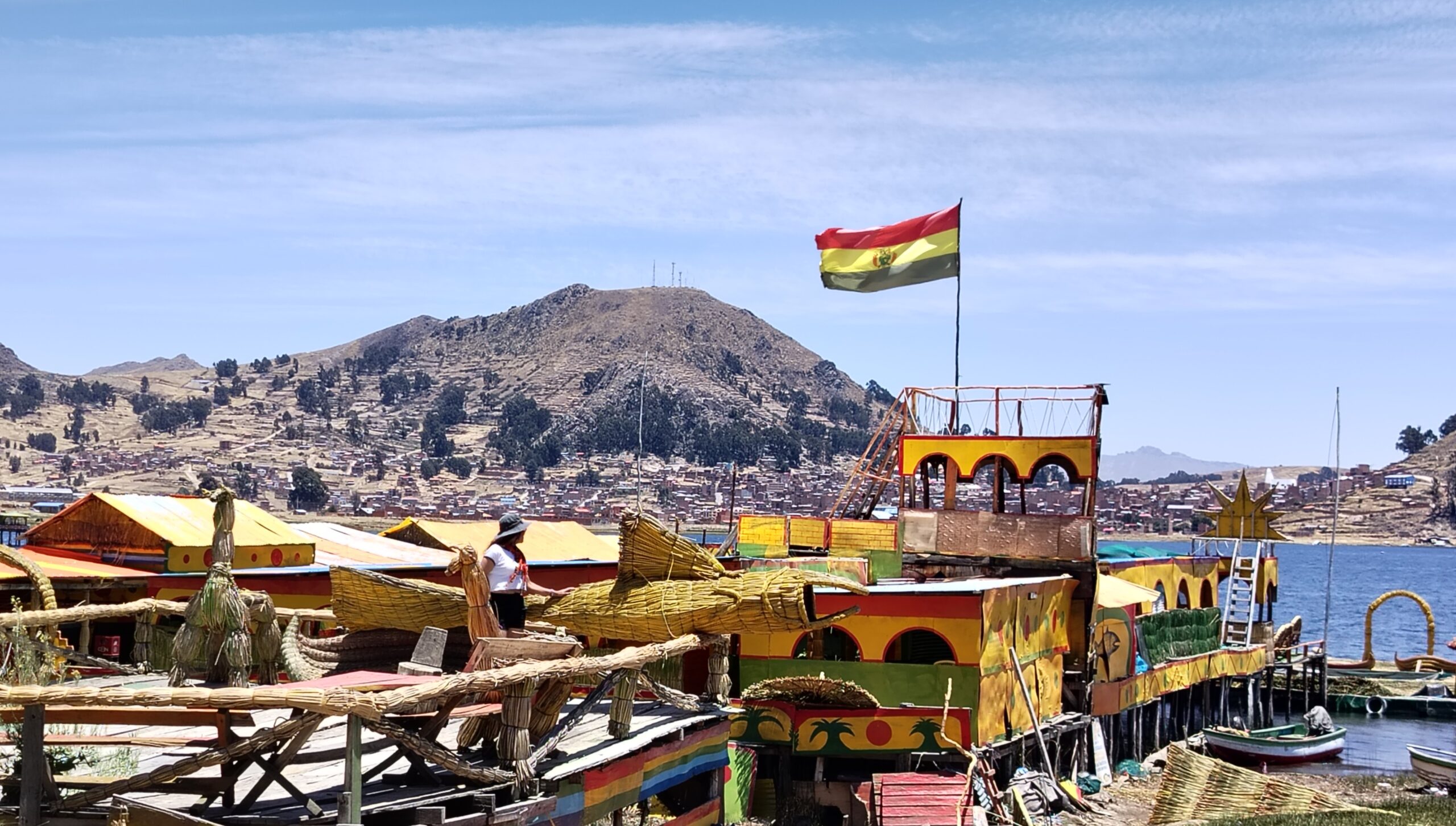
On the shore of Copacabana, we saw boats and figures made from totora reeds.
For the people of Titicaca, totora is not just a plant; it is a house, a boat, an island, a toy, and even culture itself.
Colorfully painted boats, the Bolivian flag waving in the wind, the silent yet resilient culture of the people living on the lake…
Each of these frames was a piece completing the spirit of Copacabana.
Section 8 – Totora culture photo
9. Rural Life: Sheep, Fields and Slowing Time
A village woman we encountered along the road was grazing her sheep.
The lake stretched deep blue behind her, while the woman stood there as if she had stepped out of a scene from thousands of years ago.
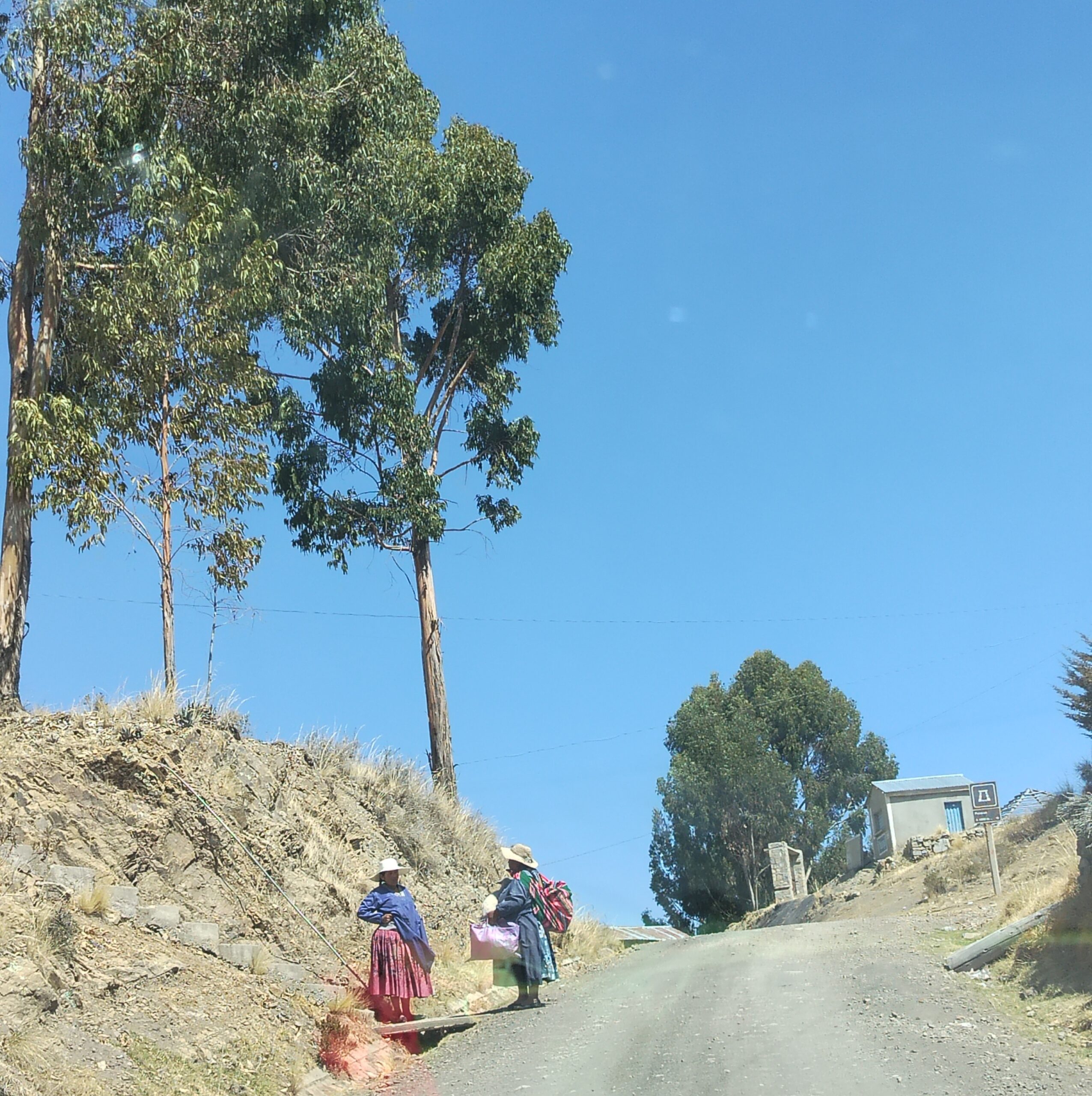
On another slope, two women were carrying loads.
The sun was overhead, the wind was thin; but their steps never stopped.
These images show that Copacabana is far more than its touristic face:
This is the home of a people who live, breathe, work and produce.
10. From Copacabana to the Kasani Border: Toward Peru
At the end of the day, we got back into the car and set off toward the Peruvian border.
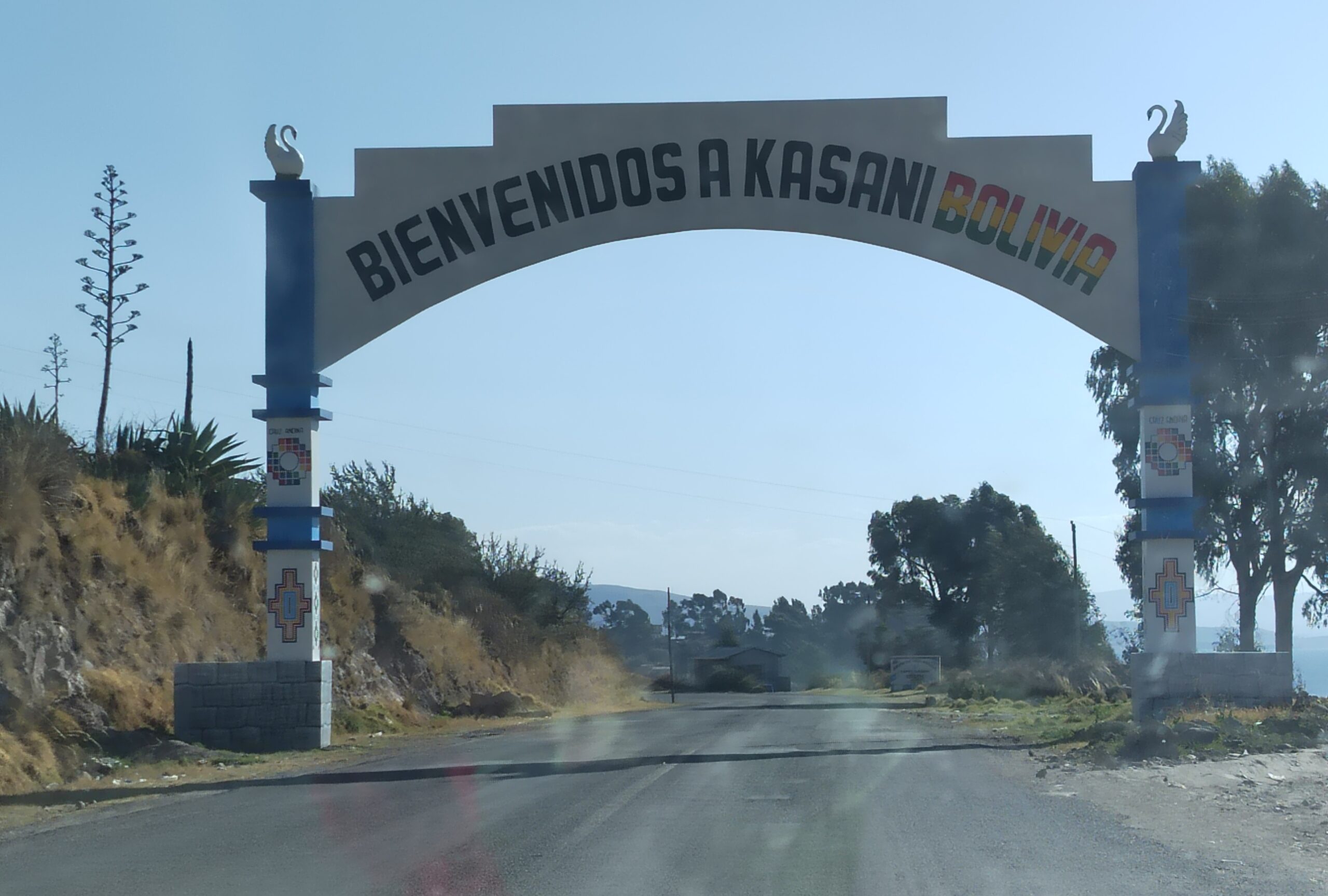
The road to Kasani had turned golden in the light of the setting sun.
As we passed under the “Bienvenidos a Kasani – Bolivia” sign, we were saying goodbye to Copacabana and moving toward a new adventure in Peru.
Section 10 – Kasani Border Entrance Photo
Conclusion: A Journey Left in the Mirror of Titicaca
Copacabana did not just show us a place.
With its calm, it muted the harsh sounds of the modern world;
with its mythology, it reminded us that human beings are not alone at home, that they have a bond with the sky;
with its women, it taught us how culture is carried;
with the blue of the lake, it rested the soul.
This journey, which began in La Paz with the Peugeot 408, did not actually end at the Kasani border.
The light on the lake whispered that within every journey we make, there is always another journey.
If Titicaca is a piece of the sky fallen onto the earth,
Copacabana is the heart of that piece.
And hearts are never the same after passing through there.
You can find the Peru routes that continue this journey and our other South America articles on our English blog page .
Follow us
You can also follow our social media accounts for short videos, photos and instant posts from our journey.
- YouTube Shorts: Watch our short road videos
- Instagram: Photos and daily posts
- Facebook: Our Facebook page