
Paraguay is one of those countries that often remains outside the classic routes through South America. It does not appear as strongly as Argentina, Brazil, Peru, Bolivia or Chile, and it is not usually represented by a major tourist icon like Machu Picchu, Patagonia or the Salar de Uyuni. But that is exactly where its charm begins: Paraguay is a less spectacular country at first sight, less touristy, more local and more real.
To understand Paraguay, it is not enough to see it as a simple transit country between Argentina, Brazil and Bolivia. This country has a very distinctive identity of its own: the Guaraní language, the culture of tereré, life beside the rivers, the Jesuit missions, the old streets of Asunción, the waterfront of Encarnación, human warmth, popular markets and the long inland roads form a different experience within the continent.
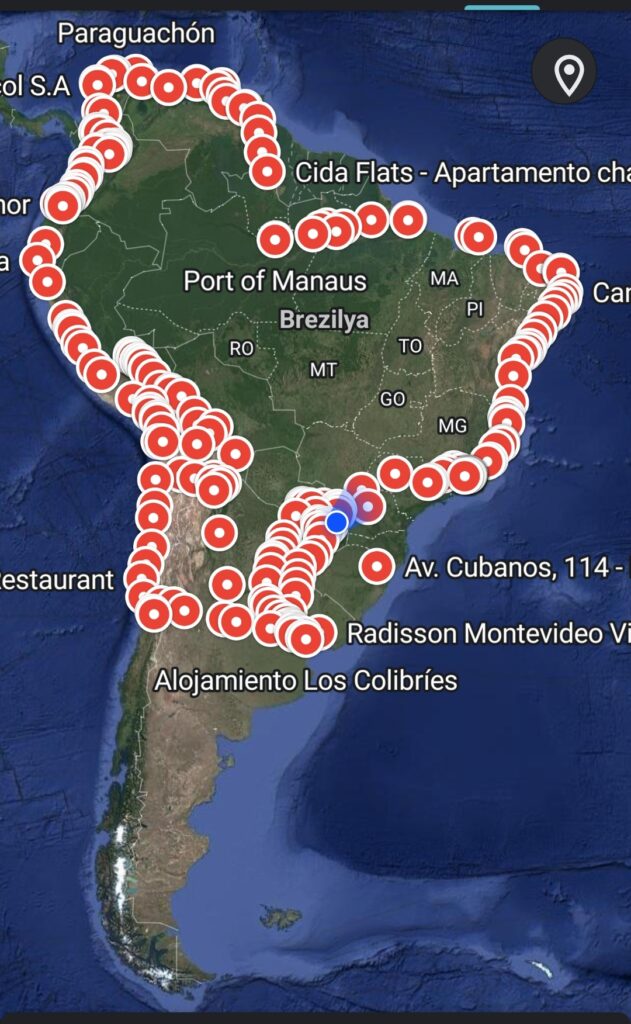
This Paraguay travel guide was prepared to look at the country as a whole: history, culture, Guaraní identity, Asunción, Encarnación, Jesuit missions, border crossings, transport, accommodation, food, budget, safety and suggested routes. To discover the general spirit of our journey through South America, you can visit our home page. If you want to know more about us, read About us. For other stories and guides, visit our English blog.

Image: Wikimedia Commons.
Table of Contents
- General information about Paraguay
- Why travel to Paraguay
- History and identity of the country
- Guaraní language, tereré and everyday life
- How to get to Paraguay
- Border crossings and entering with a vehicle
- Asunción
- Encarnación and southern Paraguay
- Jesuit missions of Paraguay
- Ciudad del Este and the east of the country
- Nature, rivers and rural Paraguay
- Transport within Paraguay
- Where to stay
- What to eat and drink
- Budget and money
- Safety and health
- When to go to Paraguay
- How many days to spend in Paraguay
- Suggested routes
- Practical information
- Final notes
General information about Paraguay
Paraguay is located in the center of South America. It has no access to the sea and borders Brazil, Argentina and Bolivia. Its capital is Asunción, one of the oldest cities in the Río de la Plata region.
One of the country’s most important characteristics is the living presence of Guaraní culture. Spanish and Guaraní coexist in daily life, and this mixture gives Paraguay a very different identity within Latin America.
Paraguay does not always have a tourism infrastructure as developed as that of other neighboring countries. For that reason, it is an ideal destination for travelers who enjoy local rhythm, markets, land routes and observing everyday life.
Why travel to Paraguay
The strongest reason to travel to Paraguay is to discover a less touristy South America. Here, not everything is prepared like a postcard. In many places, daily life is more present than tourist scenery, and that makes the trip feel closer and more authentic.
- To see a less visited face of South America: Paraguay offers a more local and less crowded experience.
- To discover Guaraní culture: The language, tereré, music and family life are an essential part of the country.
- To visit the Jesuit missions: Trinidad and Jesús de Tavarangüé are UNESCO World Heritage Sites.
- To travel by land: Paraguay naturally connects with Argentina, Brazil and Bolivia.
- To eat and live at a local rhythm: Chipa, sopa paraguaya, mbejú, asado and tereré are part of the journey.
History and identity of the country
The history of Paraguay is marked by the Guaraní peoples, Spanish colonization, the Jesuit reductions, independence and very harsh regional wars. All of this is still present in the national identity.
Before the arrival of the Spanish, the region was inhabited by Guaraní communities. Unlike other places in Latin America, the Guaraní language did not remain only as a memory of the past: it is still alive in conversations, families, markets and public spaces.
The Jesuit missions of the 17th and 18th centuries left a deep mark. In them, Guaraní communities, European religious organization, music, architecture and community life were mixed. Today, the ruins of Trinidad and Jesús de Tavarangüé are the most important testimonies of that period.
The Paraguayan War was one of the most painful episodes in Paraguayan history. The human and economic losses were enormous, and that memory is still part of the way the country thinks about itself.
Guaraní language, tereré and everyday life
Guaraní is one of the keys to understanding Paraguay. In many places, Spanish, Guaraní and an everyday mixture known as Jopara are spoken. This linguistic coexistence gives Paraguay a very strong cultural identity.
Tereré is another national symbol. It is a cold infusion of yerba mate taken with cold water, ice and sometimes refreshing herbs. In Paraguay, it is not just a drink: it is a way of sharing time, talking and getting through the heat.
Seeing people with a thermos, guampa and bombilla in squares, homes, offices or gas stations is one of the most Paraguayan images that exist. To understand the country, you have to look at those small everyday gestures.
How to get to Paraguay
By plane
The country’s main air gateway is Silvio Pettirossi International Airport, near Asunción. There are regional connections with different countries in South America, although routes may change depending on the season and airline.
By bus
Paraguay can be reached by bus from Argentina, Brazil and Bolivia. There are connections from cities such as Buenos Aires, Posadas, Foz do Iguaçu, Santa Cruz and other regional points. On long trips, it is worth checking the company, comfort, schedules and border process.
With your own vehicle
For those traveling through South America with their own vehicle, Paraguay can be a transit country or a route in itself. It is important to carry vehicle documents, insurance, passport and temporary permits in order.
Border crossings and entering with a vehicle
One of the best-known crossings is Encarnación – Posadas, between Paraguay and Argentina. It is practical for those who want to visit the south of the country and the Jesuit missions. Another important crossing with Argentina is Clorinda – Asunción.
Towards Brazil, the Ciudad del Este – Foz do Iguaçu crossing is one of the busiest. It is an area with a lot of commerce and border movement.
Towards Bolivia, the routes through the Chaco can be longer, hotter and more demanding. If you travel with your own vehicle, plan fuel, water, tires, maps and documentation carefully.
Asunción
Asunción is the capital of Paraguay and the first contact many travelers have with the country. It does not always look like an orderly or monumental capital. Some areas look old, others chaotic, and that mixture is part of its character.
Asunción should not be compared with Buenos Aires or Santiago. Its charm lies elsewhere: historic buildings, heat, markets, worn streets, local life and the Paraguay River.
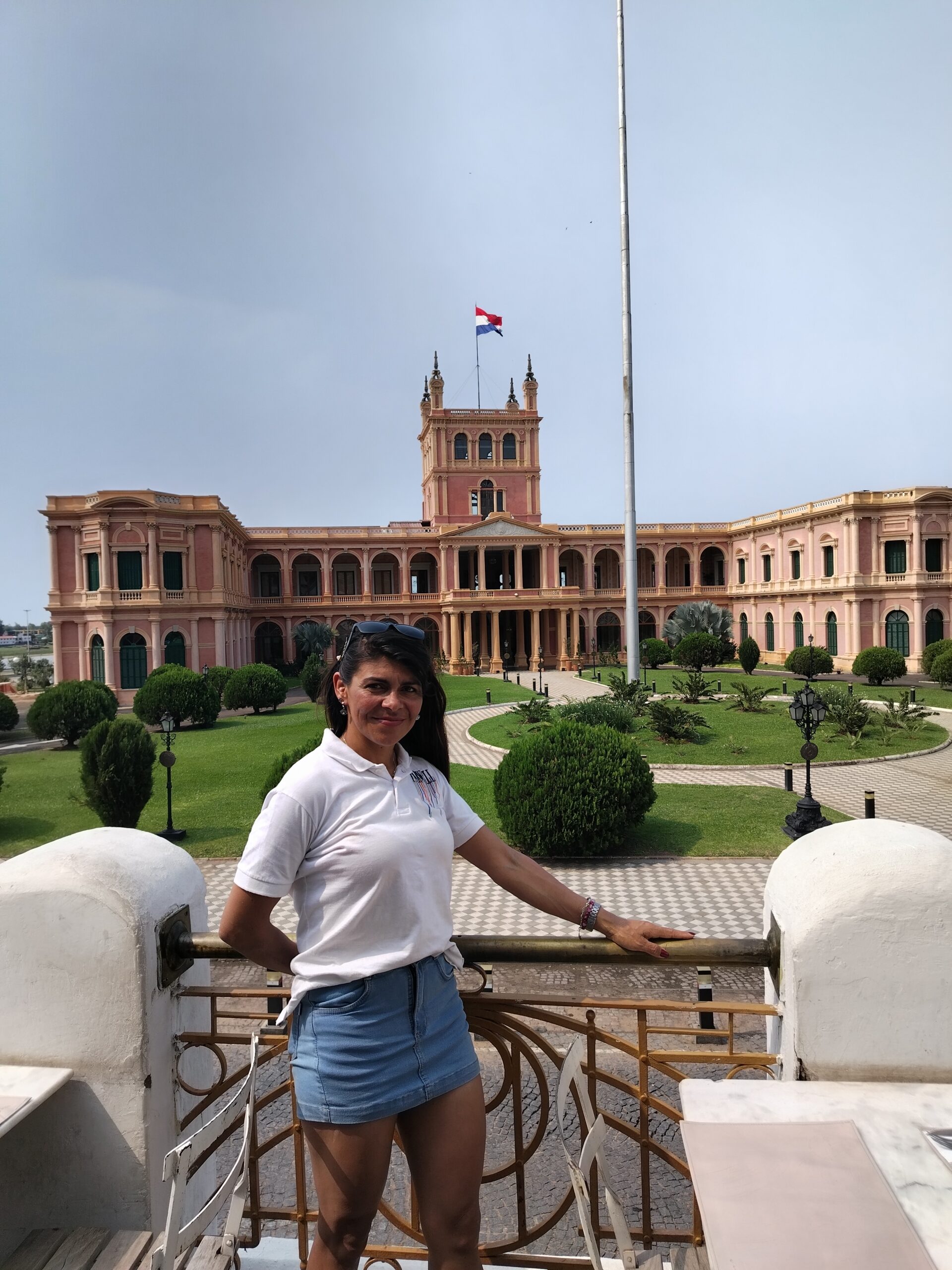
Palacio de López
The Palacio de López is one of the most emblematic buildings in Asunción. It serves as the seat of government and is especially beautiful when illuminated at night.
National Pantheon of the Heroes
The National Pantheon of the Heroes is an important place to understand Paraguayan national memory, independence and the wars that marked the country.
Calle Palma
Calle Palma is one of the best-known streets in the historic center. It has shops, old buildings and urban life. It is better to walk along it during the day.
Costanera of Asunción
The Costanera beside the Paraguay River is a pleasant place to walk, watch the sunset and feel a more open side of the city.
Mercado 4
Mercado 4 is one of the most intense markets in Asunción. It is interesting, local and very lively, but it also requires attention to personal belongings.
Encarnación and southern Paraguay
Encarnación is in the south of the country, opposite the Argentine city of Posadas. Its location on the Paraná River, its waterfront, its urban beaches and its proximity to the Jesuit missions make it a very valuable stop.
Encarnación feels calmer and more orderly than Asunción. It is a good base for visiting Trinidad and Jesús de Tavarangüé, as well as enjoying the atmosphere beside the river.
Jesuit missions of Paraguay
The Jesuit Missions of La Santísima Trinidad de Paraná and Jesús de Tavarangue are Paraguay’s great cultural treasure recognized by UNESCO. They are part of the former Jesuit reductions established in the Río de la Plata basin during the 17th and 18th centuries.
Trinidad is the best-preserved mission and one of the most impressive in the country. Its stone walls, courtyards, church remains and urban structure allow you to imagine the community life of that time.
Jesús de Tavarangüé has a different atmosphere. Its large unfinished church leaves a powerful and somewhat melancholic impression. Visiting both missions helps you better understand the cultural history of Paraguay.

Image: Wikimedia Commons.
Ciudad del Este and the east of the country
Ciudad del Este is located on the border with Brazil and is known for commerce. It is close to Foz do Iguaçu, so many travelers pass through this area when visiting the waterfalls.
The city is intense, commercial and very busy. If you go shopping, check prices, warranty, product authenticity and border regulations. In very crowded areas, take care of your phone, bag and documents.
Nature, rivers and rural Paraguay
Paraguay is not famous for major international natural icons, but its rivers, fields, towns and rural regions form an essential part of the country. The Paraguay River and the Paraná River influence national life, the economy and geography.
The Paraguayan Chaco shows a harsher, wider and less populated side. It can be interesting for experienced travelers, birdwatching or land routes, but it requires more planning.
Transport within Paraguay
The bus is the main means of transport between cities. Asunción functions as a connection hub toward Encarnación, Ciudad del Este and other regions.
When buying tickets, check whether the service is direct, whether it has air conditioning and what time it arrives. Arriving at night in an unfamiliar city can be less comfortable.
Where to stay
Asunción
For a first visit, look for a safe area, with good reviews and practical access. The center can be useful for walking during the day, but it is worth checking nighttime safety.
Encarnación
It is convenient to stay near the waterfront or the center. If you are going to visit the missions, check transportation carefully.
Ciudad del Este
Choose accommodations with good reviews, a practical location and, if you travel by car, secure parking.
What to eat and drink
Paraguayan cuisine is simple, consistent and closely linked to local products such as corn, cassava, cheese, meat and yerba mate.
- Sopa paraguaya: Although it is called soup, it is a kind of savory corn and cheese cake.
- Chipa: A small bread made from cassava starch and cheese, very common on roads and at breakfast.
- Mbejú: A traditional preparation based on cassava starch.
- Asado: Meat holds an important place in family and social gatherings.
- Tereré: A cold yerba mate drink, a symbol of Paraguayan life.
Budget and money
The currency is the Paraguayan guaraní. In large cities, cards can be used in some places, but for markets, small restaurants, buses and rural areas it is advisable to carry cash.
Paraguay can feel cheaper than other destinations in South America, although modern hotels, imported products and private transport can increase the budget.
Safety and health
Paraguay can be visited calmly, but in large cities it is necessary to maintain basic attention. In markets and crowded areas, carry your backpack in front and avoid showing your phone for a long time.
Heat, humidity, sun and mosquitoes are important issues. Carry water, sunscreen, repellent and light clothing.
When to go to Paraguay
Paraguay is a hot and humid country. Summer can be very heavy for walking. Spring and autumn are usually more balanced for traveling.
If you travel during a very hot season, organize walks early in the morning or at the end of the afternoon.
How many days to spend in Paraguay
With 2 days you can get a basic idea of Asunción. With 4 or 5 days you can add Encarnación and the Jesuit missions. With 7 days, the route becomes more complete and balanced.
Suggested routes
2 days: Asunción
Day 1: Palacio de López, National Pantheon of the Heroes, Calle Palma and historic center.
Day 2: Mercado 4, Costanera of Asunción and local food.
5 days: Asunción + Encarnación
Days 1-2: Asunción.
Day 3: Trip to Encarnación.
Day 4: Missions of Trinidad and Jesús de Tavarangüé.
Day 5: Costanera of Encarnación and departure.
7 days: A more complete Paraguay
Days 1-2: Asunción.
Day 3: Areguá or San Bernardino.
Days 4-5: Encarnación and Jesuit missions.
Days 6-7: Ciudad del Este or continuation toward Argentina, Brazil or Bolivia.
Practical information
Knowing some Spanish helps a lot. Outside tourist areas, English may be limited. Hearing words in Guaraní will be a natural part of the journey.
There is mobile internet in large cities, but in rural areas it may fail. If you travel by car, download offline maps.
Final notes
Paraguay does not immediately show itself through great famous landscapes. You have to enter its rhythm little by little: watch the markets, try tereré, walk beside the river, listen to Guaraní and visit the Jesuit missions.
It is not just a transit country. With time and curiosity, Paraguay adds a calm, local and very authentic layer to any journey through South America.
Follow us
You can also follow our journey on social media to see short videos, photos and moments from the road.
- YouTube Shorts: Watch our short travel videos
- Instagram: Photos and moments from the journey
- Facebook: Our Facebook page