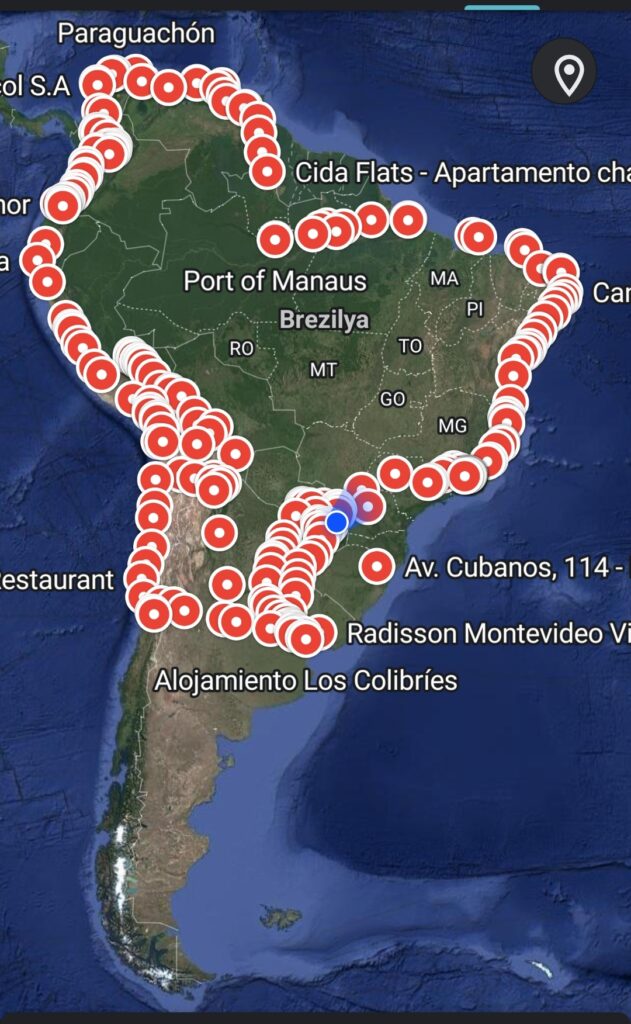

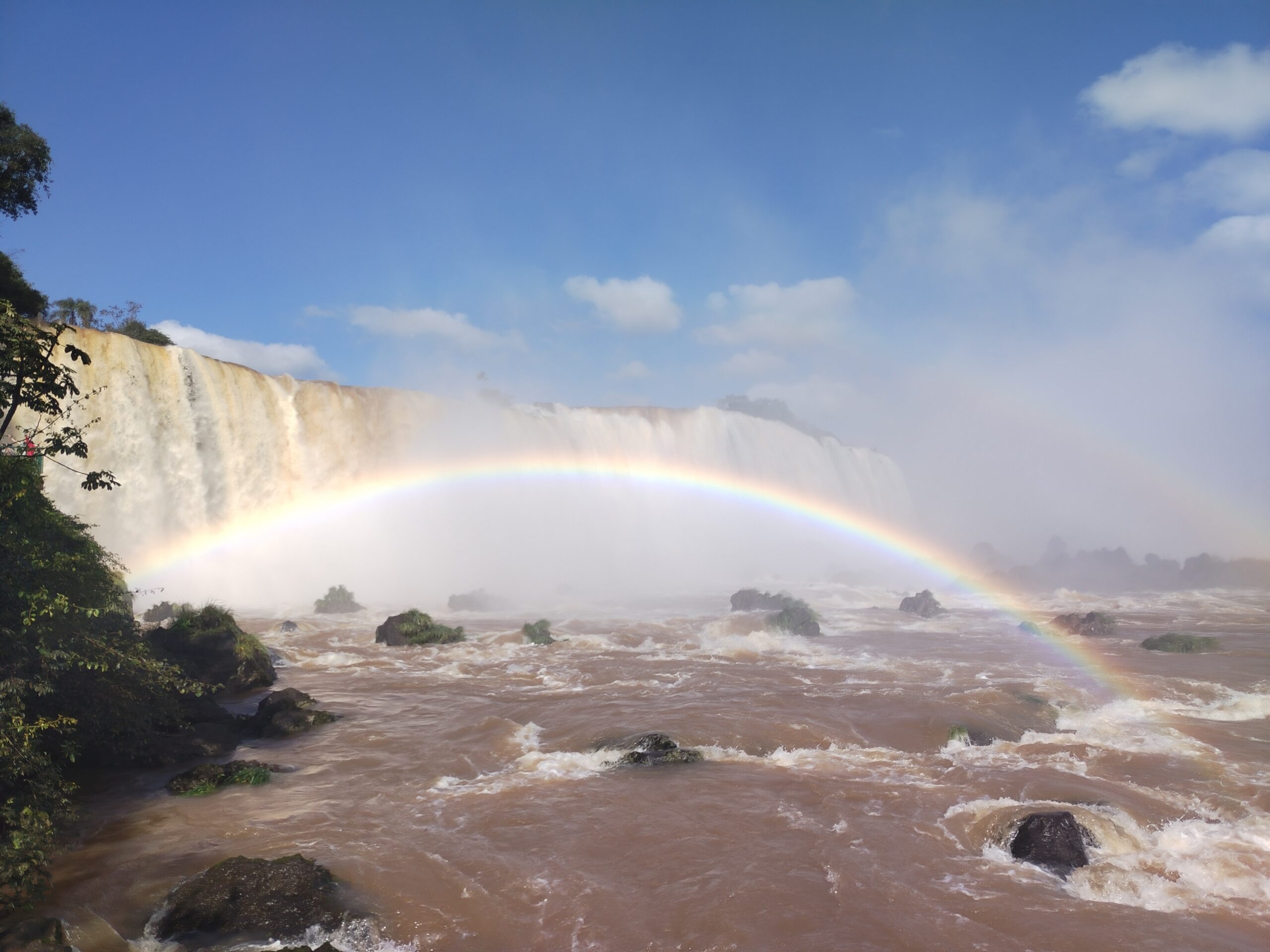
The Brazil side of Iguaçu Falls is one of the places that stays most strongly in your memory during a journey through South America. The Argentina side lets you get deeper into the waterfalls; the Brazil side lets you see the falls from a wide, panoramic and very impressive angle. That is why the two sides should not be seen as alternatives to each other, but as two separate experiences that complement one another.
In this guide, we will focus only on visiting Parque Nacional do Iguaçu on the Brazil side. We will explain step by step how to get to the park from Foz do Iguaçu, how to buy tickets, how much the 2026 entrance fees are, what kind of route the Trilha das Cataratas follows, where to see the Devil’s Throat view, whether Macuco Safari makes sense, and whether Parque das Aves and Itaipu can fit into the same day.
If you would like to see other routes from our South America journey, you can visit our home page; and for all our travel articles, you can visit our blog page.

Image: gicar93, CC BY-SA 3.0, Wikimedia Commons.
Contents
- Brief information about Iguaçu Falls
- Where is the Brazil side of Iguaçu Falls?
- Brazil side or Argentina side?
- How to get to the park from Foz do Iguaçu?
- How to buy a ticket for the Brazil side of Iguaçu Falls?
- 2026 entrance fees and approximate costs
- Visiting hours and entry system
- Trilha das Cataratas walking route
- Devil’s Throat viewpoint
- Macuco Safari and boat tour
- Can Parque das Aves fit into the same day?
- Can it be planned together with Itaipu Dam?
- When to visit Iguaçu Falls?
- Practical information for the Brazil side
- Final notes about the Brazil side of Iguaçu Falls
Brief information about Iguaçu Falls
Iguaçu Falls is one of the most impressive waterfall systems in the world, located on the Iguaçu River on the border between Brazil and Argentina. Most of the waterfalls are on the Argentina side; however, the chance to view them from the widest, most balanced and most photogenic angle is largely offered by the Brazil side.
The area on the Brazil side is located inside Parque Nacional do Iguaçu. The park was established in 1939 and gained UNESCO World Heritage status in 1986. The falls were also listed in 2011 among the “New 7 Wonders of Nature.” If you would like general historical and geographical information about Iguaçu, you can also look at the Iguazu Falls page.
This is not only a waterfall viewpoint; it is also a large protected natural area within the Atlantic Forest biome. Along the way, butterflies, birds, dense greenery, sometimes coatis and humid tropical air accompany you. For this reason, the visit should be seen not as a short stop for taking photos and leaving, but as an experience to walk slowly through nature.
Where is the Brazil side of Iguaçu Falls?
The visitor area on the Brazil side is located in the city of Foz do Iguaçu, in the state of Paraná. The official address of the park is listed as BR-469, Km 18, Parque Nacional do Iguaçu, Foz do Iguaçu / Paraná / Brasil. Access from the city center is generally easy and the road is in good condition.
Foz do Iguaçu is a Brazilian city very close to the borders of Paraguay and Argentina. For those coming from Ciudad del Este, it is possible to cross to the Brazil side over the Friendship Bridge. Those coming from Puerto Iguazú on the Argentina side cross into Brazil over the Tancredo Neves Bridge. However, if a border crossing is involved, passport, residence, visa and vehicle documents should be checked beforehand.
The park entry system is not like a classic open city area. Visitors first arrive at the Visitor Center section, pass the ticket check and are transported by the park’s official buses to the starting point of the waterfall walking route.
Brazil side or Argentina side?
One of the most common questions about Iguaçu Falls is this: is the Brazil side more beautiful, or the Argentina side? In fact, the correct answer, if you have time, is both. Because the two sides show the same waterfalls in very different ways.
On the Argentina side, the walking paths are longer and more varied. With the upper circuit, lower circuit and Devil’s Throat routes, you go deeper into the waterfalls. You walk for a longer time and see different angles from above and beside the falls.
On the Brazil side, the visit is shorter, more organized and more panoramic. Because you walk facing the waterfalls, you watch the entire system from a wide angle. In terms of photography and video, the Brazil side is very strong. Especially for first-time visitors, the feeling of “understanding the size of Iguaçu in one glance” is clearer here.
Our recommendation is to choose the Brazil side if you have only one day and want a short but very impressive experience. If you have two days, the best plan is to dedicate one day to the Brazil side and one day to the Argentina side.
How to get to the park from Foz do Iguaçu?
There are several options for going from Foz do Iguaçu city center to Iguaçu Falls on the Brazil side: public transport, taxi/app vehicles, tour transfer or your own vehicle.
The most economical option is usually city buses. In Foz do Iguaçu, there are lines going toward the airport, Parque das Aves and Cataratas. However, because bus times, departure points and routes can change, it is necessary to check current information from your accommodation or local transport apps.
Taxis or app vehicles are more comfortable and faster. Especially if you are traveling as two people or with a larger group, they save time. On the way back from the park, during busy hours, finding a vehicle may sometimes require waiting, so it is good not to leave the return plan until the very last moment.
It is also possible to go with your own vehicle. The park has a paid parking lot operated by a third party. Those arriving by car still enter through the Visitor Center; private vehicles cannot go directly to the waterfall walking path.
How to buy a ticket for the Brazil side of Iguaçu Falls?
Tickets for the Brazil side park can officially be purchased through the Cataratas do Iguaçu ticket system. During high season, weekends and holiday periods, buying the ticket in advance is safer.
When buying a ticket, the date and visitor type are important. There may be different categories such as foreign visitor, Brazil/Mercosur visitor and local resident. To benefit from a Mercosur discount, the conditions related to citizenship of the relevant country or required documents may vary, so the category explanations should be read carefully before payment.
Buying tickets online especially reduces waiting in the line at the gate. Still, time should be allowed for ticket control, crowds, bus queues and walking time. The Brazil side may look short, but with photo stops, waiting and internal park transport added, it easily fills half a day.
2026 entrance fees and approximate costs
Fees may change seasonally. The figures below are given for planning purposes as of June 2026. Before going, the safest method is to check the current amount on the official ticket site.
| Item | Approximate fee | Note |
|---|---|---|
| Cataratas do Iguaçu full entrance | Approximately R$ 134 | May apply to foreign visitors in the full ticket category. |
| Brazil/Mercosur entrance | Approximately R$ 121 | The category and discount eligibility should be checked on the official site. |
| Children up to 6 years old | Free with document | The current application should be checked before the visit. |
| Macuco Safari | Paid separately | Not included in the park entrance; the price should be checked on the official site. |
| Parque das Aves | Paid separately | It is very close to the park entrance and can be planned for the same day. |
| Itaipu Panorâmica | Approximately R$ 63 | Can be planned as a separate trip in Foz do Iguaçu. |
| Transport and food | Varies according to personal preference | Budget for taxi, bus, parking, restaurant and snacks should also be considered. |
For children, there may be free entry or different applications depending on age. According to official information, children up to 6 years old can enter free with a document; those aged 7 and over pay normal entrance. Student discounts or the classic “half-ticket” system may not always apply in federal parks.
Visiting hours and entry system
Parque Nacional do Iguaçu is open every day throughout the year. In the official visitor guide, hours are listed as 09:00-16:00 on weekdays and 08:30-16:00 on Saturdays and Sundays. Because hours may change due to special events, maintenance, crowds or weather conditions, it is good to check the official site before going.
The park experience starts at the Visitor Center. Ticket control is done here, then visitors are transported by panoramic buses to the stops inside the park. For the main waterfall walk, you get off at the starting point of the Trilha das Cataratas.
The bus system may look like a waste of time at first, but it is necessary to organize traffic inside the park and protect the natural area. Especially late in the morning and during the afternoon return, there may be queues for the buses.
Trilha das Cataratas walking route
The main part of the classic visit on the Brazil side is the Trilha das Cataratas walk. According to official park information, this route is approximately 1.5 kilometers long and is included in the park entrance ticket.
The walk is not technically difficult. The route largely consists of arranged path, stairs, viewpoints and platforms. However, due to humidity, heat, crowds and constant photo stops, the duration may extend. Although the route looks short for someone walking at a normal pace, more than an hour can pass as you stop at the viewpoints.
The most beautiful part of this route is that it progresses facing the waterfalls. As you walk, different angles open up: first a wide and distant view, then closer curtains of waterfalls, and finally the powerful sound of water and misty atmosphere as you approach Devil’s Throat.

Image: Alessandro Alcino da Silva, CC BY-SA 4.0, Wikimedia Commons.

Image: RHalac, CC BY-SA 4.0, Wikimedia Commons.
Devil’s Throat viewpoint
Garganta do Diabo, or Devil’s Throat, is the most powerful and dramatic section of Iguaçu Falls. On the Argentina side, this area is reached from above and with a very close platform. On the Brazil side, Devil’s Throat is felt from across and below.
In the final part of the walk, the sound of the water gradually increases. As you approach the platforms, water droplets in the air, wind and mist begin to hit your face. In some periods, there is so much water vapor that your clothes can get wet in a short time.
Taking photos here is very enjoyable but also difficult. Phone and camera lenses quickly become covered with water droplets. Therefore, a microfiber cloth, waterproof phone case or small plastic bag is useful. The best images are usually taken early in the morning or when the light is not too harsh.

Image: Alessandro Alcino da Silva, CC BY-SA 4.0, Wikimedia Commons.
Macuco Safari and boat tour
Macuco Safari is one of the best-known additional activities on the Brazil side. This tour, done inside the park for a separate fee, usually consists of a short transport/walking section through the forest and then a boat experience on the Iguaçu River approaching the waterfalls.
The most important feature of this tour is that the chance of getting wet is very high. In fact, for most people, that is also the fun part of the tour. As you approach the waterfalls by boat, you feel the power of the water curtain, wind and sound in a much more physical way.
However, Macuco Safari is not included in the park entrance and its ticket price should be calculated separately. When planning for 2026, the current prices and times should be checked on the official Macuco Safari website. Using a waterproof bag for phone, passport, money and electronic items is very important.
For travelers on a limited budget, Macuco Safari is not essential. The classic Trilha das Cataratas route on the Brazil side already offers a very strong experience by itself. But for those who say “I want to feel the waterfall water up close,” it can be an unforgettable extra activity.
Can Parque das Aves fit into the same day?
Parque das Aves is located very close to the entrance of Iguaçu Falls. Therefore, placing it on the same day as the Brazil-side waterfall visit is a practical plan. Especially visiting the waterfalls in the morning and then moving to Parque das Aves in the afternoon can make sense.
In the park, tropical birds, toucans, parrots, flamingos and different species connected with rehabilitation/conservation work can be seen. This place should not be thought of as a classic zoo, but rather as a visitor area focused on protecting birds and the Atlantic Forest ecosystem.
If your time is limited, this plan can be applied: Iguaçu Falls early in the morning, park exit around noon, then Parque das Aves. This plan is easy in terms of transport and allows you to complete two main experiences in the same area in one day.
Can it be planned together with Itaipu Dam?
Itaipu Dam is another important visiting point in Foz do Iguaçu. However, it is not in the same area as the waterfalls; it requires a separate route and time. Therefore, squeezing Iguaçu Falls, Parque das Aves and Itaipu into the same day can be tiring for most people.
The Itaipu Panorâmica tour is a shorter option lasting about 1 hour and 10 minutes, showing the outer areas and viewpoints of the dam. More detailed tours take longer. If you have energy and a vehicle, the waterfalls can be done in the morning and Itaipu in the afternoon; but in this program, time for rest, food and transport remains limited.
In our opinion, the most comfortable plan is to dedicate one day to the Brazil-side waterfalls + Parque das Aves, and another half day to Itaipu. This way, you do not rush the natural beauty and you can visit the city’s other important point more calmly.
When to visit Iguaçu Falls?
Iguaçu Falls can be visited year-round. However, water flow, rainfall, temperature and crowds change according to the period. Summer months can be hot and humid; the chance of rain is higher. During this period, the amount of water can be impressive, but the walk can become more oppressive.
Winter and transition months are generally cooler and more comfortable for walking. However, because the water level changes seasonally, the same view should not always be expected. With very high flow, some platforms may be temporarily closed; with low flow, some branches of the waterfalls may appear calmer.
To avoid crowds, weekdays and early morning hours are better. Holiday periods, long weekends and school holidays can be busier. For photography, morning or afternoon hours can give better results than harsh midday light.
Practical information for the Brazil side
It is good to bring comfortable walking shoes, a light raincoat or quick-drying clothes. Since the chance of getting wet is high in the Devil’s Throat section, you should protect your electronic devices.
Coatis look cute, but they are wild animals. They may rummage through bags, attack food or scratch. Animals should not be fed inside the park and food should not be left in the open.
Keep your passport or identity document with you. Especially if you are coming from Paraguay or Argentina with a border crossing, documents become even more important. If you come by car, check insurance, registration, border crossing rules and park parking in advance.
There are restaurants and sales points in the park, but prices may be higher than in the city center. It is good to be prepared with water, small snacks and spare clothes. Still, as in archaeological/protected areas, trash should be carried with you and park rules should be followed.
If you are curious about the story behind our journey through Foz do Iguaçu and its surroundings, you can find more personal notes in the about us section.

Image: Reynaldostein, CC BY-SA 3.0, Wikimedia Commons.

Image: Anagoria, CC BY 3.0, Wikimedia Commons.
Final notes about the Brazil side of Iguaçu Falls
A trip to Iguaçu Falls on the Brazil side gives the chance to see one of the world’s most impressive natural landscapes without requiring long walks or complicated route planning. The park system is organized, the walking route is clear and the view is powerful from beginning to end.
The biggest advantage of this side is its panoramic perspective. Seeing all the waterfalls like a wall in front of you, feeling the sound and moisture of the water and finally approaching Devil’s Throat is an unforgettable experience.
For the right plan, you should buy your ticket in advance, check visiting hours, prepare according to the weather and avoid squeezing too many activities into the same day. The Brazil side may look short, but it is a place that should not be rushed. For our other travel notes from South America, you can also visit the blog.
Source note: For current ticket and hour information, the official Cataratas do Iguaçu website; for ticket purchase, the official ticket system; for Macuco Safari, Macuco Safari; and for Itaipu visits, Turismo Itaipu should be checked. Prices and hours may change seasonally.
Follow us
You can also follow our social media accounts for short videos, photos and instant posts from our journey.
- YouTube Shorts: Watch our short road videos
- Instagram: Photos and daily posts
- Facebook: Our Facebook page