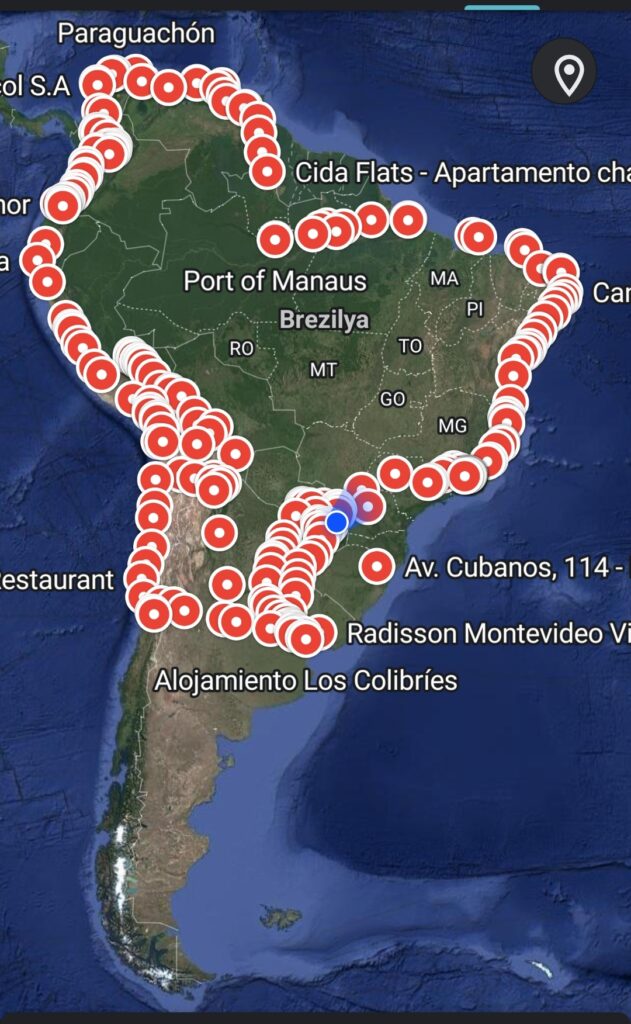

During our journey through South America, Machu Picchu was undoubtedly one of the places that excited us the most. One of the most famous ancient cities in the world… That mystical city we had seen in documentaries since childhood, read about in books, and come across in films. A stone civilization standing among the clouds, at the summit of the Andes Mountains.
But we had never imagined that reaching it would be so difficult, exhausting, and unforgettable at the same time. For us, Machu Picchu was not only a place to see; it also meant patience, uncertainty, road fatigue, and finally the fulfillment of a dream.
You can find the other stops of this long journey on our English blog page and read our story on the about us page.
The Machu Picchu plan that began in Cusco
Everything began in the city of Cusco. First, we started researching how to get to Machu Picchu. The first thing we learned was this: getting there was not as easy as we had imagined.
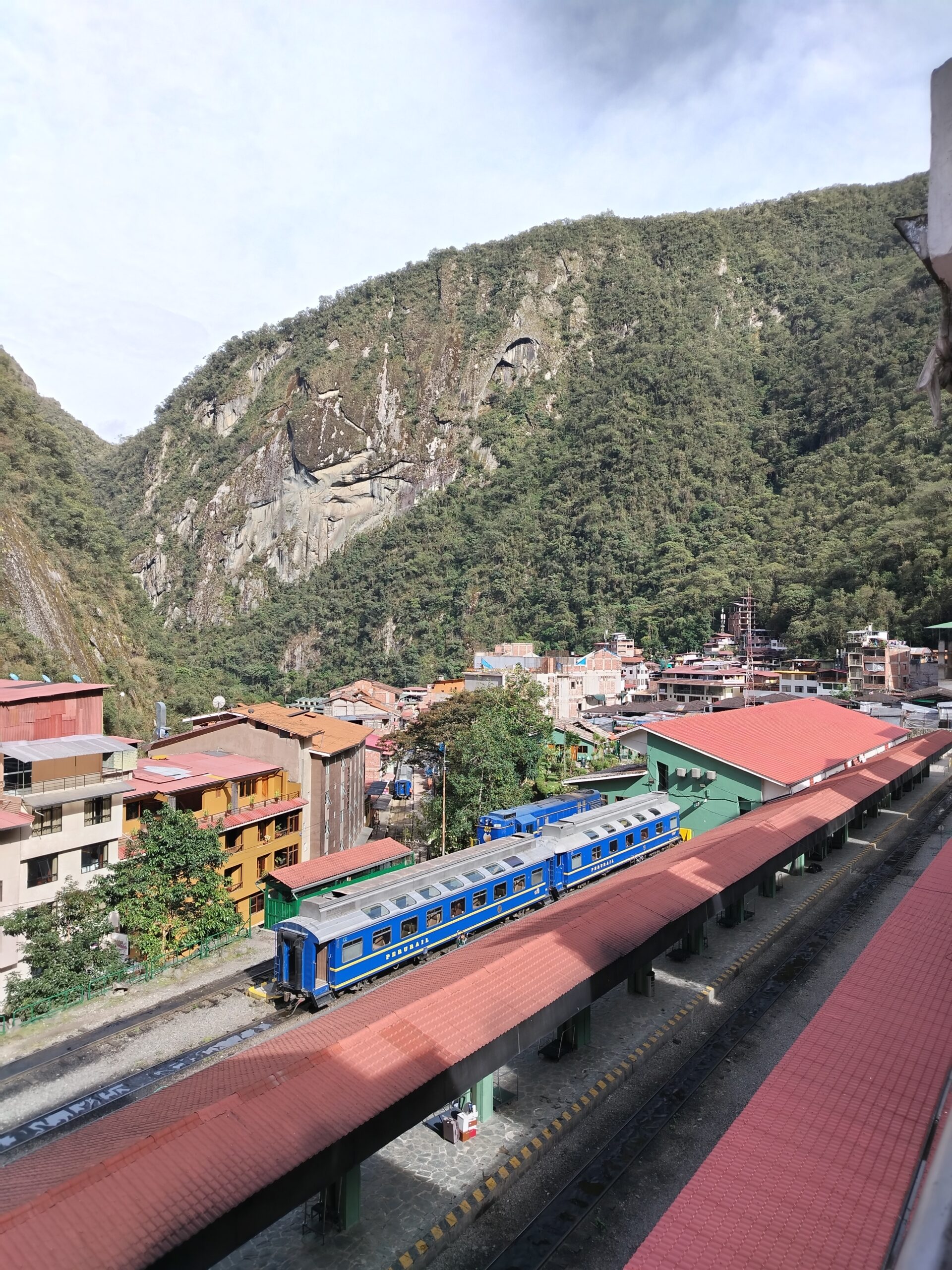
There were different options for going to Machu Picchu from Cusco. The most popular option was the train journey. With trains operated by companies such as PeruRail and Inca Rail, you could depart from Cusco or Ollantaytambo and reach the town of Aguas Calientes. The journey was beautiful, comfortable, and of course the most touristic option. However, the prices were quite high for us. Train tickets varied depending on the season, time, and class, but a one-way ticket per person could reach around 60–100 dollars. When the return was added, it meant a serious budget for two people.
We, however, had one advantage: our car.
So we began looking for alternative routes. We talked to people, asked drivers, and went in and out of small tour offices. In the end, the route we learned was this: first we would continue through the Ollantaytambo side, then cross high Andean passes, and then drive as far as the area called Hidroeléctrica. From there, we would follow the walking path beside the train tracks and walk about 10–12 kilometers to reach Aguas Calientes, that is, the town of Machu Picchu Pueblo.
It sounded romantic and adventurous. In reality, it was much harsher.
Into the fog
When we set out on the mountain road, it was already beginning to get dark. At first, everything looked normal. But as we climbed higher, the weather began to change. First a thin fog appeared. Then the rain started. After a while, we could hardly see what was in front of us.
Literally, we could see only one or two meters ahead.
We were on one of the high passes of the Andes Mountains. The altitude was rising to around 4,300–4,800 meters. The road was narrow, winding, and frightening. On one side there was a cliff, on the other side the mountain. Because of the rain, there had been landslides. Stones had fallen onto the road. And we had to drive over those stones.
As we slowly moved the car forward, the same feeling kept running through us: “What if we get stuck here?”
At night, when fog and mountains come together, the human mind works differently. Although the road did not look very long in terms of kilometers, it took hours. Because it was impossible to go fast. Especially the dirt section that started after the asphalt road ended was truly difficult. For about 30 kilometers, there was no proper asphalt. There were roadworks. There was mud. There were large potholes. In some places, there was only enough space for a single vehicle to pass.
Actually, it was more like a road for 4×4 vehicles. We, however, were driving a normal car.
The smell of gasoline and fear
At one point, we stopped for a restroom break. Just then, we noticed something. Liquid was leaking from under the car. At first, we thought it was oil. Then, when we smelled it, we realized the truth: it was gasoline.
While passing over the landslide stones, the underside of the car had hit the ground and the gasoline pipe had been punctured. In an instant, it felt as if all our plans had collapsed. We were on a deserted mountain road. It was night. There was fog. There was no phone signal. Fuel was leaking onto the ground.
At that moment, we truly did not know what to do. Did we have to go back to Cusco? But how? The fuel was constantly draining.
We remember looking at each other in silence for a while. In moments like that, a person both panics and, incredibly, tries to find a solution. Then we started trying things with whatever we had. Plastic bags, rubber pieces, tightening and pressing… Not a professional repair at all, but a repair made entirely with the instinct to survive.
And unbelievably, it worked. The fuel flow stopped to a large extent. Maybe it was not perfect, but it was good enough not to leave us stranded on the road.
That was the moment we understood: sometimes the greatest luxury in travel is not comfort, but being able to continue.
Arriving at Hidroeléctrica
It was already getting close to night. Finally, we reached the Hidroeléctrica area. This was a transit point formed around a small hydroelectric plant. Cars were left here, and people walked from this point on.
We were tired. We truly felt exhausted. We slept in the car for a few hours. Around four o’clock, movement began around us. Other tourists, guides, and small minibuses began arriving. We got ready and started walking too.
And after that moment, one of the most beautiful parts of the journey began.
Walking beside the train tracks
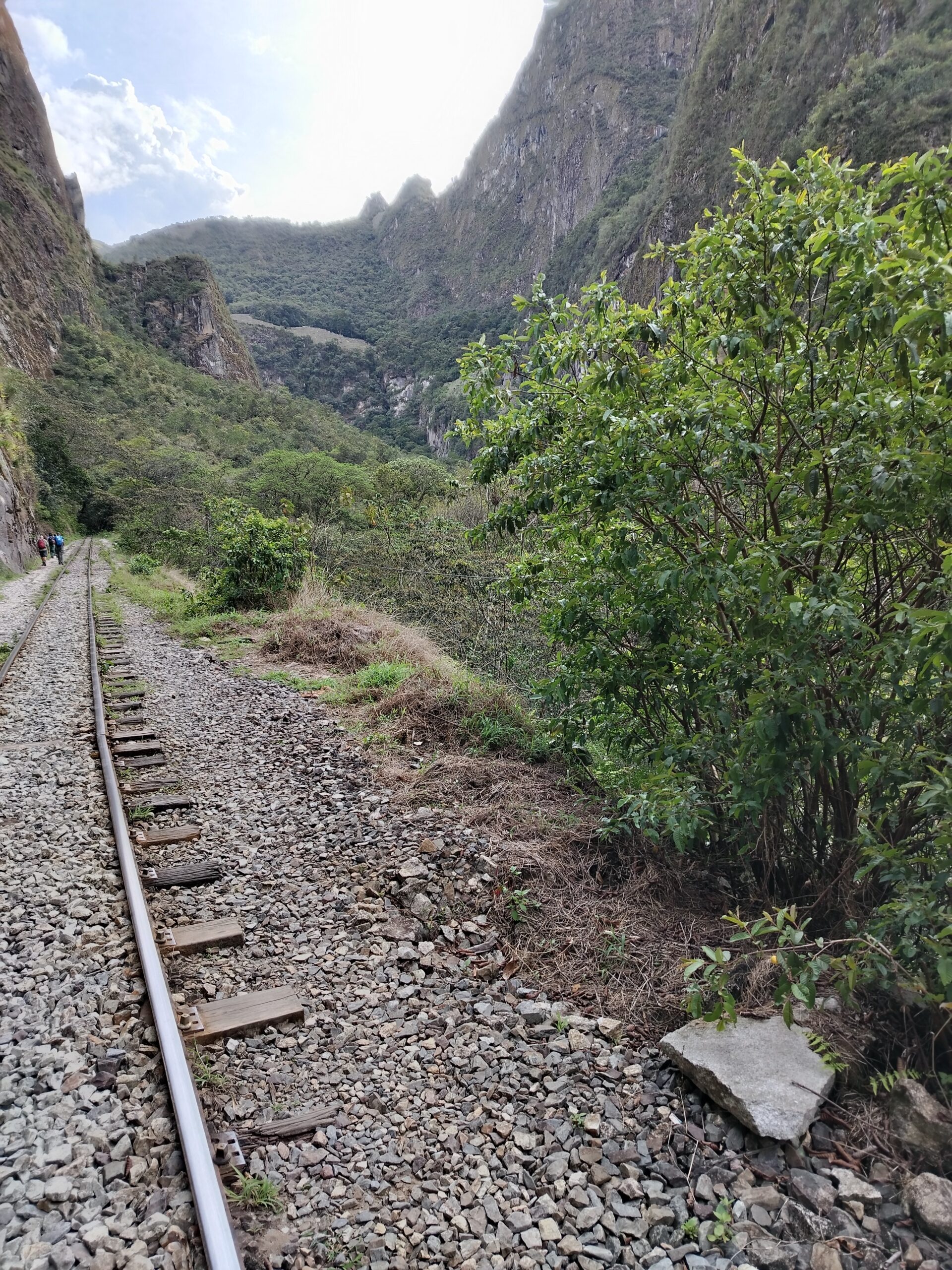
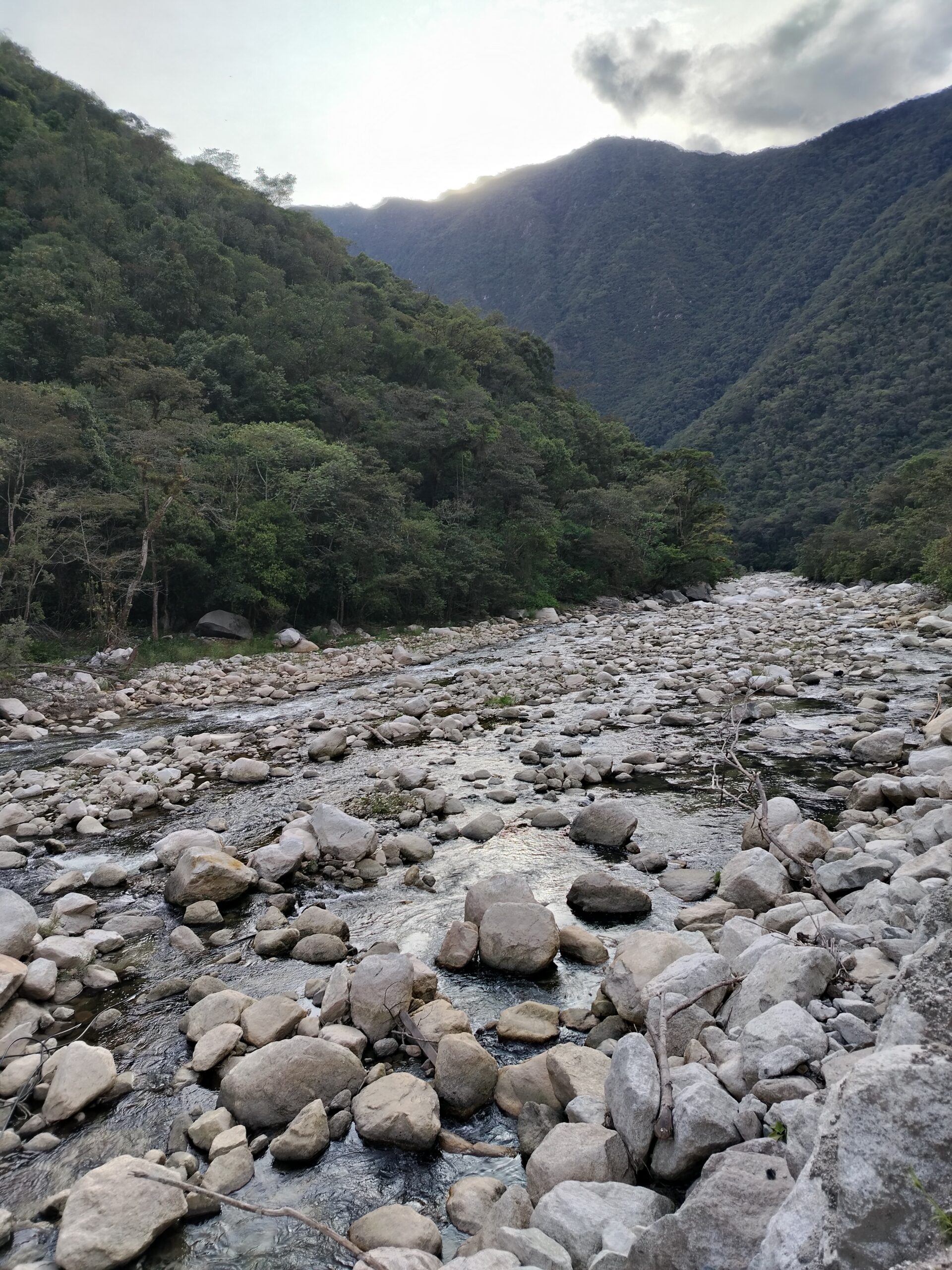
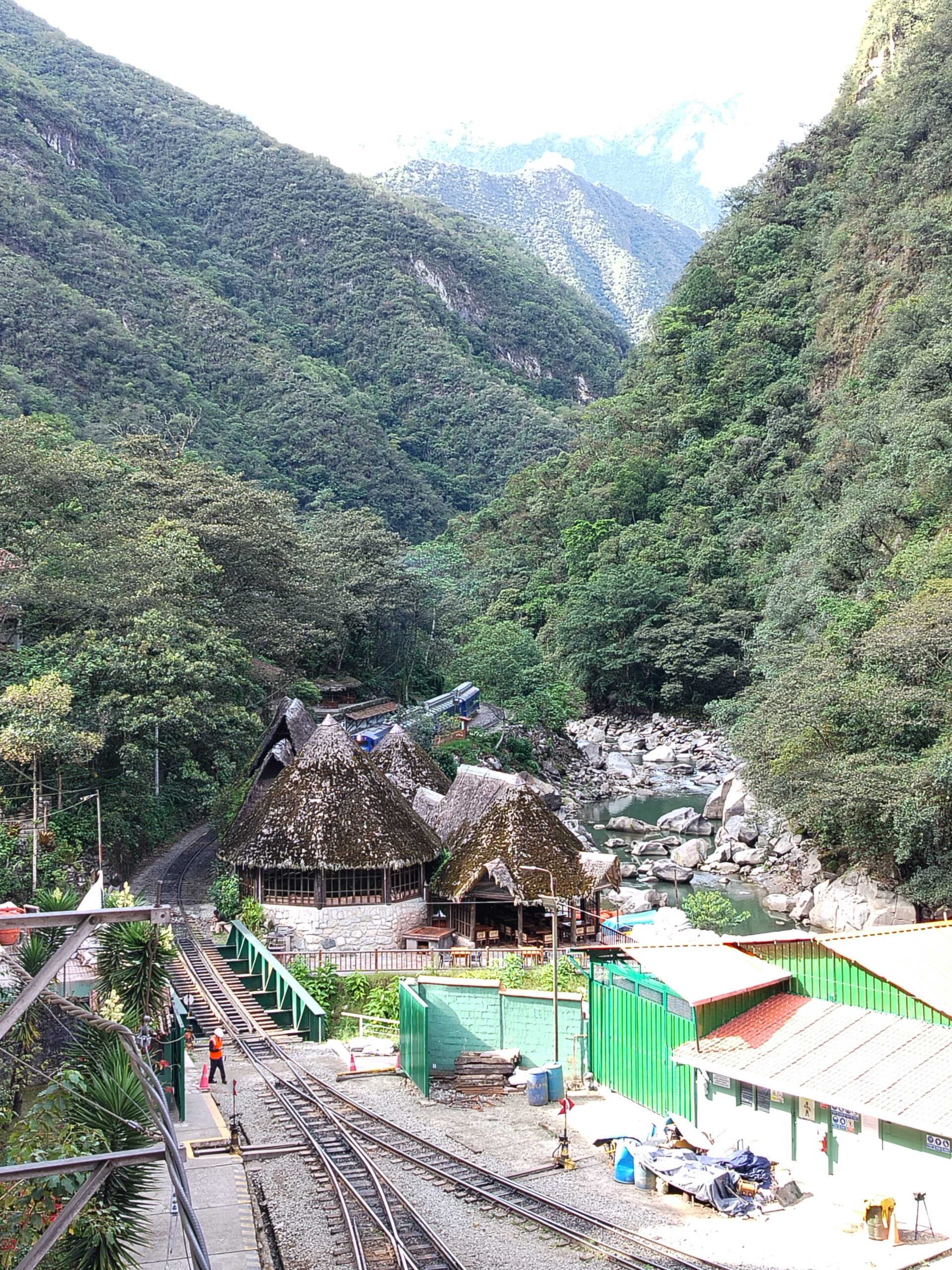
We still cannot forget that walk. On one side was the stony bed of the Urubamba River, on the other side cloud forests, giant cliffs, and people walking along the tracks… Sometimes the sound of a train coming from far away, sometimes complete silence.
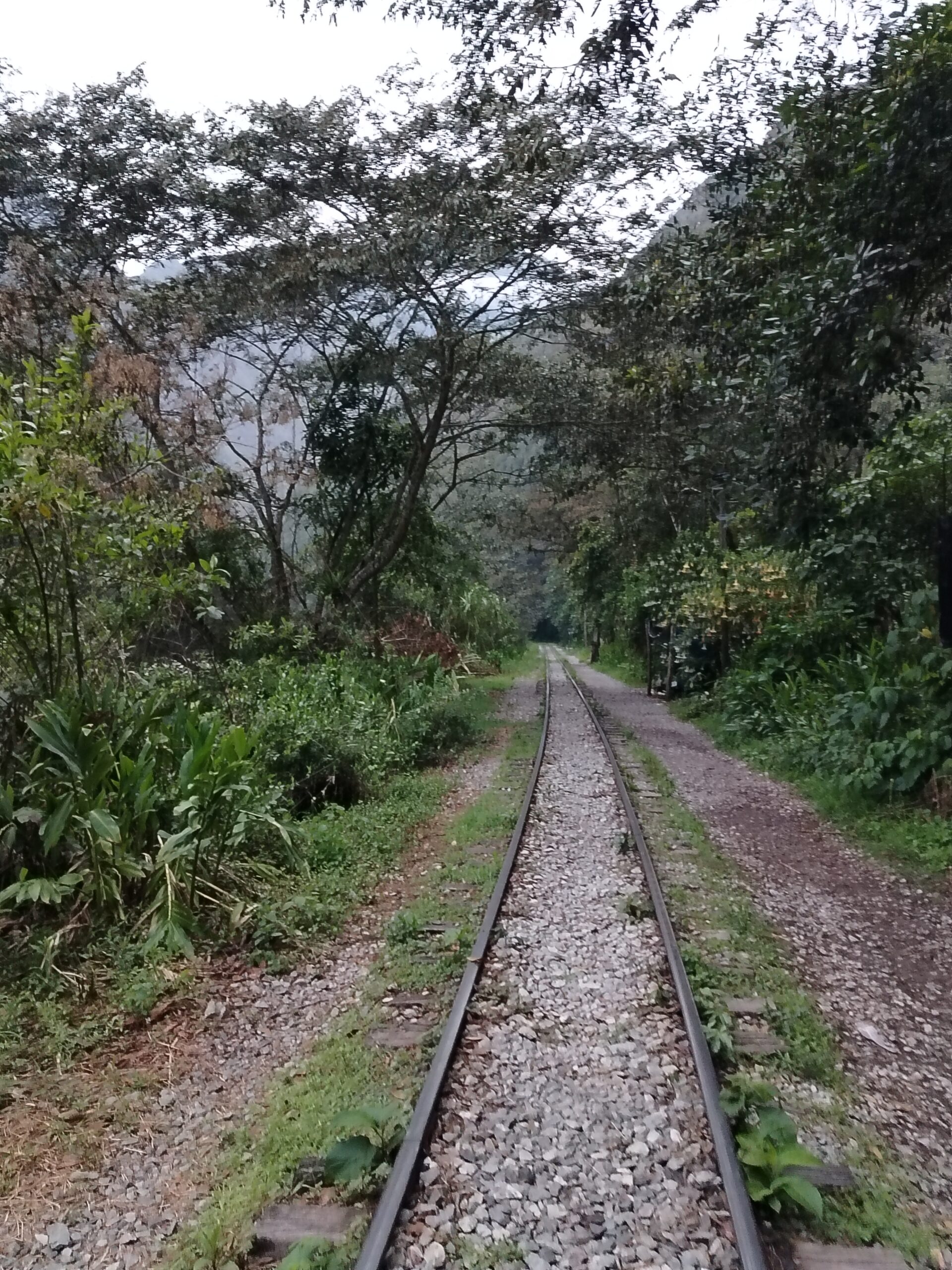
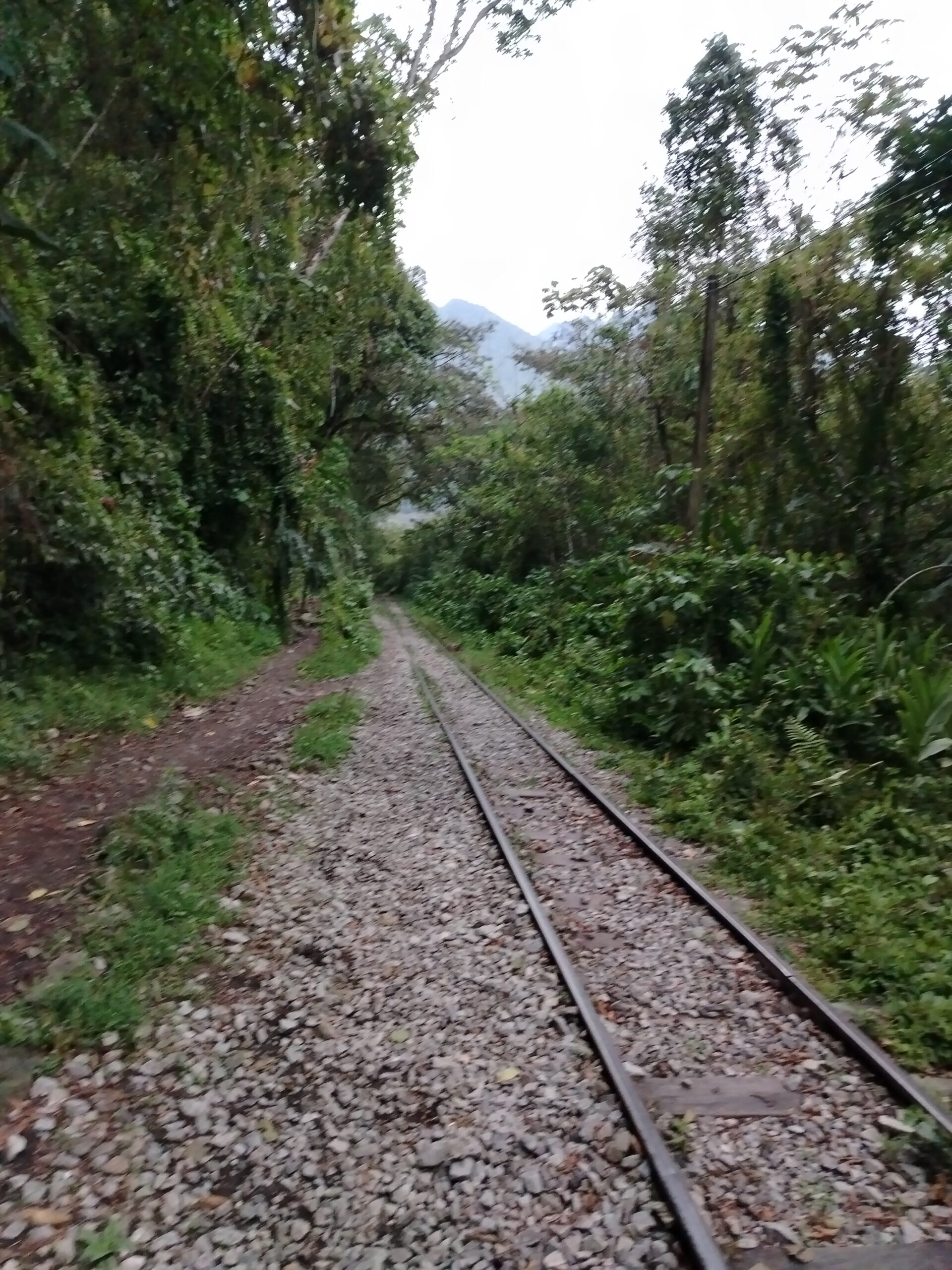
Walking through that wild nature of the Andes Mountains was truly a different feeling. The route was about 10–12 kilometers and took an average of 2.5–3.5 hours. But this walk was not only a means of transportation. For us, it was one of the most real, simple, and unforgettable parts of the Machu Picchu journey.
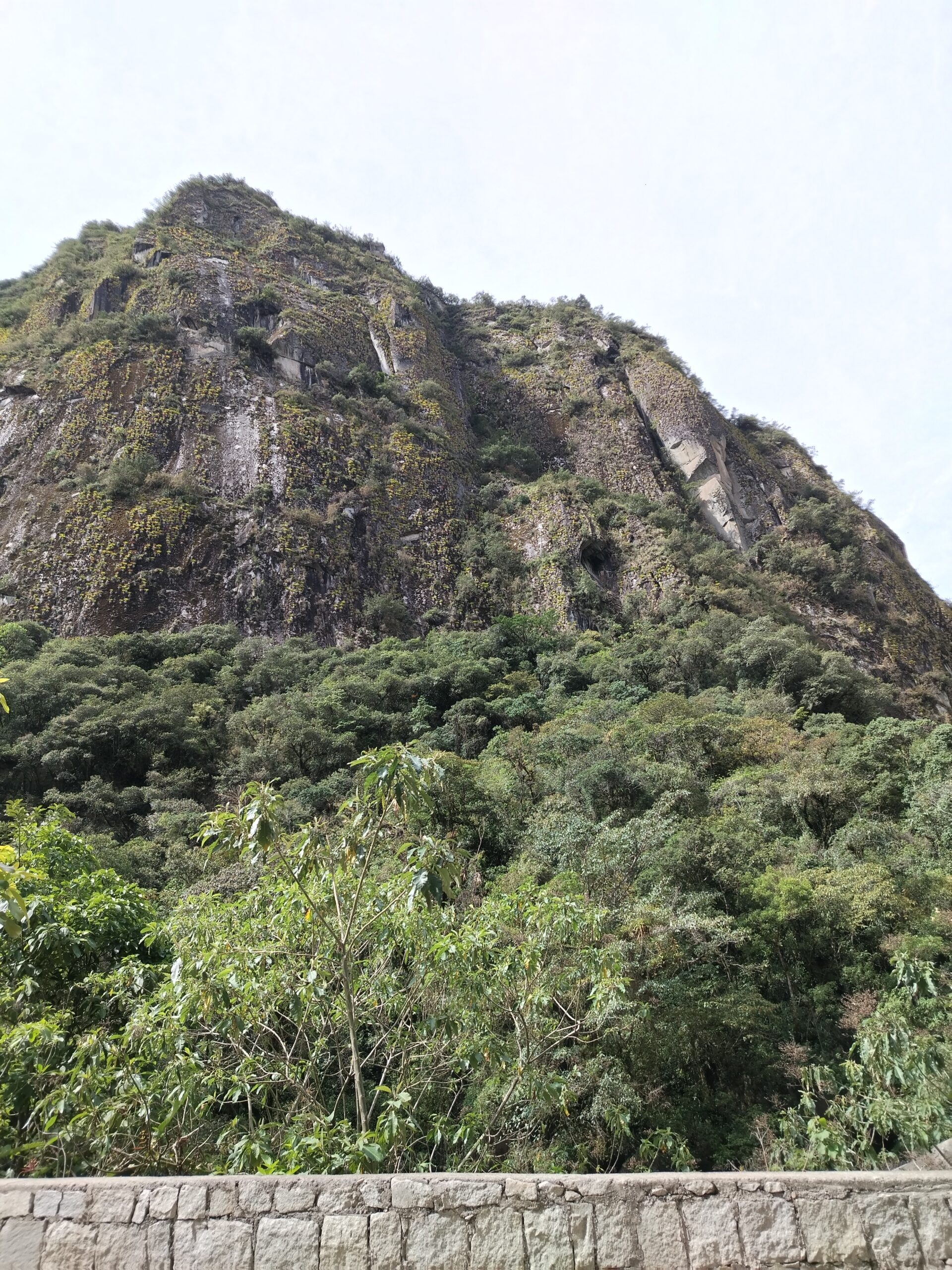
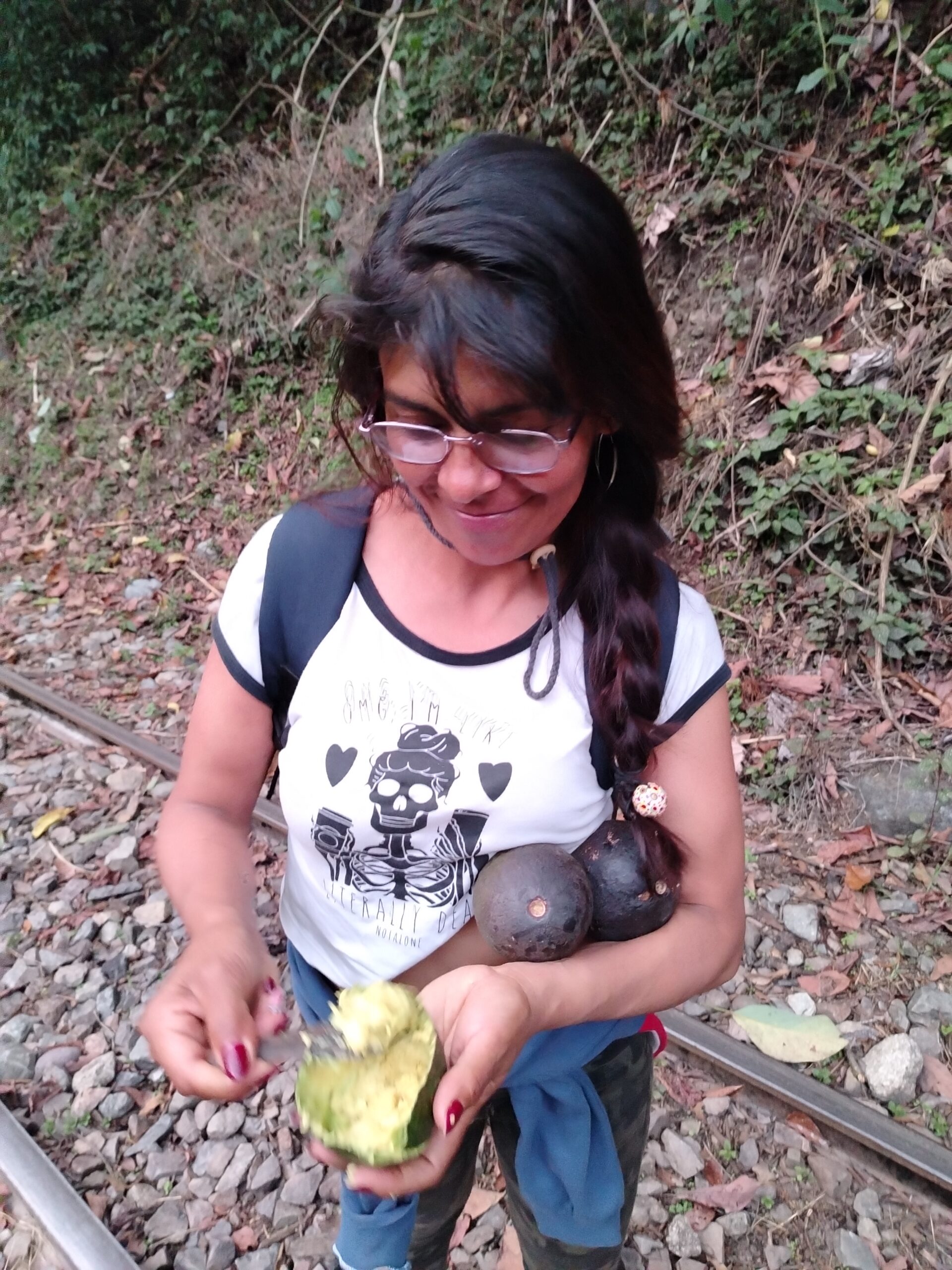
Even the small details along the way stayed in our memory. The avocados we found on the ground, for example… We sat on a rock and ate avocados. Maybe it was not the most luxurious meal of our lives, but at that moment it felt incredibly good. Because sometimes happiness is simply being able to share something in nature when you are tired.
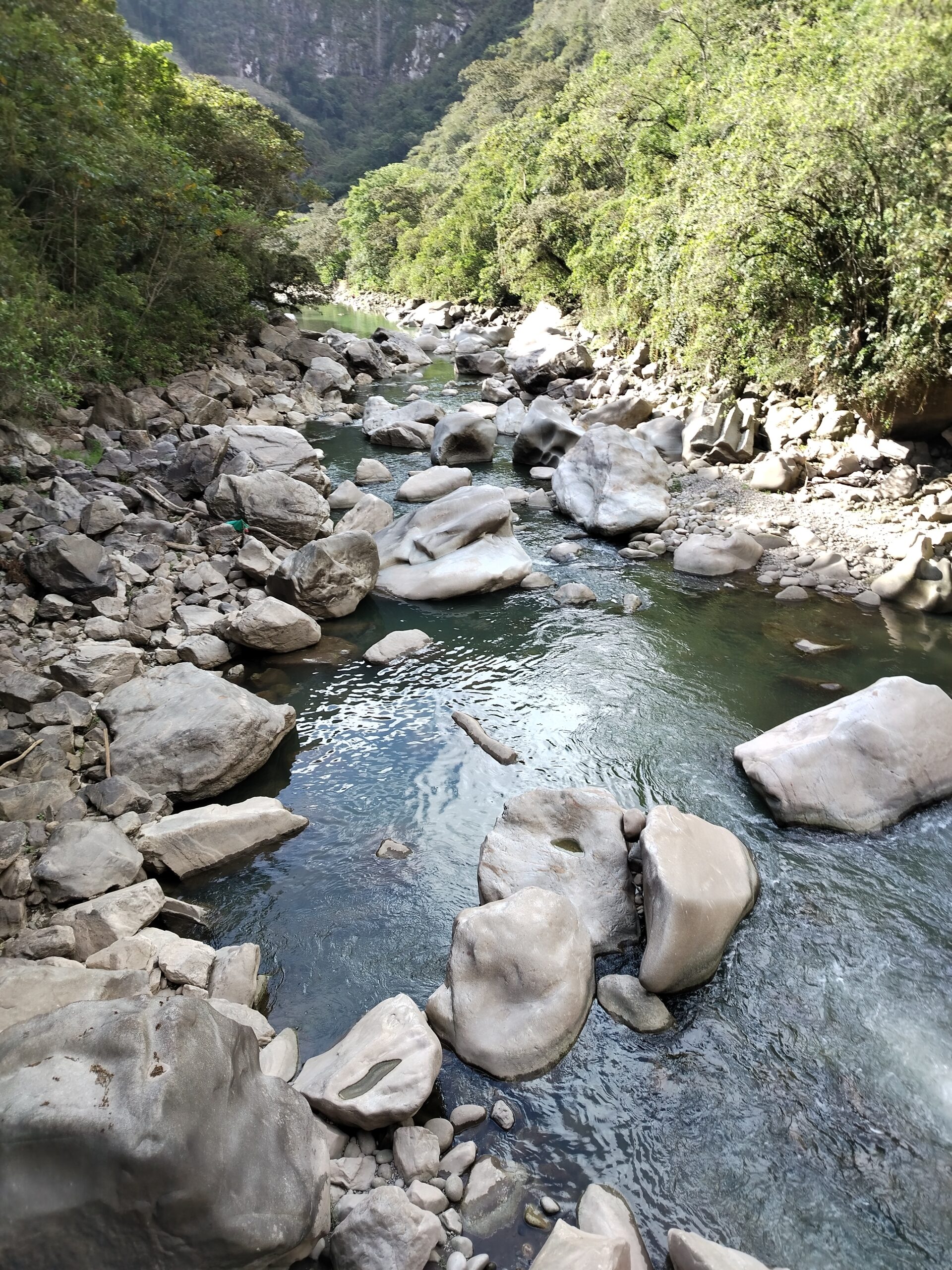
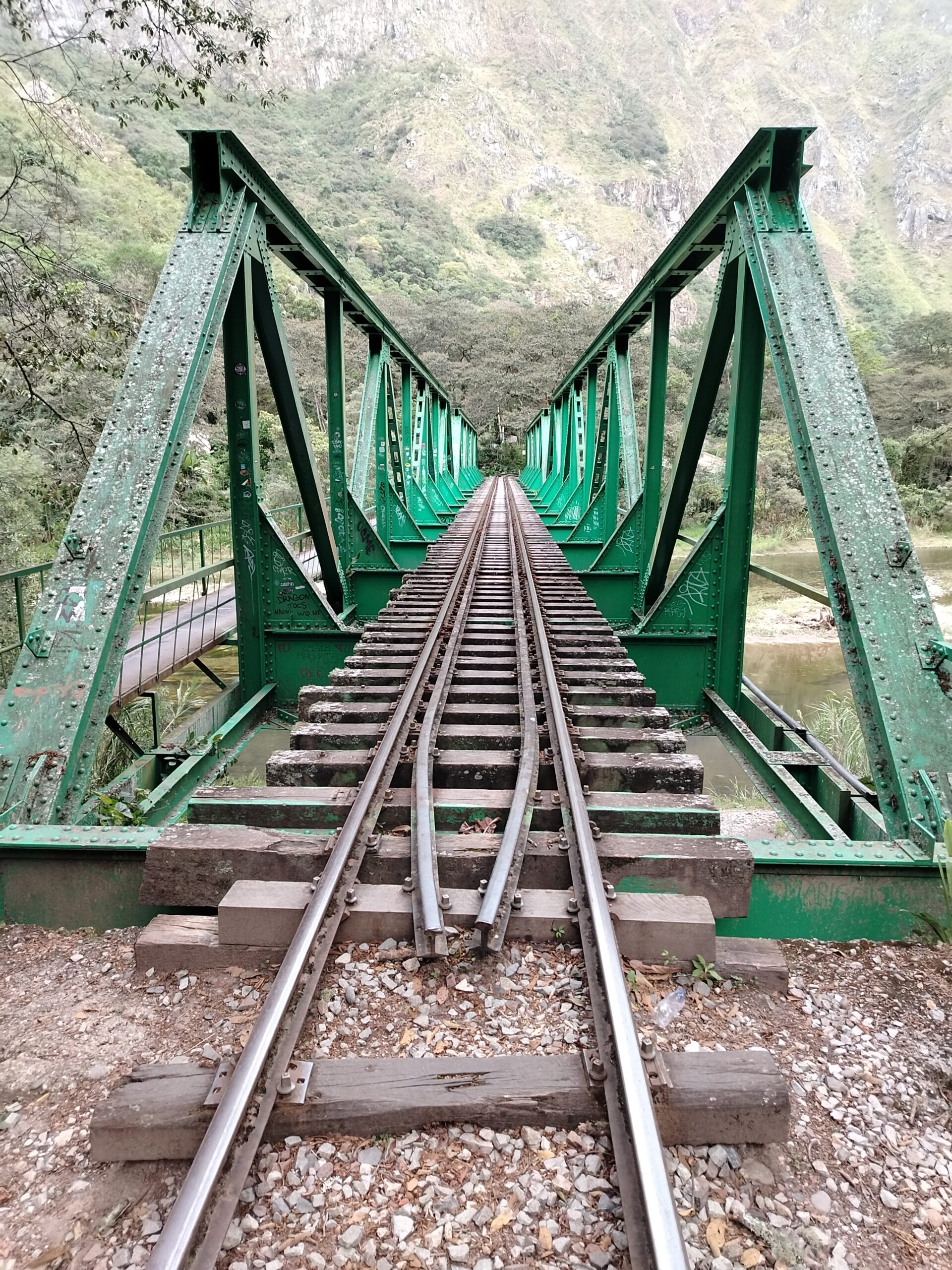
As we approached Aguas Calientes, the river, bridges, and stony valley made the final part of the route even more impressive.
The reality of Aguas Calientes
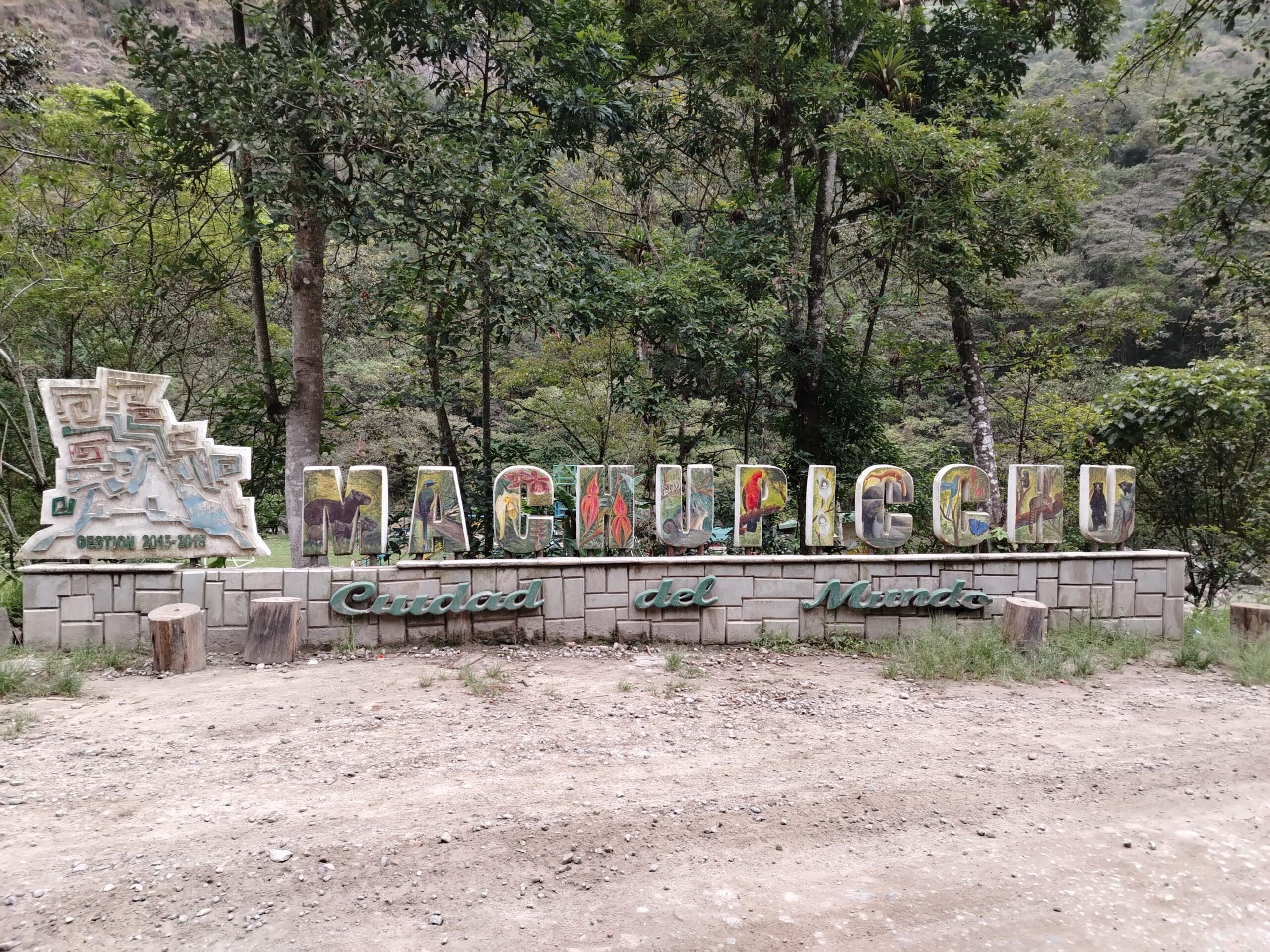
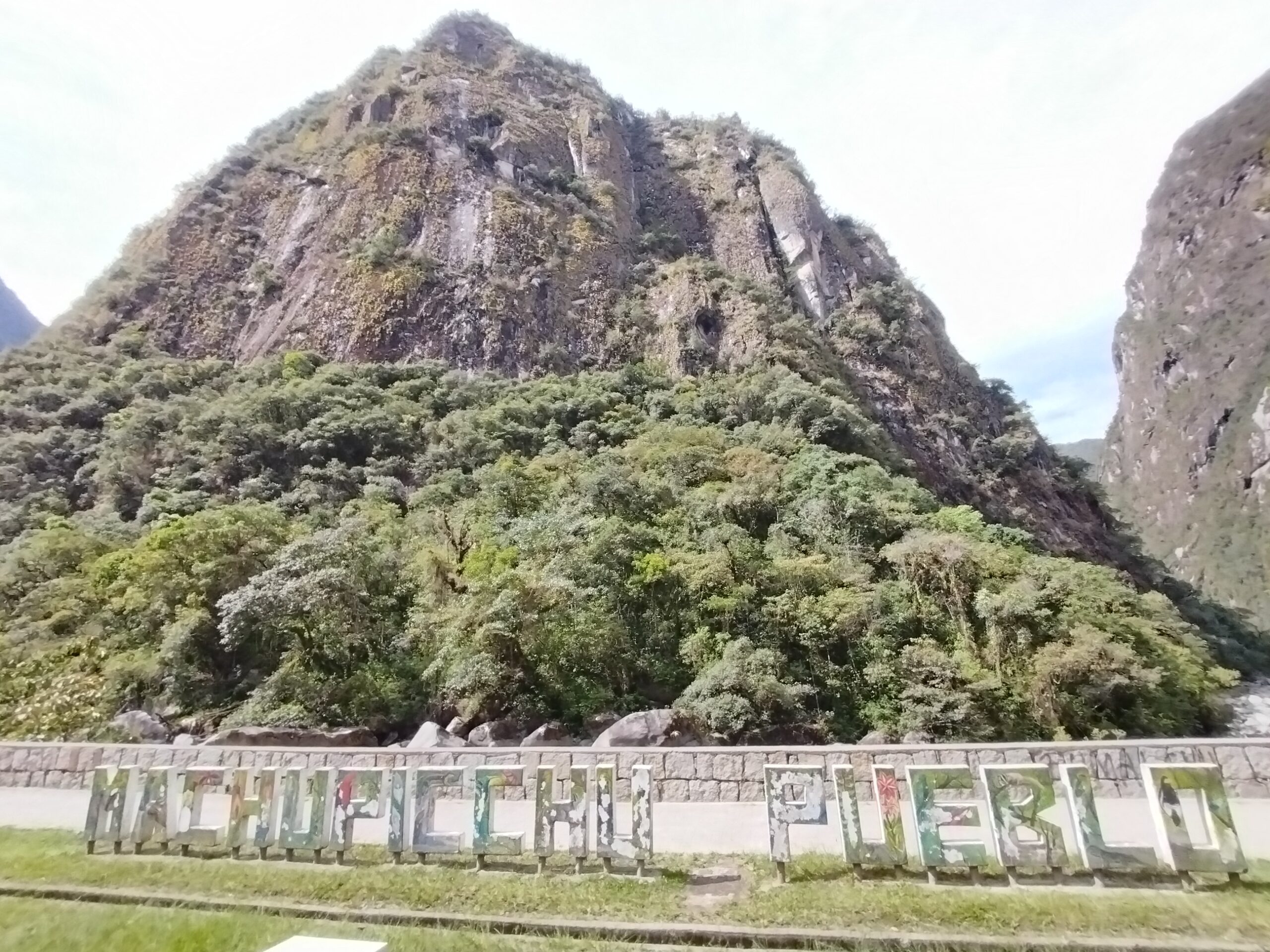
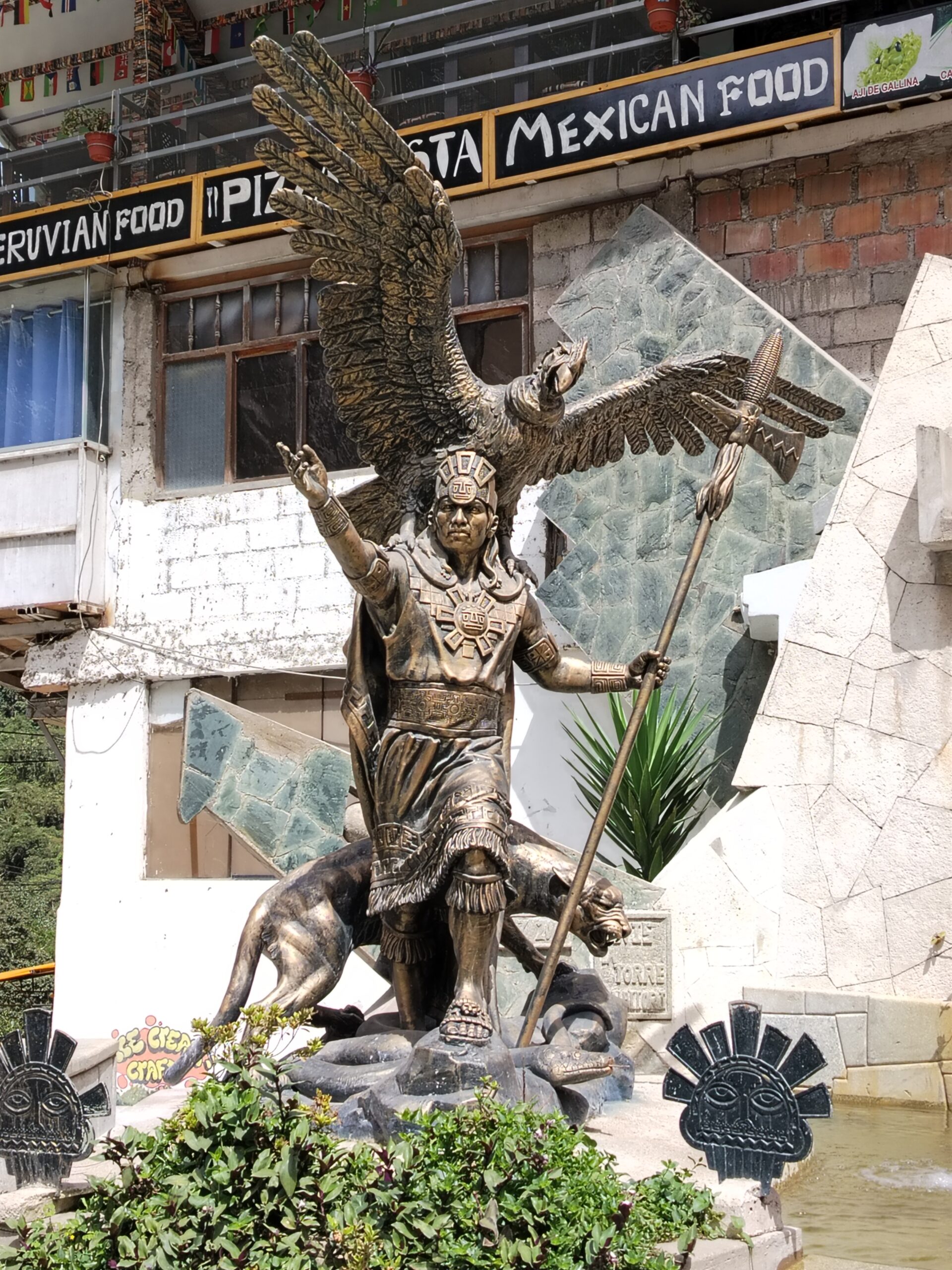
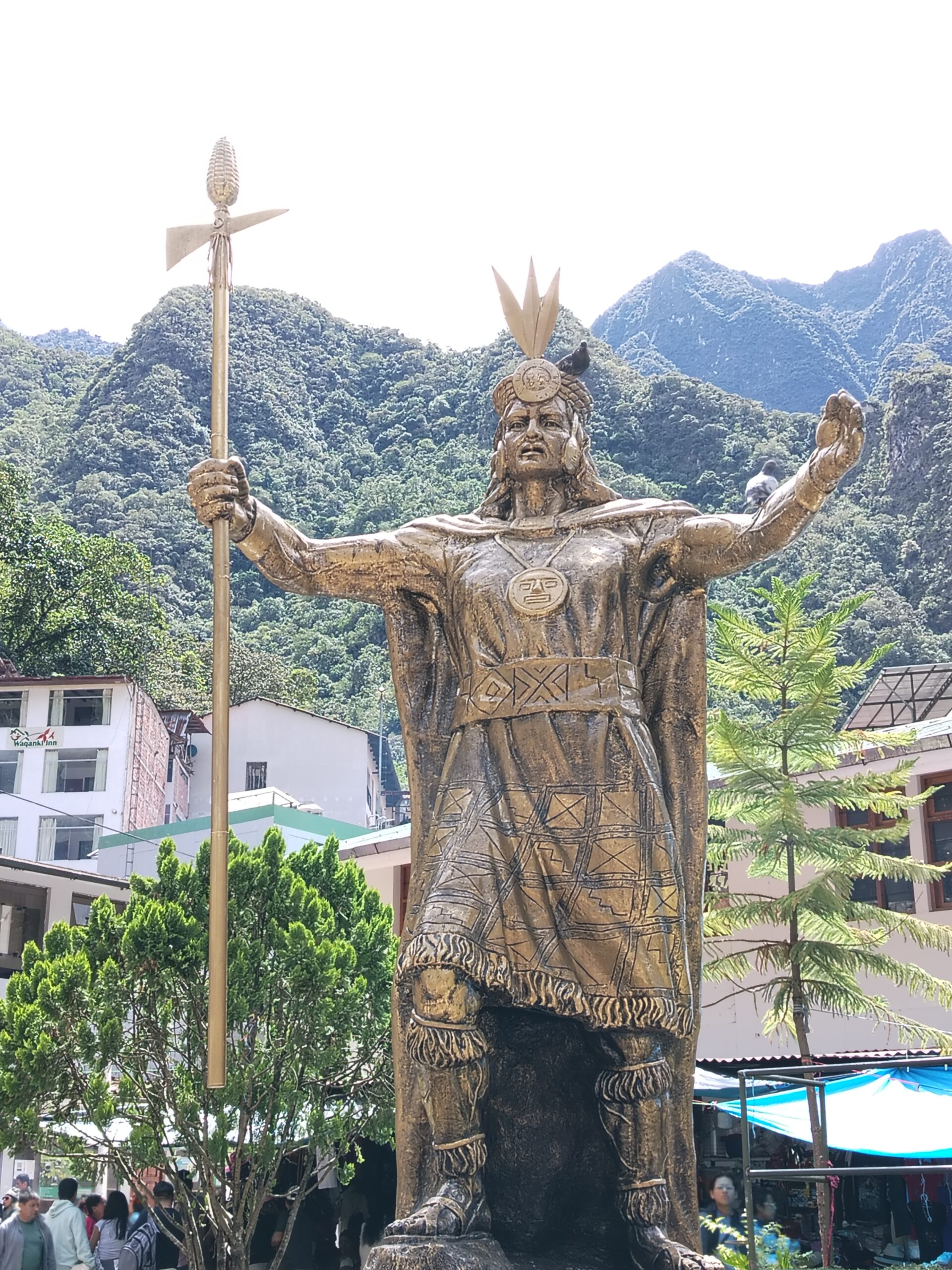
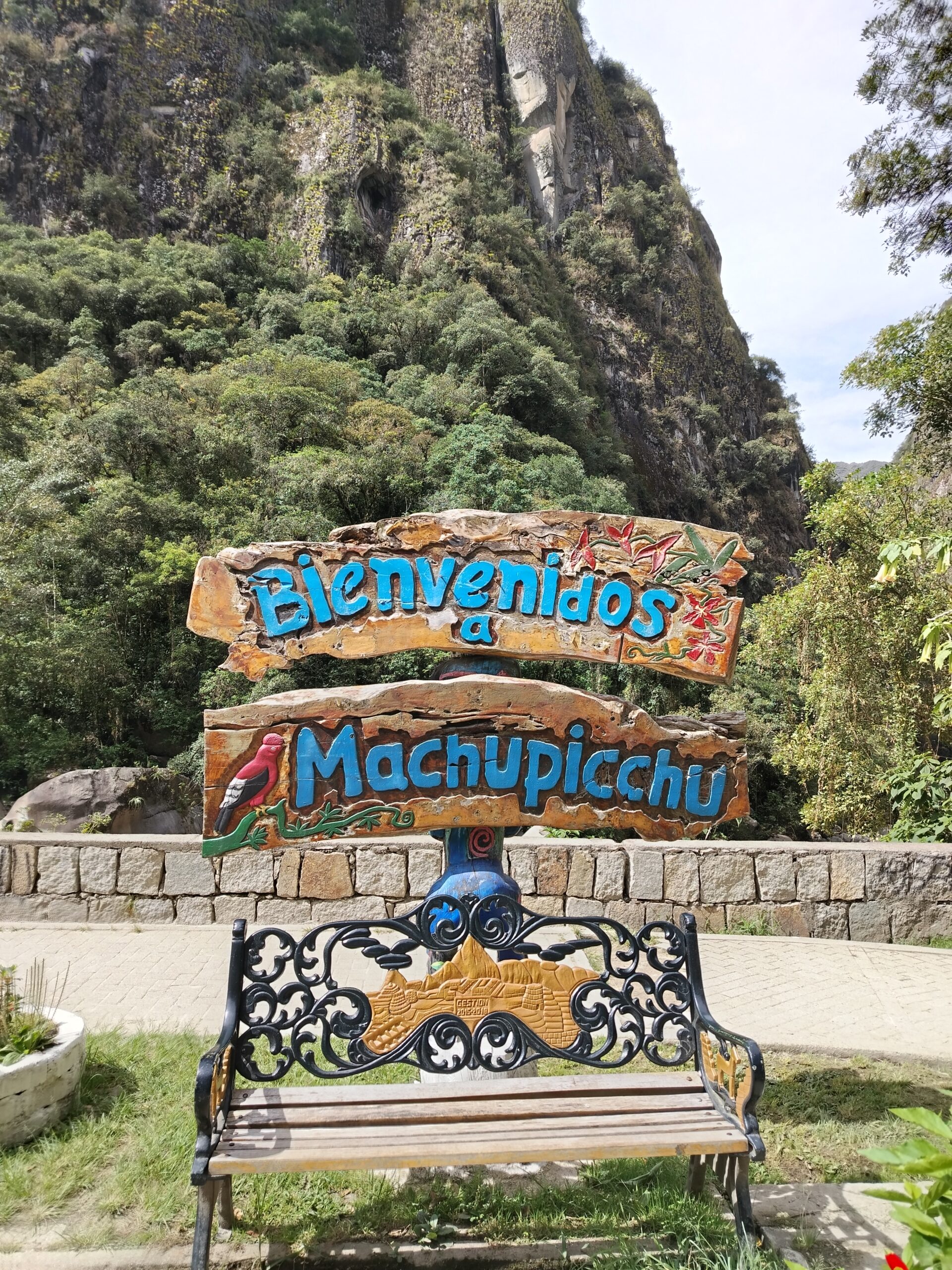
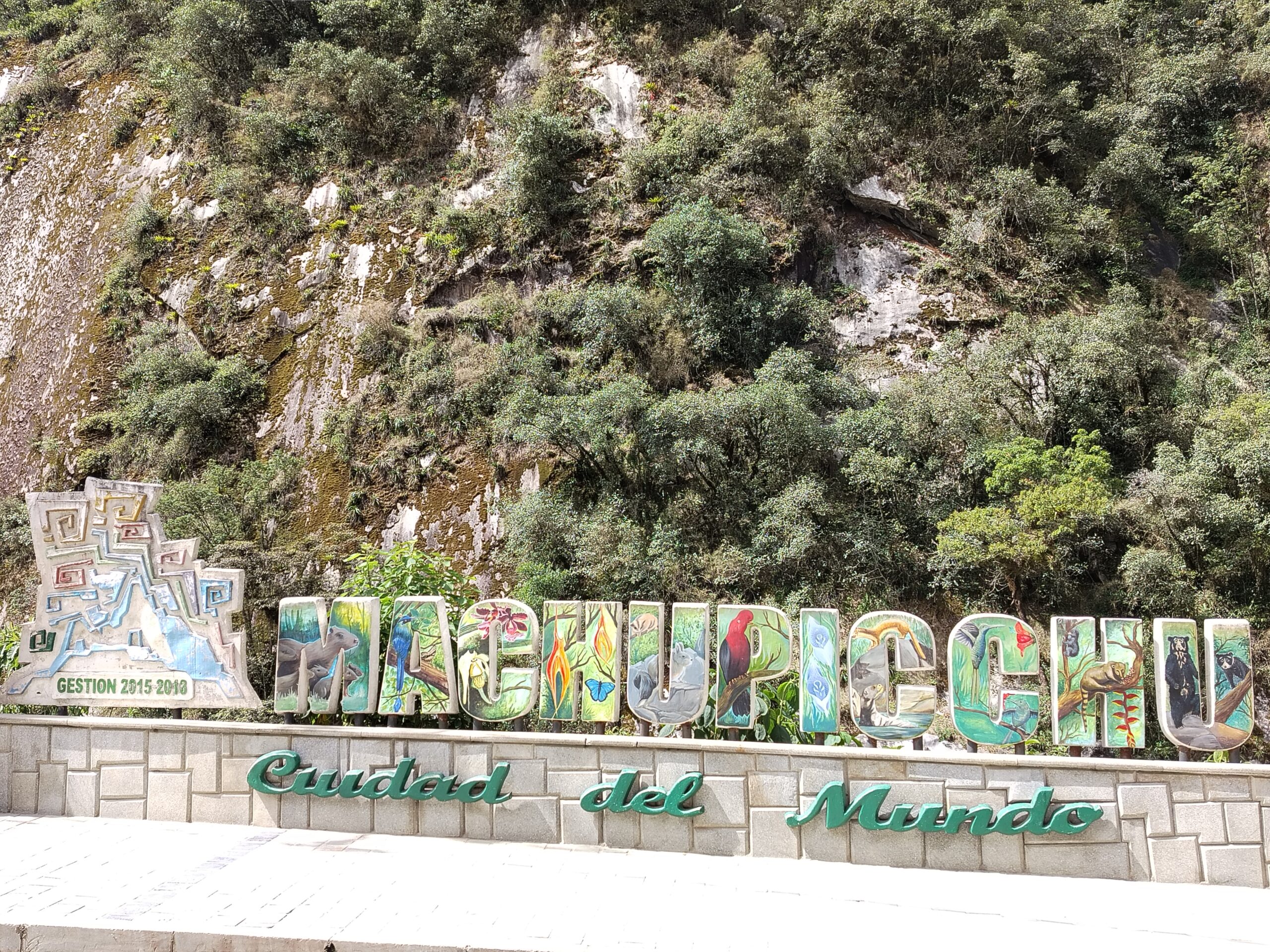
In the morning, around seven o’clock, we reached the town of Aguas Calientes. Today it is also better known as Machu Picchu Pueblo. It is a small but crowded town squeezed between the mountains, grown around the train tracks, and living entirely with the movement of people going to Machu Picchu.
Our thought was very simple: “We will buy the ticket and go up to Machu Picchu right away.” But things do not work that way.
There was an incredible queue in the town. Even early in the morning, hundreds of people were waiting in line. We also joined the queue. Hours later, an official looked at our passports and, instead of giving us tickets, gave us a number.
Yes, just a number.
Because the system worked like this: first you wait in line. Then you are given a “turn to buy a ticket.” Then you are called again in the afternoon. Only then can you actually buy the real ticket.
And the most interesting part was this: that ticket may not be for the same day. Depending on your luck, it may be for the next day, two days later, or even three days later. In our case, luckily, it was for the next day. This meant that we had to stay there.
Honestly, we found this system very tiring. Because it makes it almost impossible for everyone who comes to Machu Picchu to return on the same day. Whether you come by train or on foot… The system forces you to stay in the town. It may be an arrangement designed to support local tourism. But as visitors, what we felt was more like this: “This is a somewhat compulsory waiting system.”
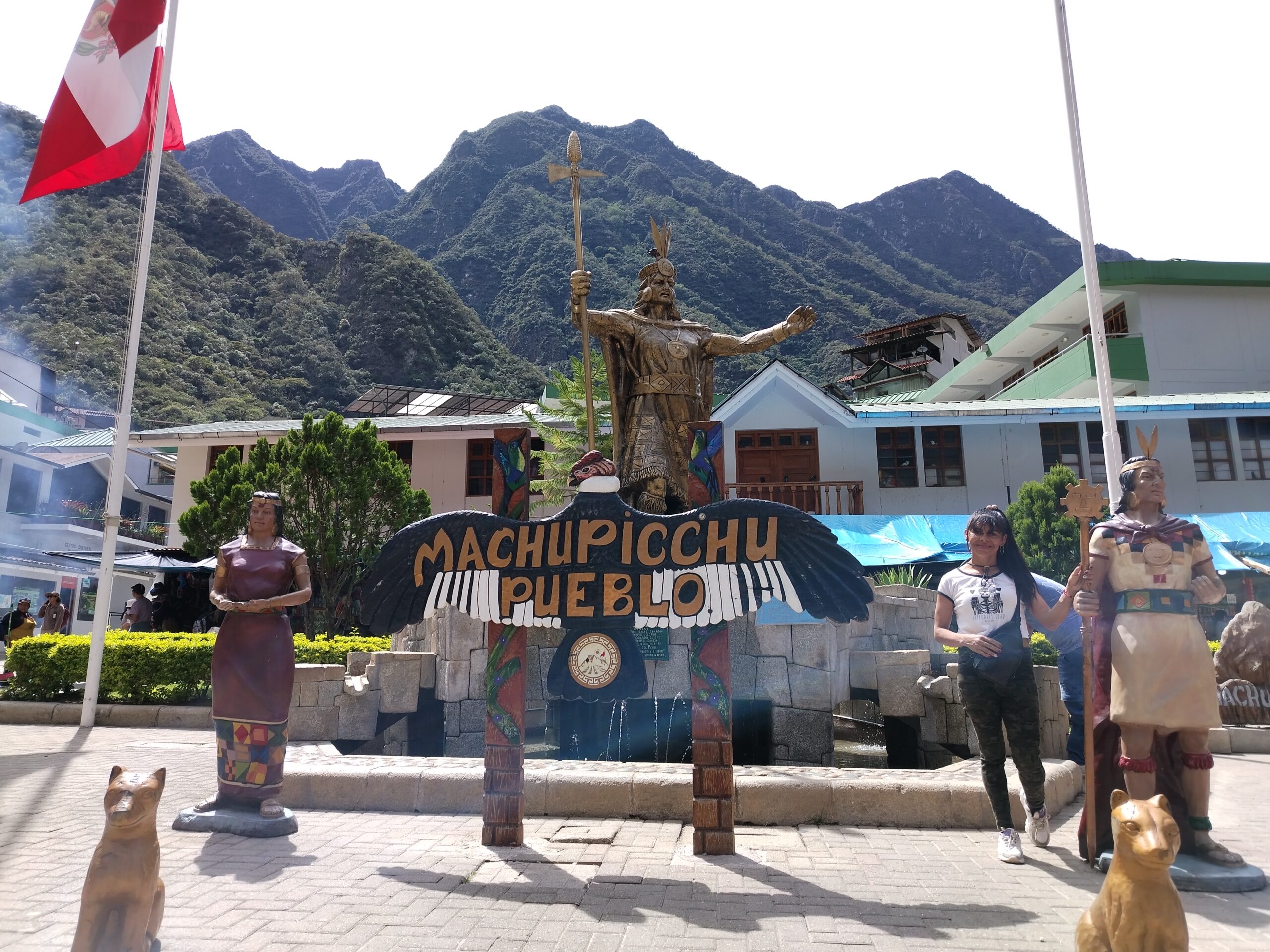
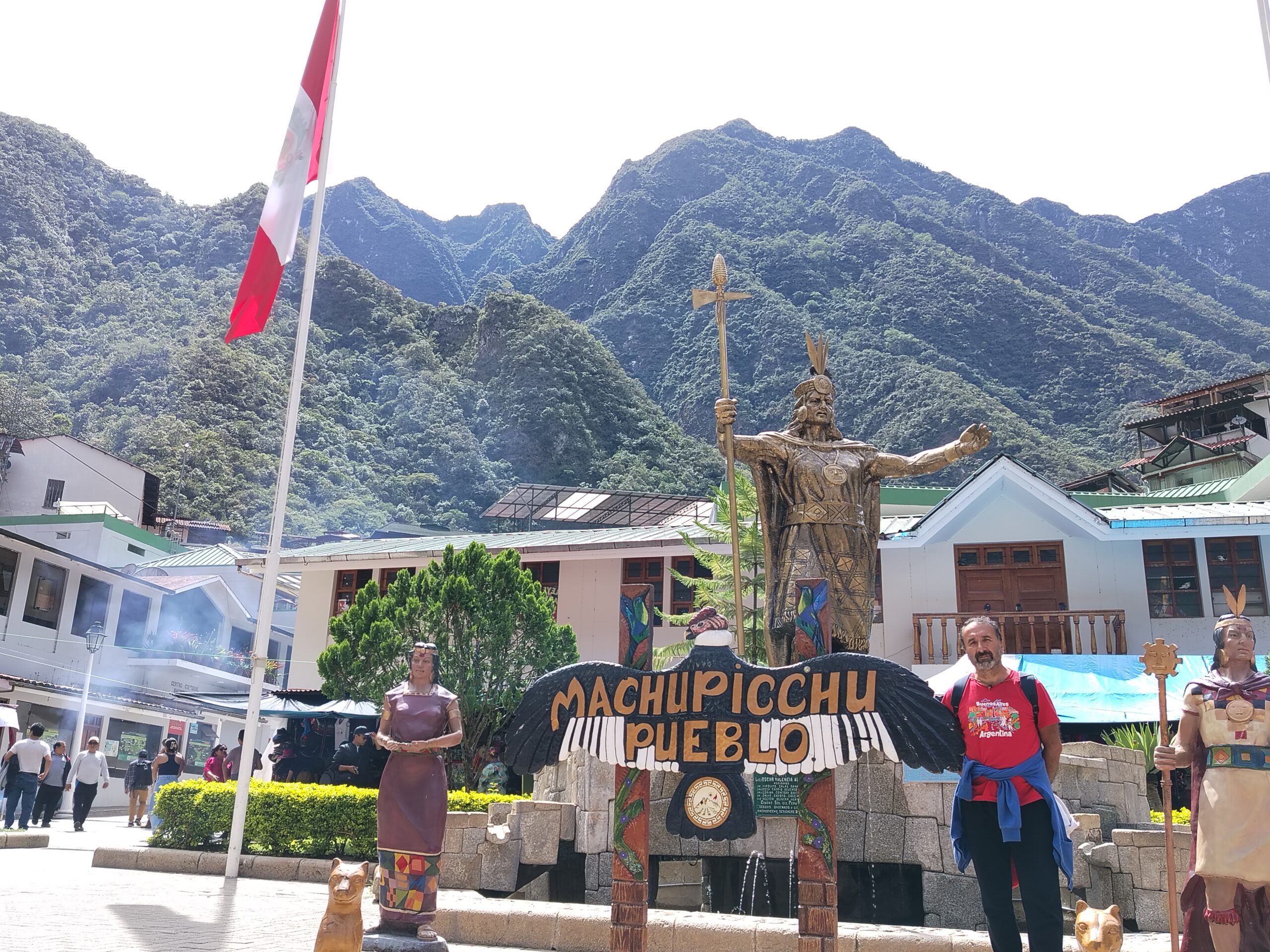
The hotels were full. The restaurants were full. The streets were crowded. And our minds were constantly on the car. Because all our belongings were there. Our computers, clothes, electronic devices… On top of that, the car’s fuel system had already been damaged.
All night long, we kept thinking the same thing: “I wonder if something happened to the car?”
The moment that dream came true
The next morning, our turn finally came. This time there was the part of going up to Machu Picchu. There were two ways to go up: walking or taking the bus.
The bus fares were also quite expensive. The outbound and return trips were priced separately. We bought only a one-way bus ticket, because we had decided to walk back down.
And finally… Machu Picchu was in front of us.
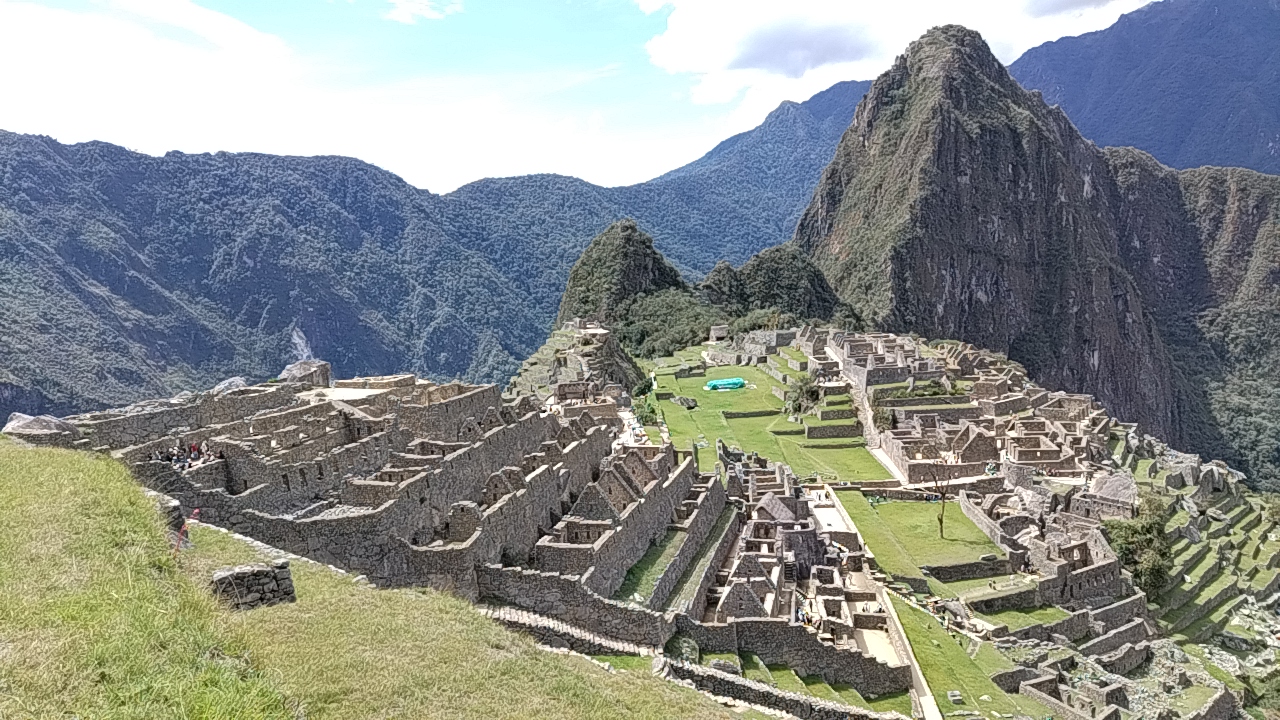
We still remember the first moment we saw it very clearly. When the bus climbed the curves and reached the entrance point, at first there were only dark green mountains visible through the fog. Then, when we walked along the path and reached the area with the stone terraces, suddenly that view opened up before us.
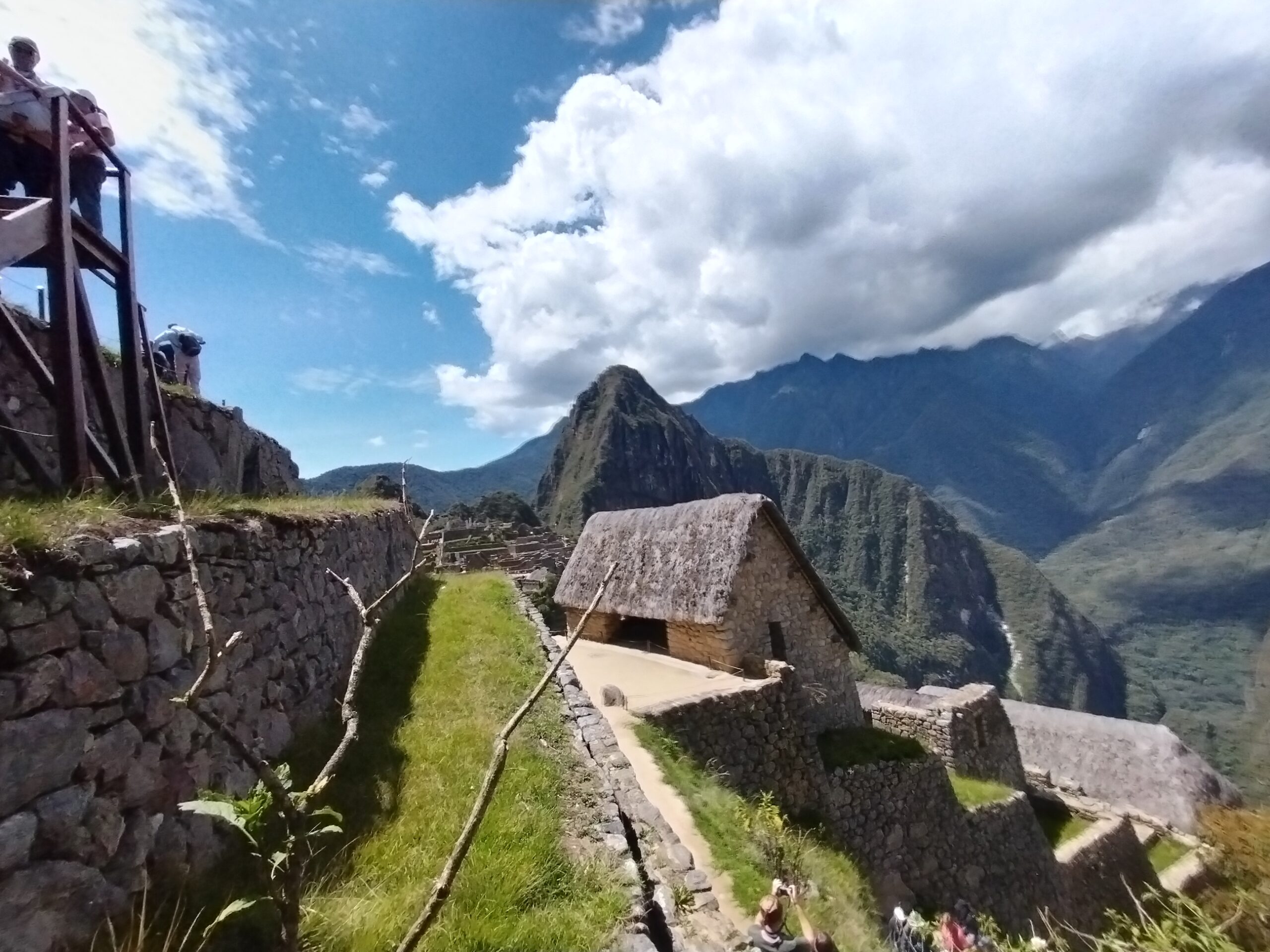
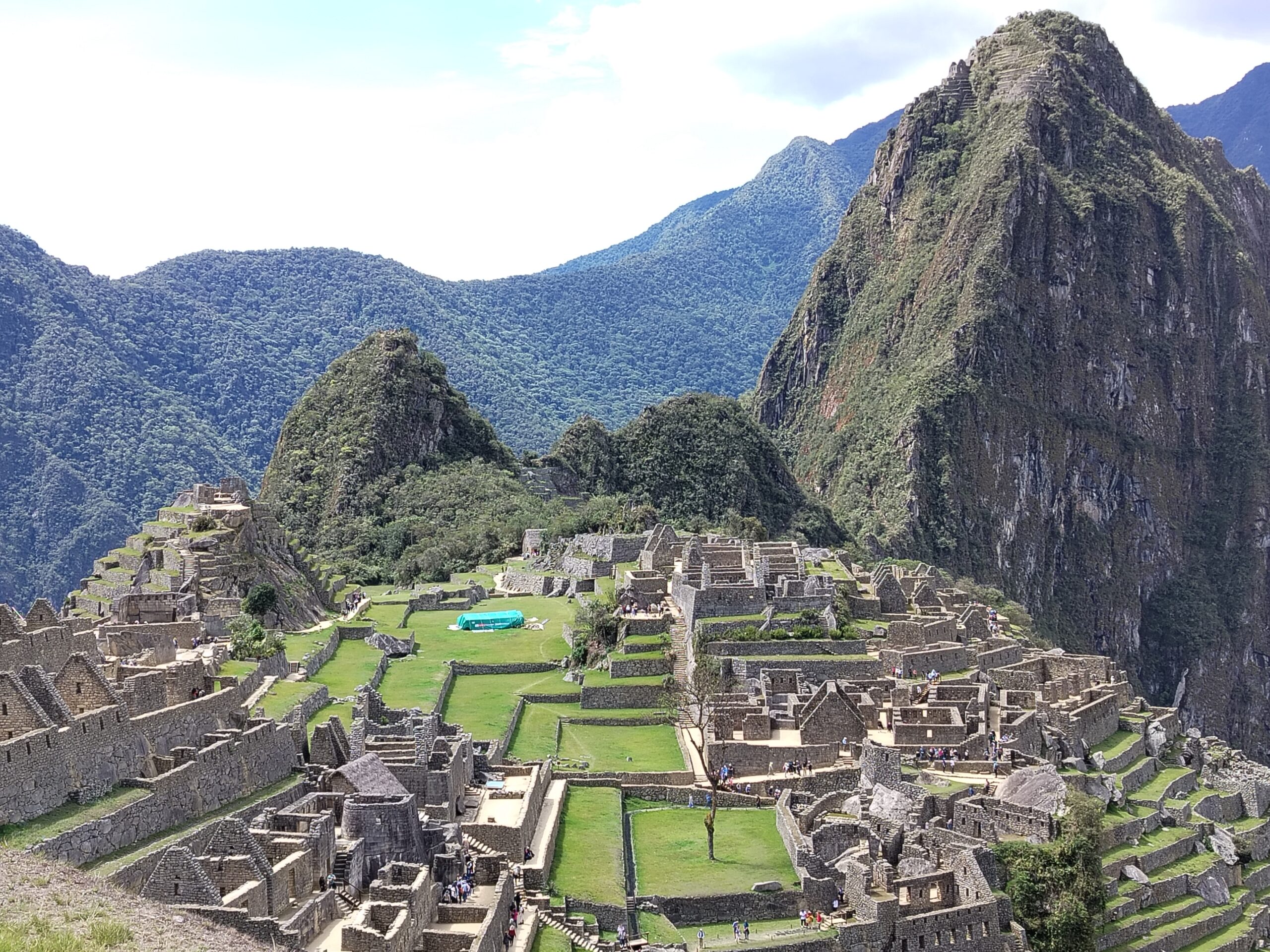
You really stop and stare for a few seconds. Because Machu Picchu is not just an ancient city. It is like another world hidden inside the mountains.
On one side cliffs, on another the sharp Andean peaks disappearing into the clouds, and in the middle stone structures built hundreds of years ago… And the most impressive part is this: the stones are still standing.
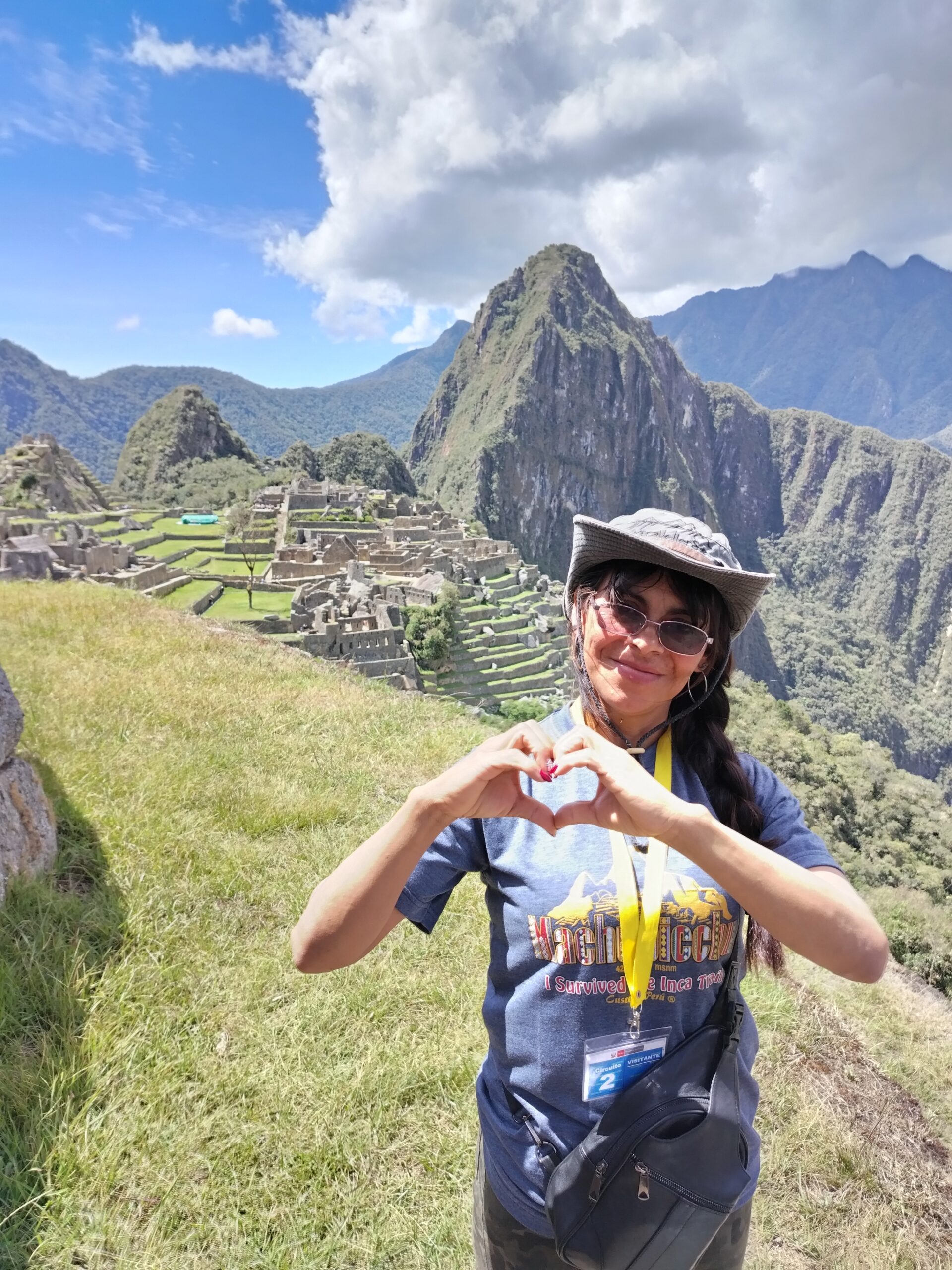
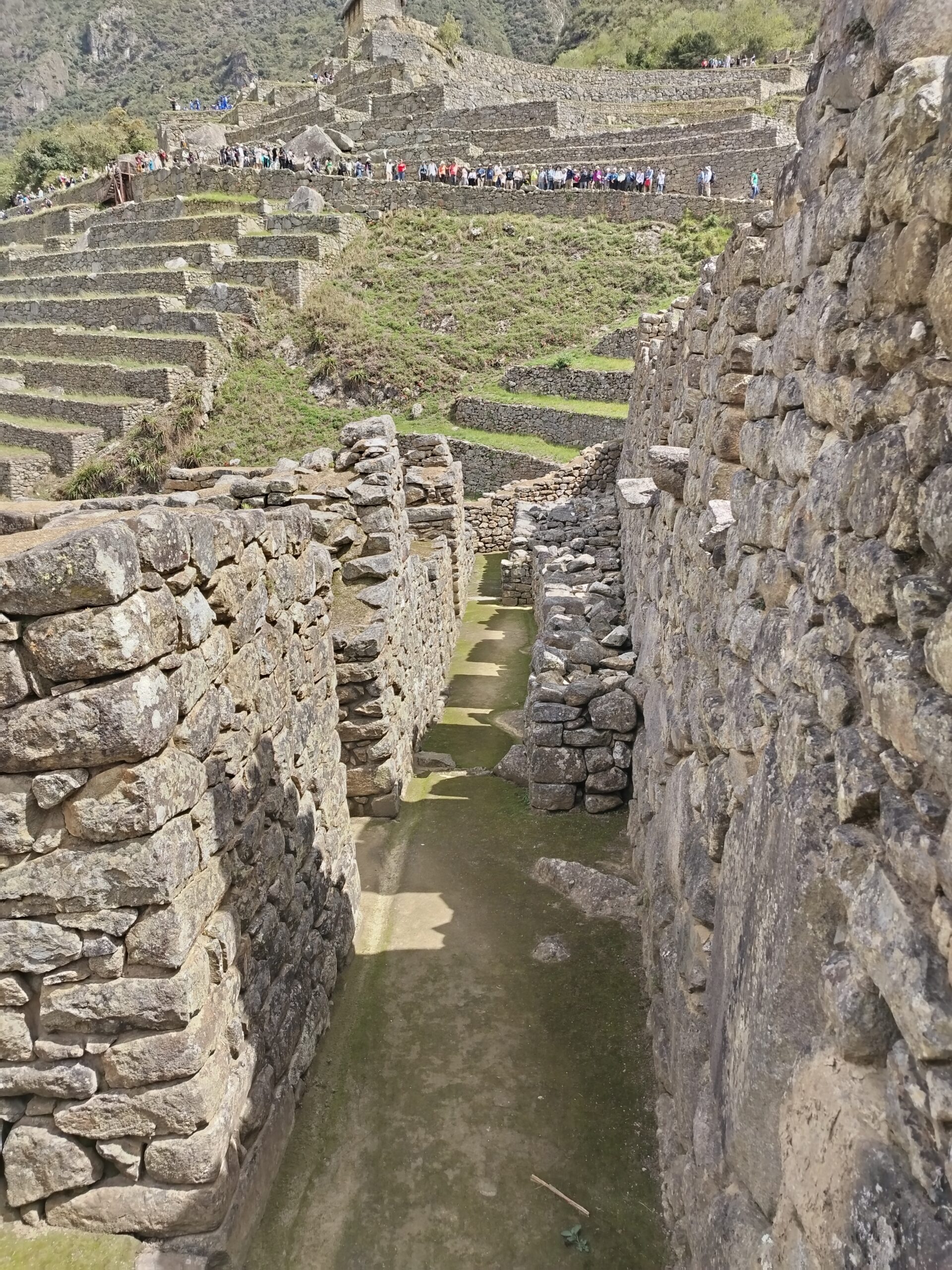
And they are not ordinary stones. Giant rocks fitted together with millimetric precision, terraces, walls, passages, and rooms… Although centuries have passed, the structures are still standing firmly.
You cannot help but think: “How did they do this?”
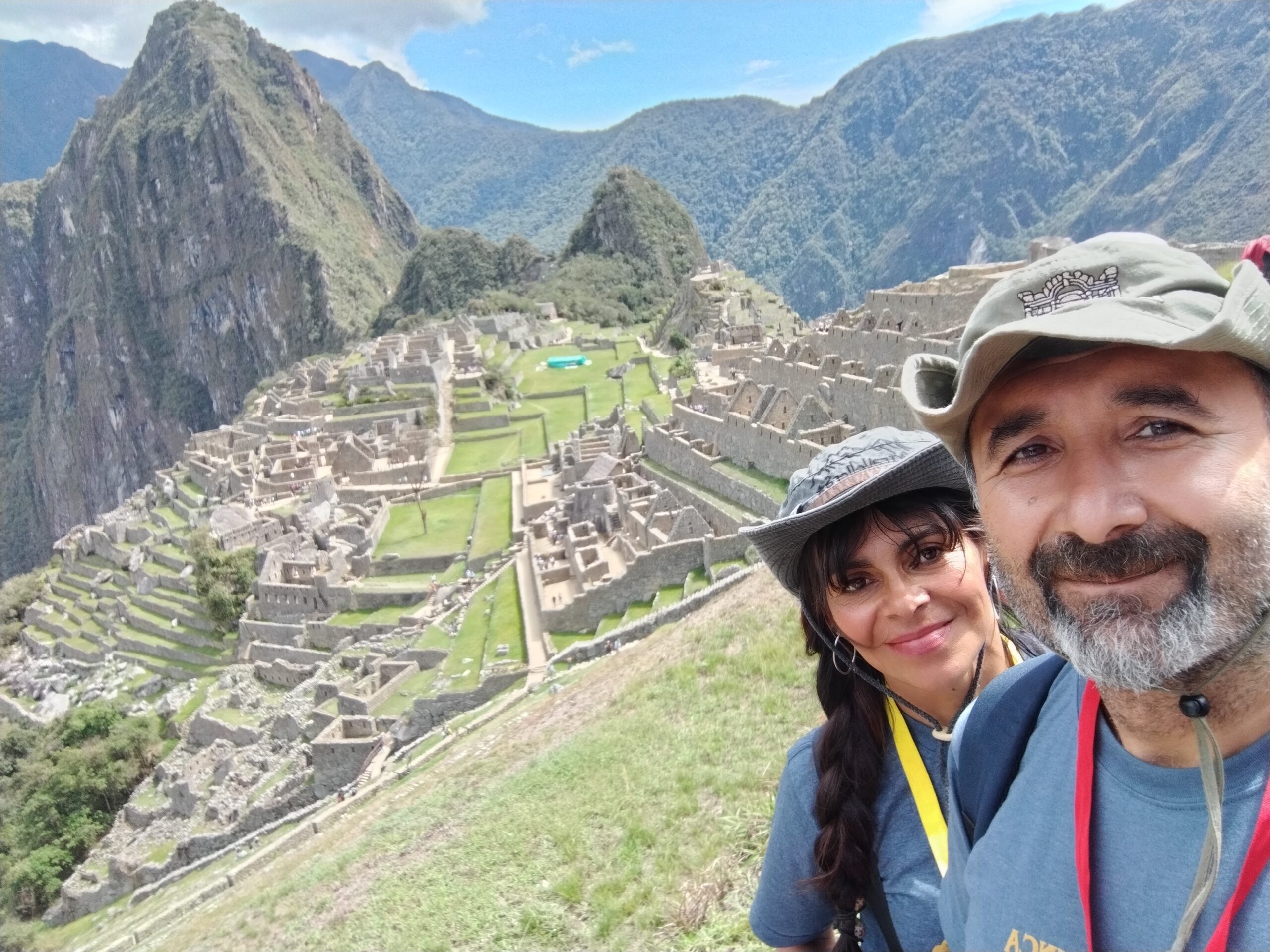
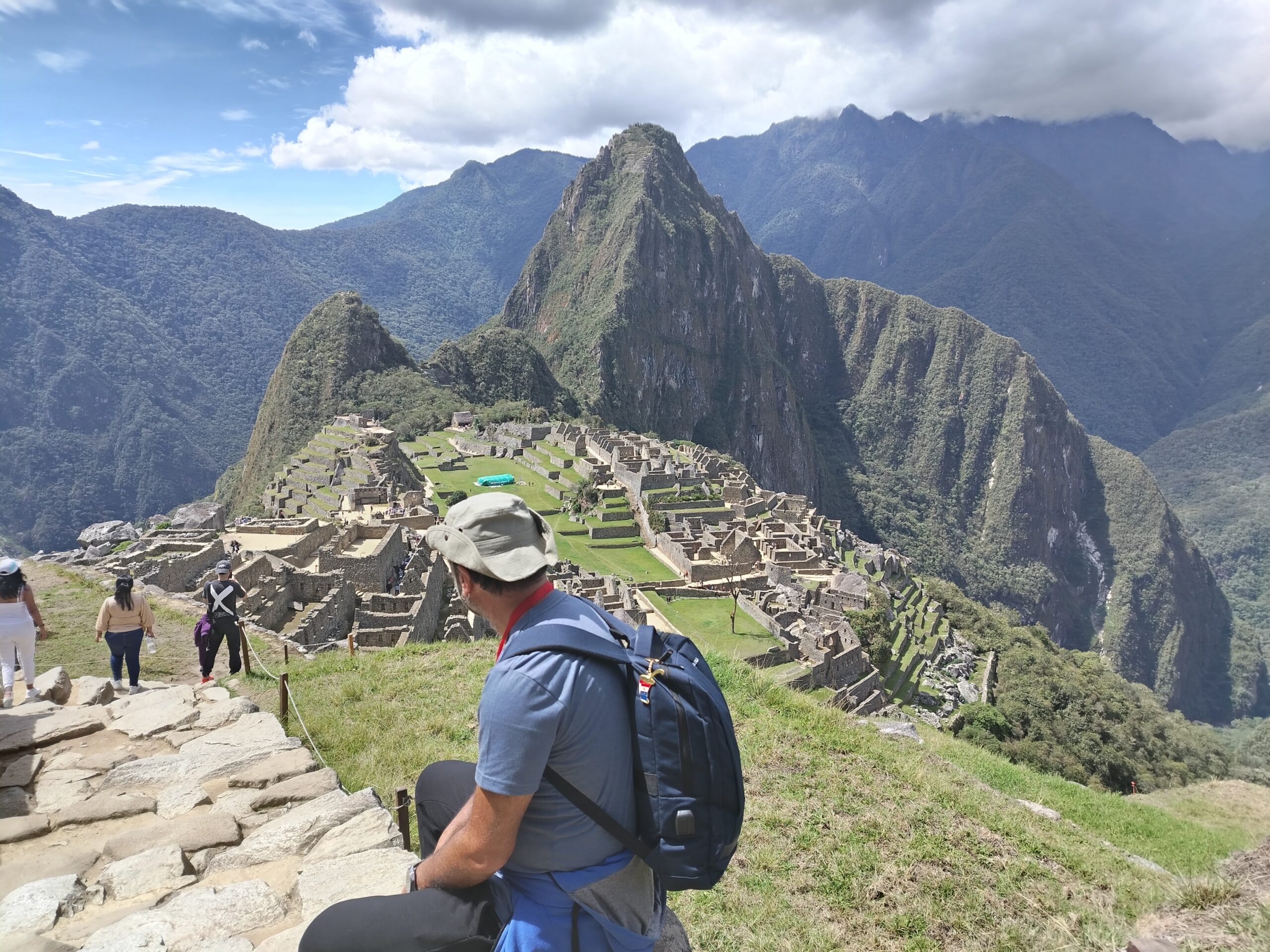
Because even its location is incredible in itself. We are talking about a city built on the summit of the mountains, about 2,430 meters above sea level. Even today, it is hard to reach; the idea that such large stone structures were built there hundreds of years ago truly feels mind-blowing.
Historians say that Machu Picchu was built in the 15th century, during one of the strongest periods of the Inca Empire. According to some, it was a royal settlement; according to others, a sacred religious center; and according to others, a special Inca complex with astronomical observation and ceremonial areas. But while walking there, a person feels something beyond all of these explanations.
As if the city were still alive.
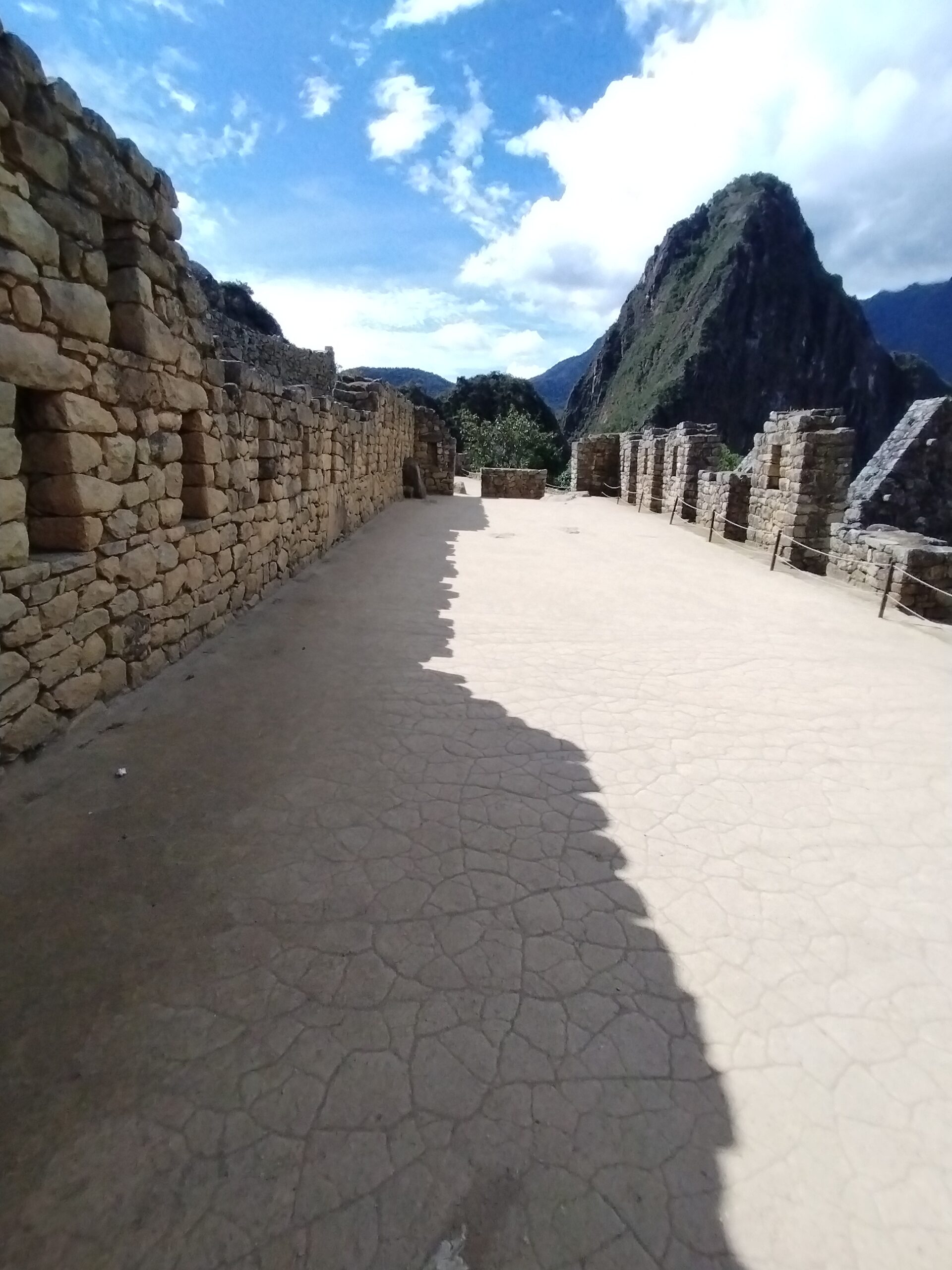
While walking along the stone paths, sometimes there is complete silence. Then suddenly the wind comes through the mountains. The clouds move. The sun hits the stone walls for a few seconds. And in that moment, you truly understand why it is seen as one of the most fascinating places in the world.
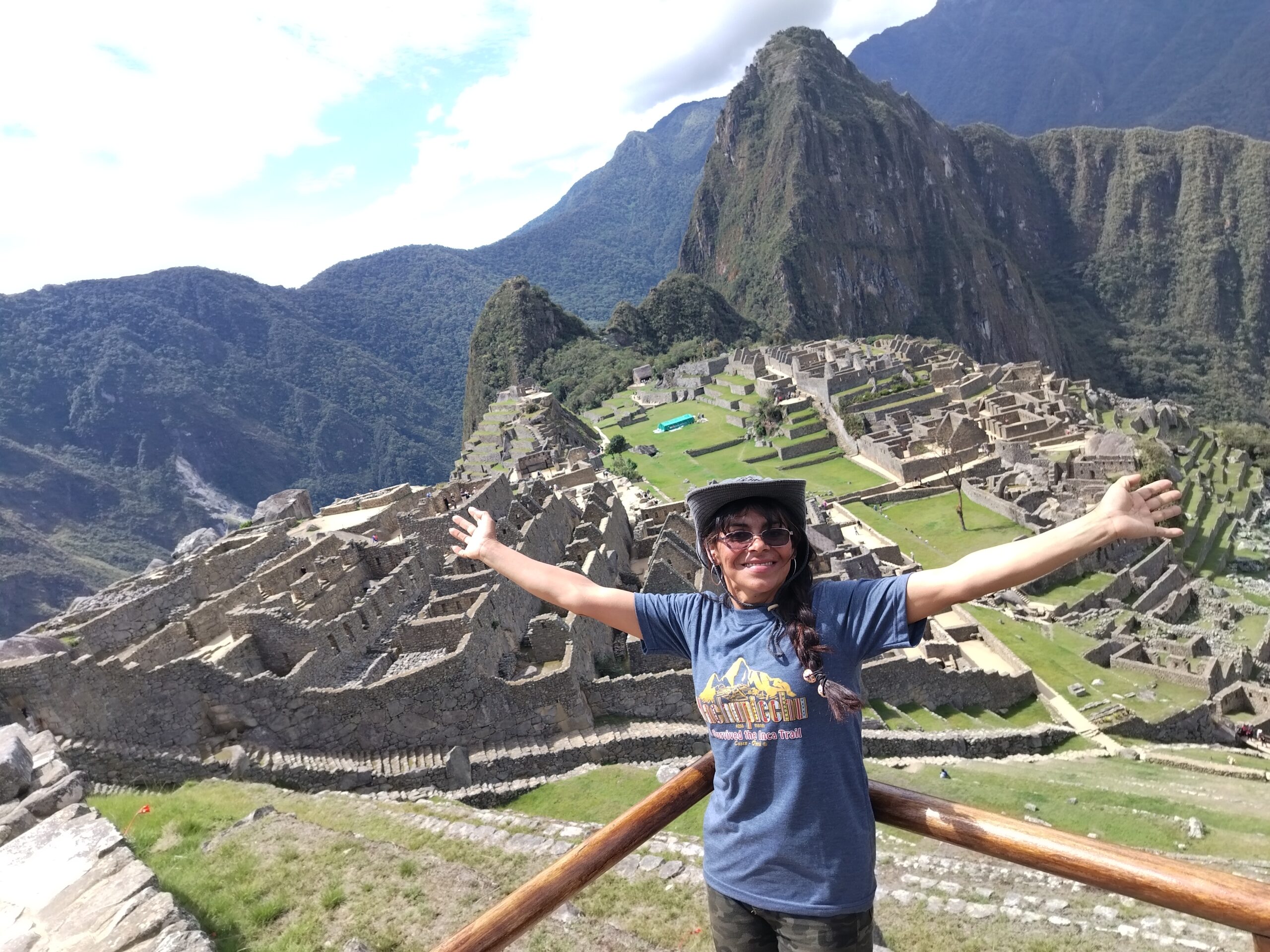
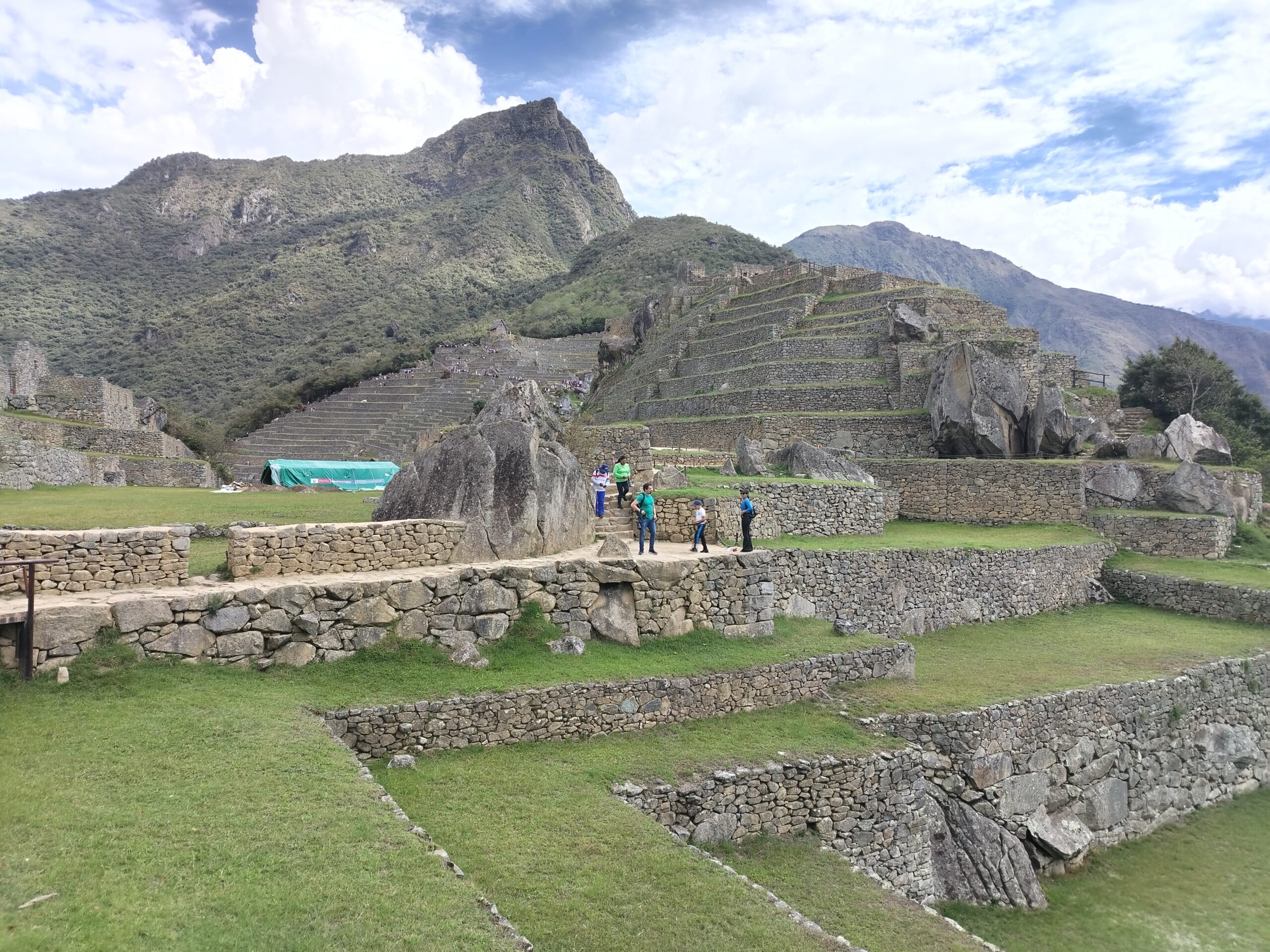
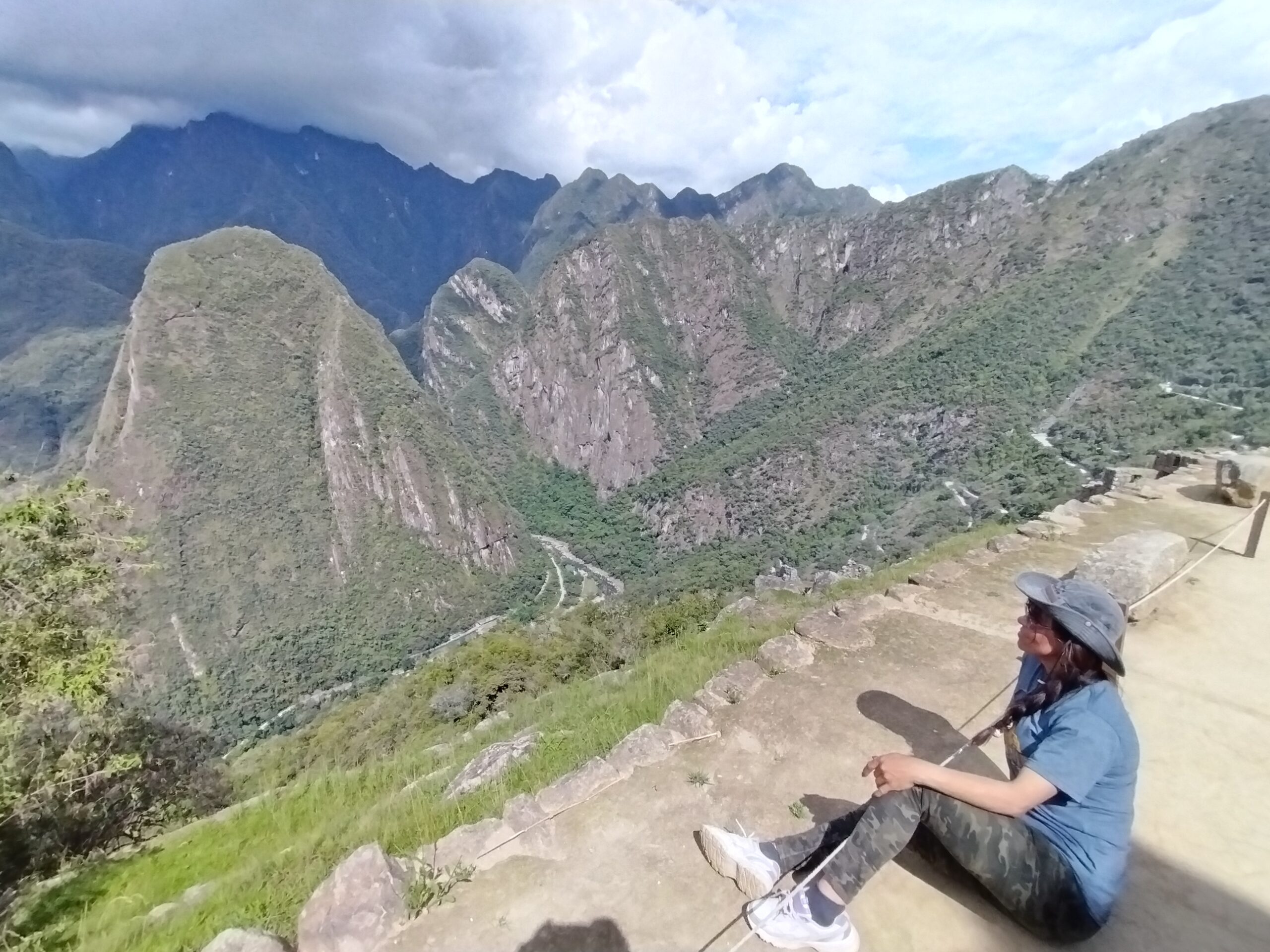
Our photographs show different sides of this feeling. In one frame, the classic panoramic view of Machu Picchu appears before us together with Huayna Picchu rising behind it. In another, we look down into the valleys from between the stone houses. In another, we see the order of the terraces and how they rise layer by layer along the slope. In some photos, we are also in the frame; because this is not a place only to look at from afar, but an experience to enter and live.
Especially when we looked from above, those famous terraces spread out before our eyes. The layered green areas made for agriculture hundreds of years ago still preserve their entire order today. These terraces do not only create an aesthetic view; they are also an indication of Inca engineering, their way of building harmony with nature, and their ability to adapt to mountainous geography.
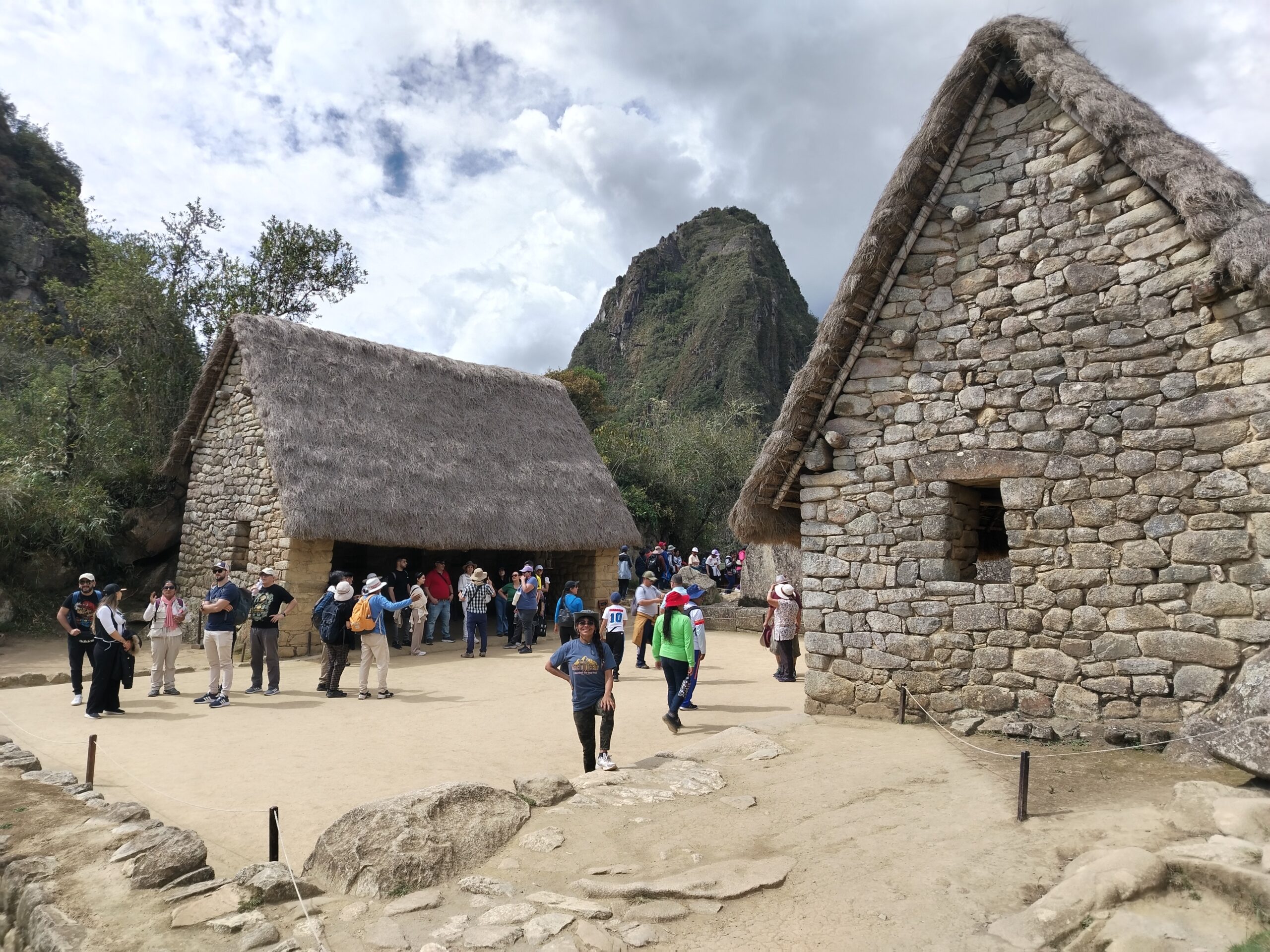
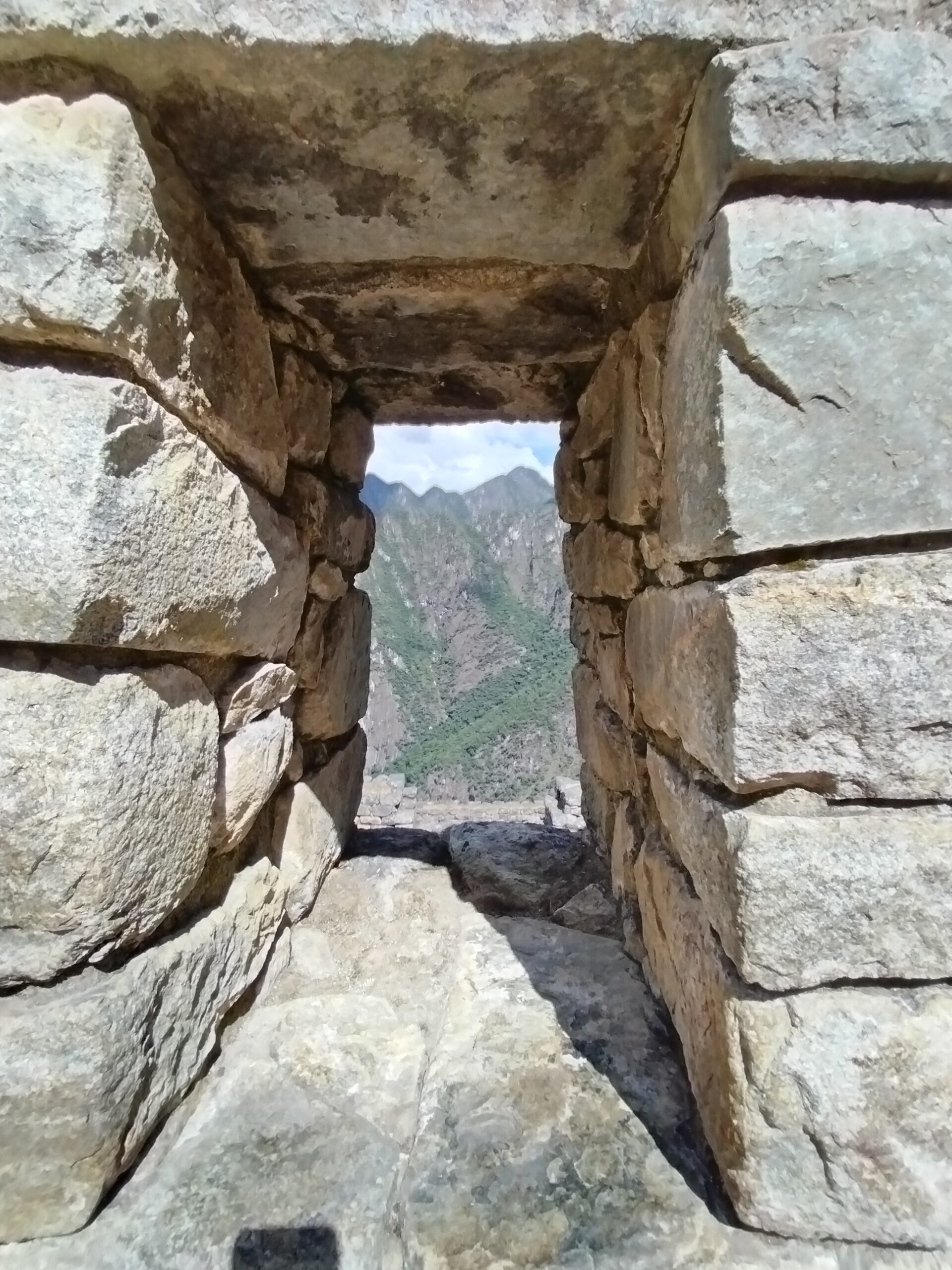
The image of the thatched stone houses, narrow passages, stairs, and structures built around large rock blocks… All of it makes you feel this: here, there is a city built not against nature, but together with nature.
The shapes of the mountains and the shapes of the stones blend into each other. There is no sharp distinction left between what humans made and what nature made. It is as if the Inca masters understood the language of the mountains and then answered that language with stones.
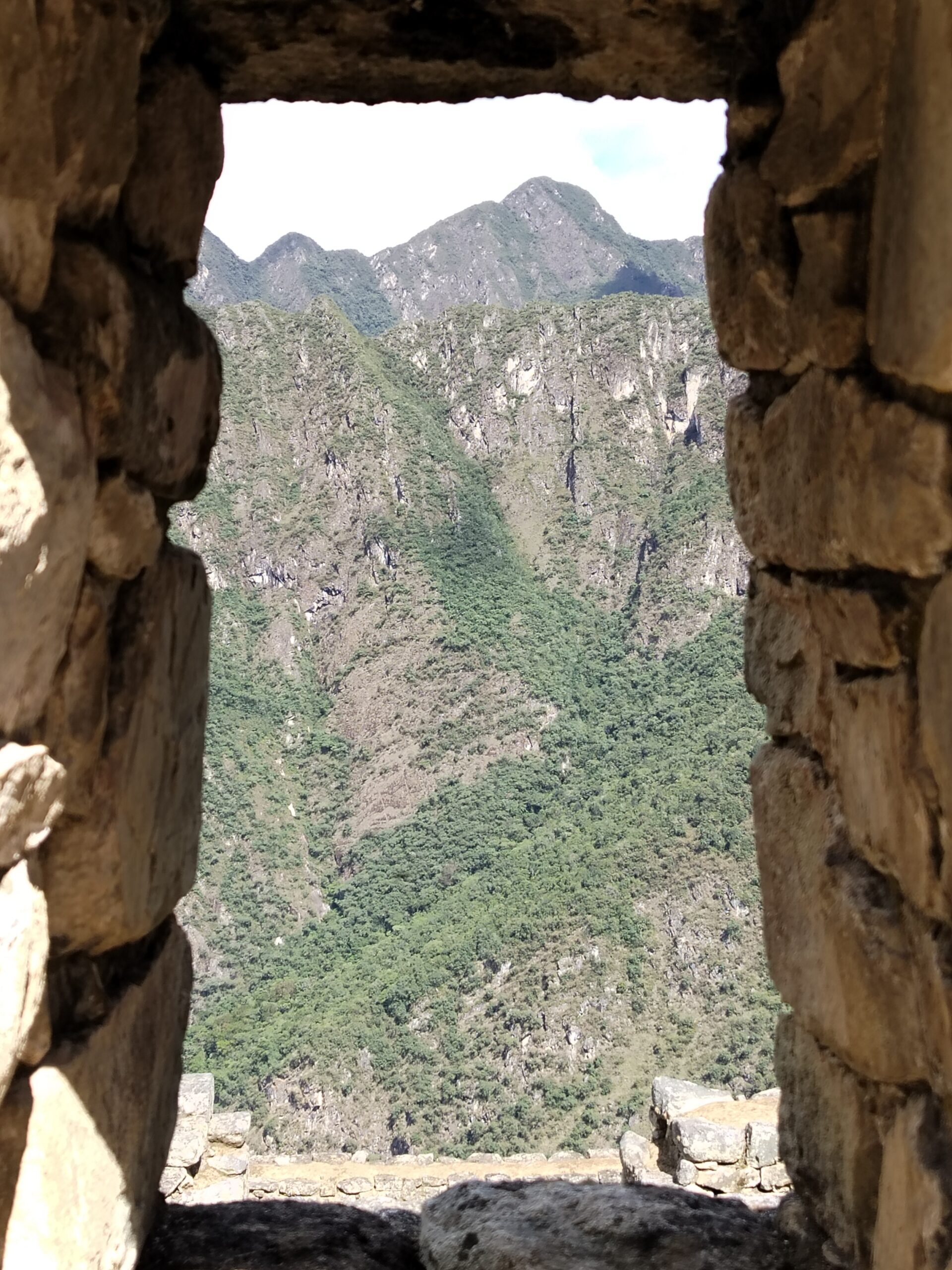
The Huayna Picchu mountain rising behind it makes the whole view even more impressive. What we see in photographs actually remains very small compared with the reality. Because there is not only an image there; there is an atmosphere.
While wandering among the mountains, sometimes we felt as if we were inside a documentary. Sometimes it felt as if we were inside a dream. We were walking in the place whose name we had heard since childhood, on the other side of the world.
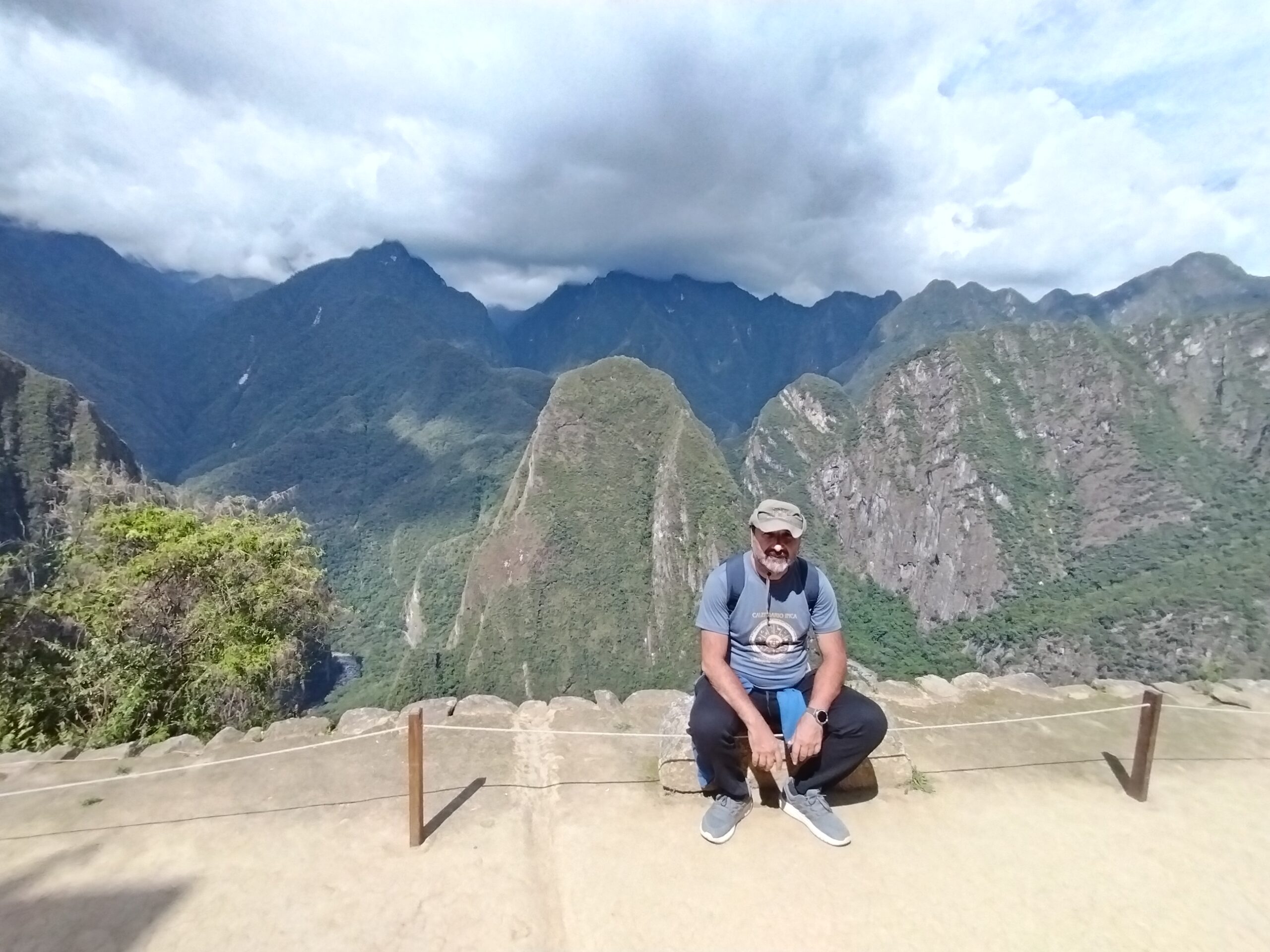
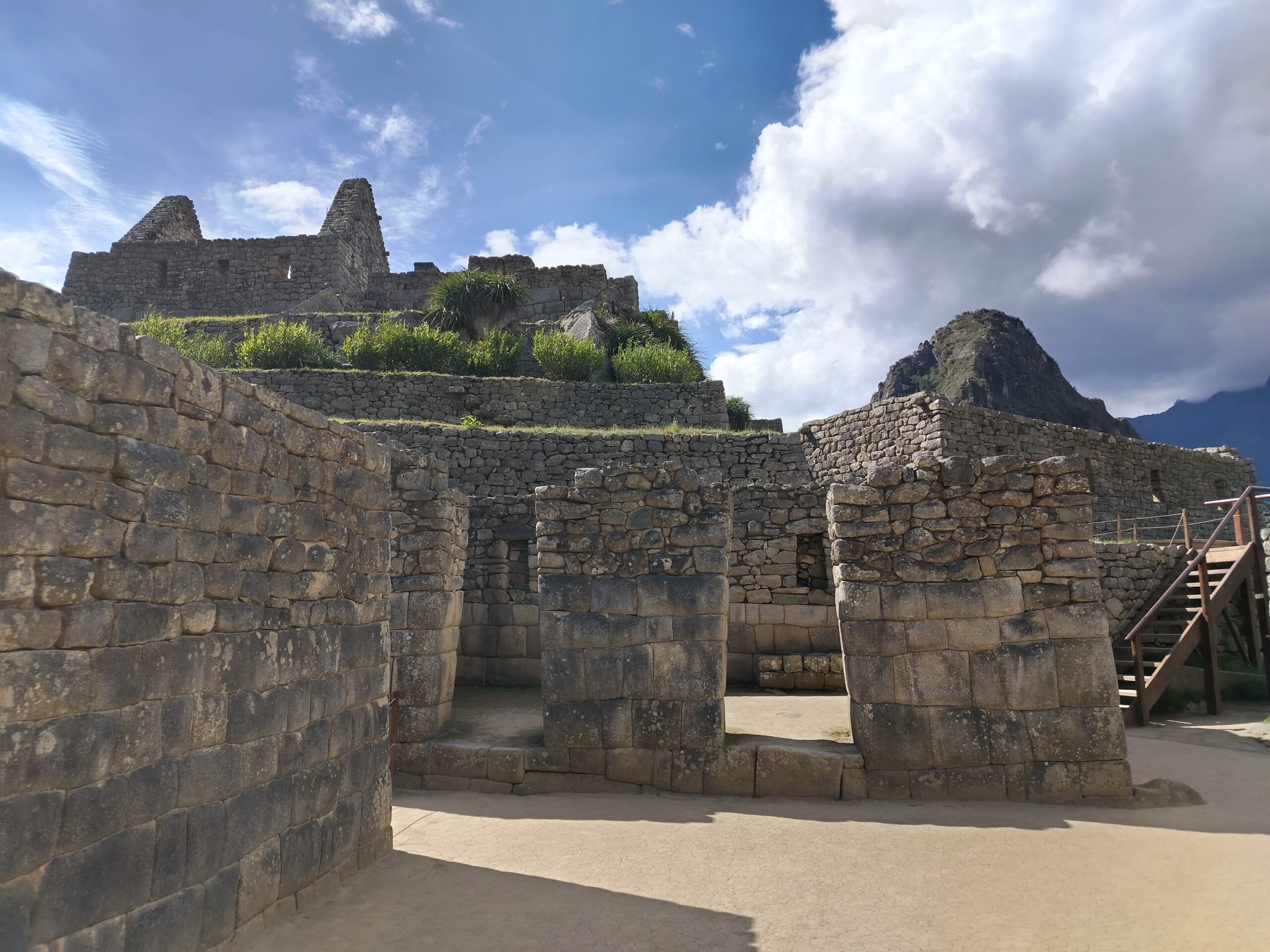
And the interesting part is that all the difficulties we experienced to reach it made Machu Picchu even more valuable. Fog, landslides, the punctured gasoline pipe, sleeplessness, hours of walking, uncertainty… When you look at that view after all of this, only one thing comes to mind:
“Yes… it was worth it.”
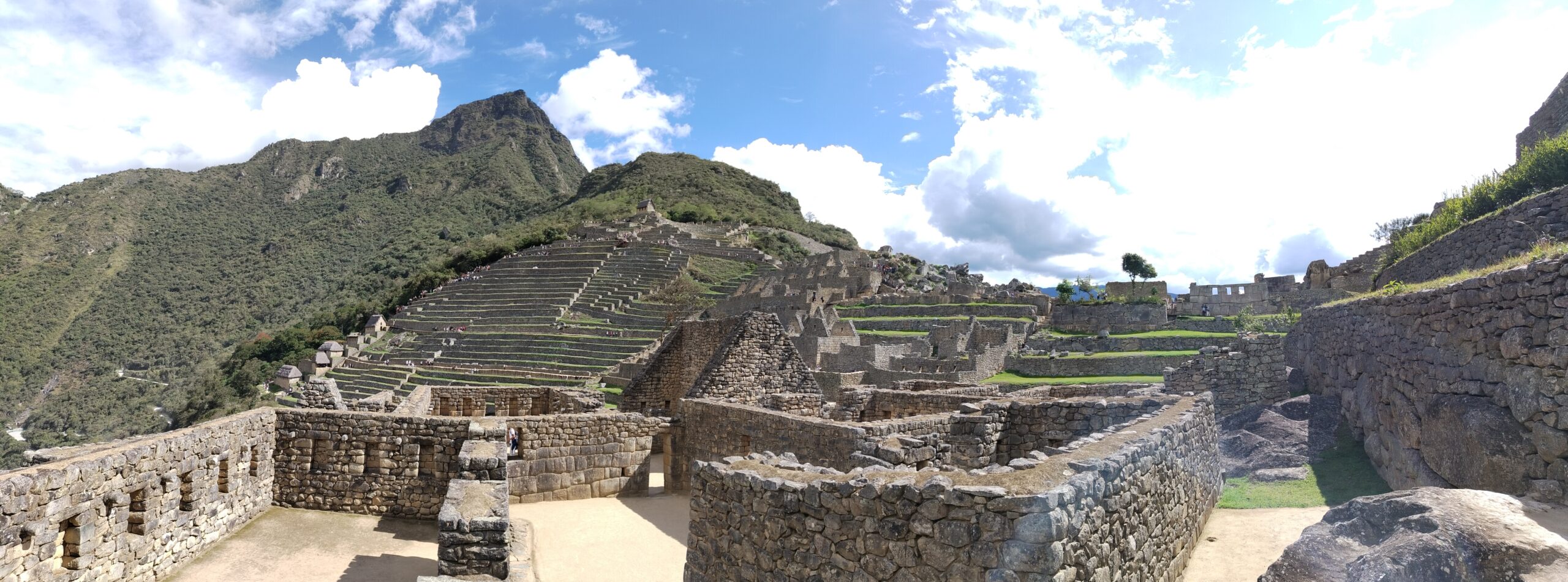
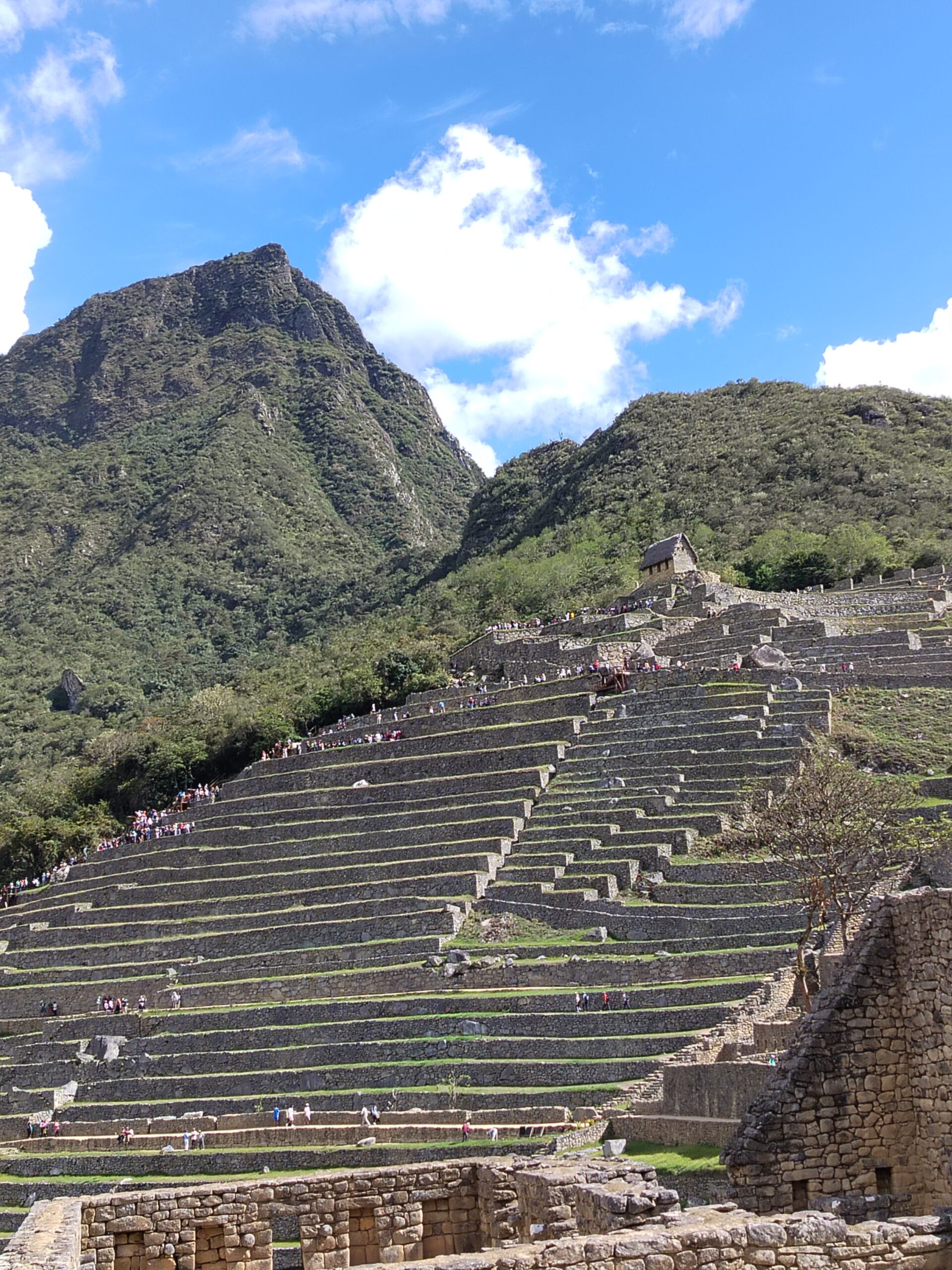
The last wide view that stayed in our memory before leaving Machu Picchu: the stone city, terraces, and the Andes Mountains.
Walking down from Machu Picchu
After visiting Machu Picchu, we did not take the bus on the way back. We walked down. Even descending from that height was exhausting in itself. The stairs, narrow paths, and constantly descending route put serious strain on the legs.
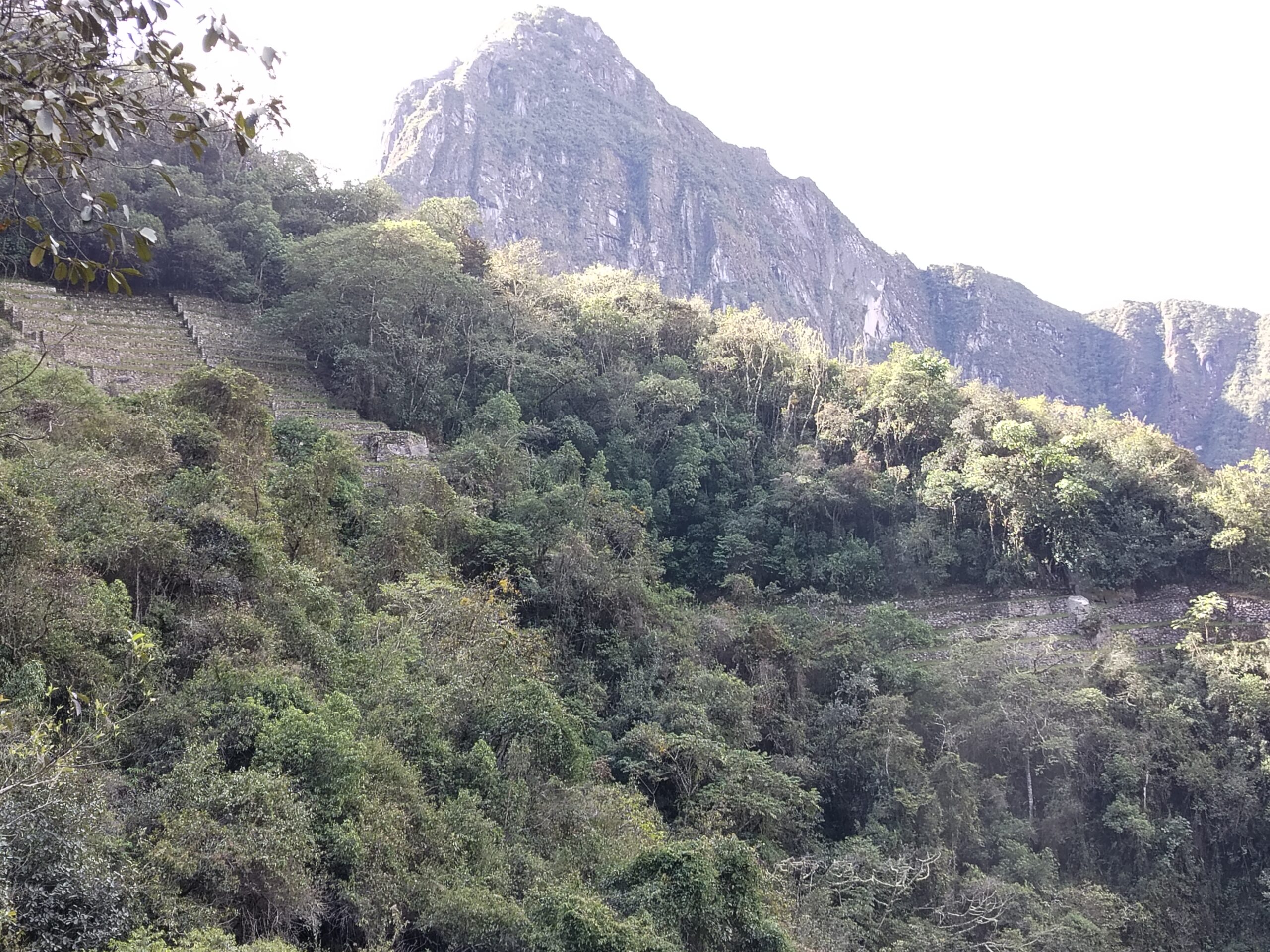
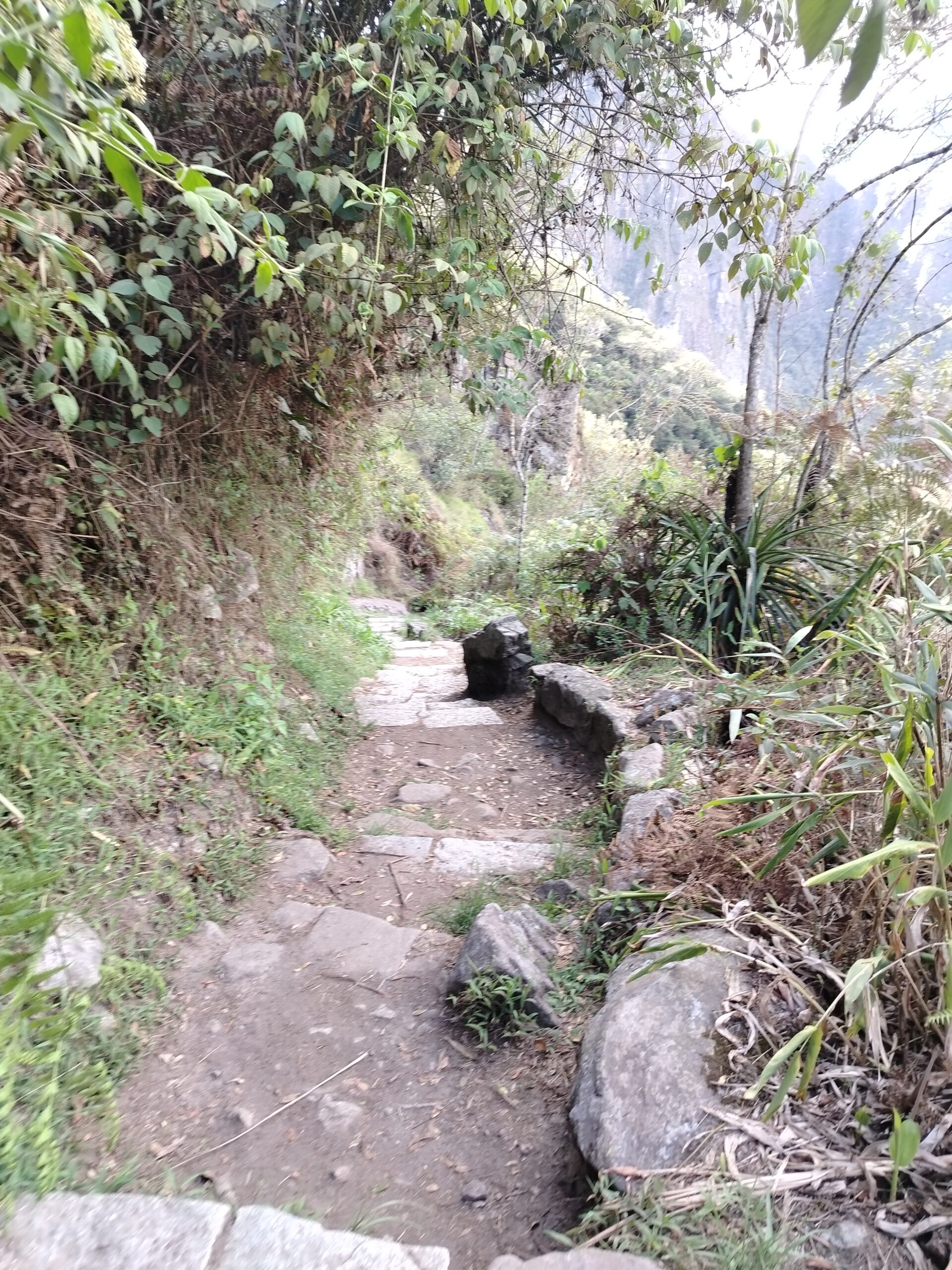
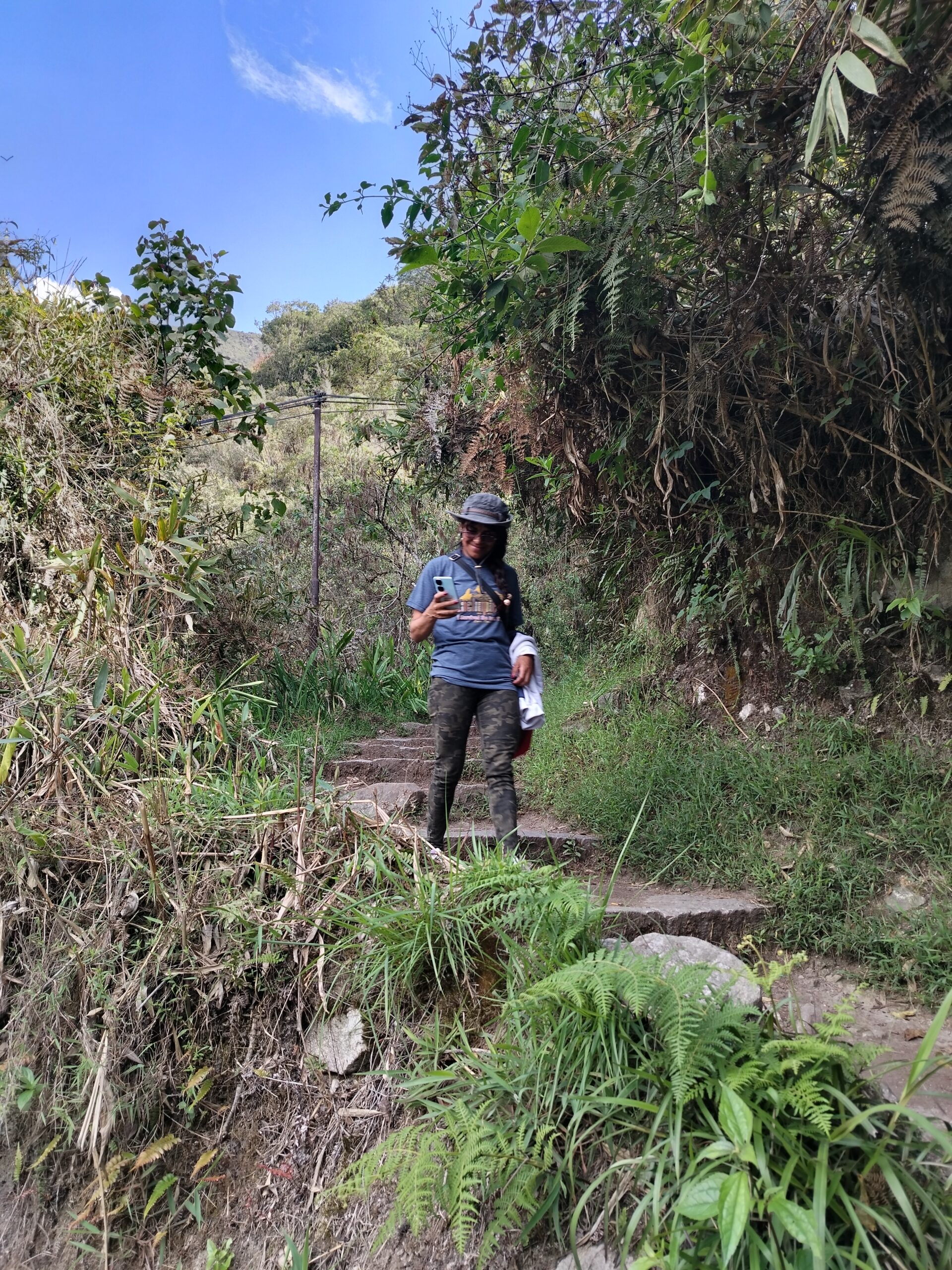
But at the same time, there was a strange peace inside us. Because we had finally fulfilled that dream. We had seen it with our own eyes, walked among its stones, and looked at its view.
After descending, we entered the train route again. This time, we began walking along the same track for the return. The excitement of the morning had given way to a tired but satisfied silence.
Returning to the car and the same fog
Finally, we reached our car again. This was one of the greatest moments of relief. Because the vehicle was still there. Nothing had happened. Our belongings were safe as well.
At that moment, we truly took a deep breath. The fear that had stayed in our minds all night was finally over.
Then we entered the same mountain road again. And incredibly, the same fog greeted us on the way back too. Visibility decreased again, the road became difficult again, and once again we faced the harsh side of the Andes Mountains.
It was as if the mountain was telling us one last time: “Coming here is not easy.”
What did Machu Picchu teach us?
This journey did not show us only an ancient city. It taught us patience. It taught us how to live with uncertainty. It taught us how to find solutions in moments of panic. It taught us that sometimes being on the road is more important than arriving.
For us, Machu Picchu is not only a historic place to see in Peru. It also means foggy mountain roads, a punctured gasoline pipe, a long walk beside the tracks, the compulsory wait in Aguas Calientes, the bus ticket bought the next day, the admiration felt while walking among stone walls, and the exhaustion on the return road.
In other words, this journey was too big an experience to fit into the sentence “We saw Machu Picchu.”
And most importantly, we learned this: Some places are not only seen. They are lived.
For us, Machu Picchu became exactly such a place.
Follow us
You can also follow our social media accounts for short videos, photos, and instant posts from our journey. To access all our content, you can also visit our English home page.
- YouTube Shorts: Watch our short road videos
- Instagram: Photos and daily posts
- Facebook: Our Facebook page