
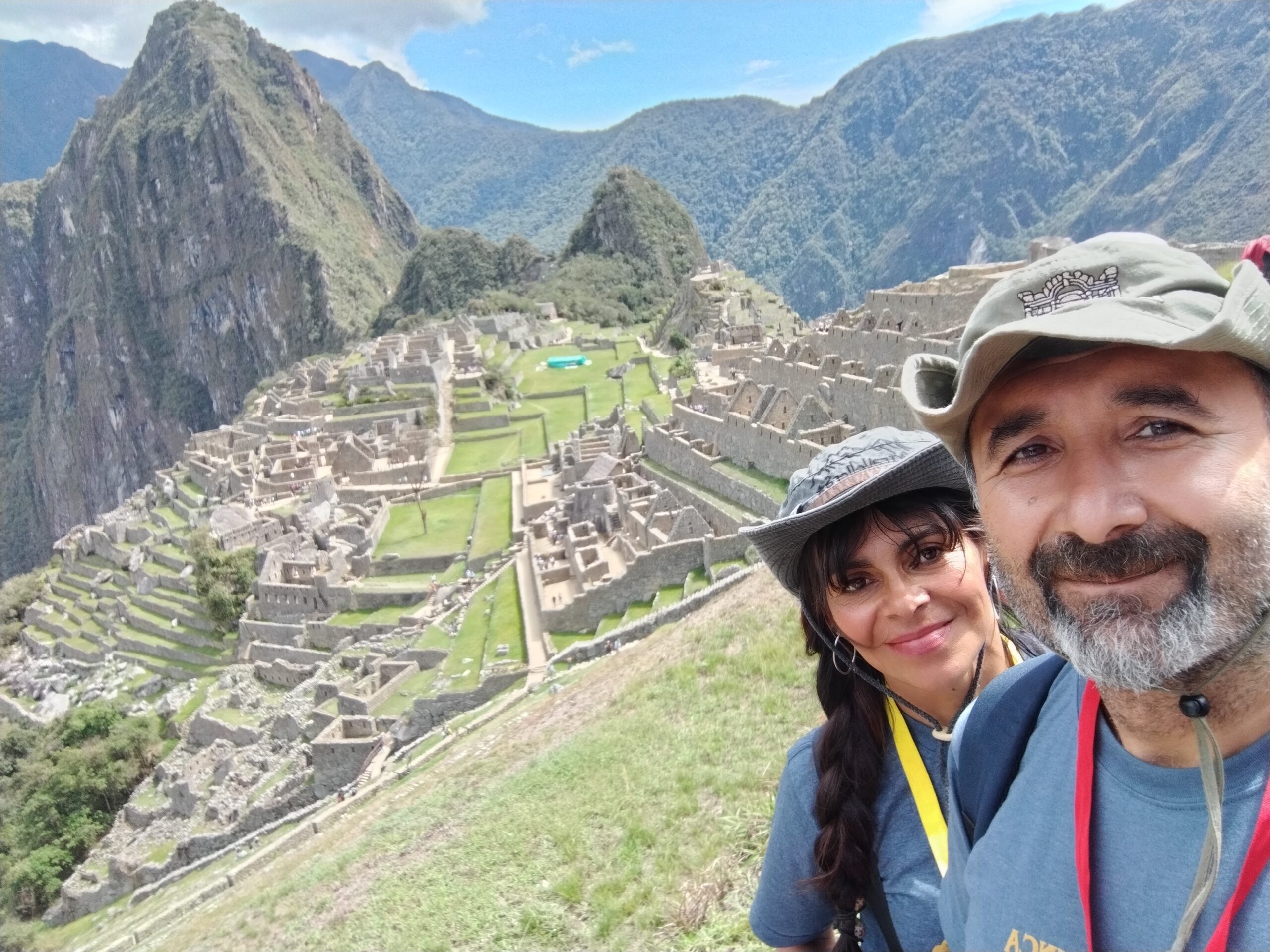
Machu Picchu is one of the most special stops on a trip to Peru. Hidden among the Andes Mountains, clouds and steep valleys, this ancient Inca city is not just the classic view we see in photos. Reaching it requires planning, patience and the right information.
In this guide, we will focus only on Machu Picchu. We will explain in detail how to get from Cusco to Machu Picchu, what transportation options are available, whether going by train makes more sense, what the Hidroeléctrica hiking route is like, how to buy tickets in Aguas Calientes, how much Machu Picchu entrance tickets cost, whether to go up by bus or on foot, and which parts can be visited inside the ancient city.
If you would like to see the other routes from our Peru journey, you can visit our home page, and for all of our travel articles, you can visit our blog page.

Image: Brian Jeffery Beggerly, CC BY 2.0, Wikimedia Commons.
Table of Contents
- Brief information about Machu Picchu
- Where is Machu Picchu?
- How to get to Machu Picchu?
- Going to Machu Picchu by train
- Going to Machu Picchu with a tour
- Going to Machu Picchu via Hidroeléctrica
- Is it necessary to stay in Aguas Calientes?
- How to buy Machu Picchu tickets?
- Machu Picchu 2026 ticket and transportation prices
- Machu Picchu circuits and route selection
- Going from Aguas Calientes to Machu Picchu by bus or on foot
- What is inside the ancient city of Machu Picchu?
- When to visit Machu Picchu?
- Practical information for Machu Picchu
- Final notes about Machu Picchu
Brief information about Machu Picchu
Machu Picchu is one of the most famous Inca ancient cities located in the Cusco region of Peru. We are talking about a stone city built among the mountains, above the Urubamba River valley, at an altitude of approximately 2,430 meters above sea level.
It is believed to have been built in the 15th century during the Inca Empire, but there are different opinions about exactly what Machu Picchu was used for. According to some, it was a royal residence; according to others, a sacred ceremonial center; and according to others, a special Inca complex with religious, agricultural and astronomical functions. If you would like to learn more general historical information about Machu Picchu, you can also visit the Machu Picchu page.
Today, Machu Picchu is listed as a UNESCO World Heritage Site and is considered one of the most visited archaeological sites in the world. But what makes it special is not only its fame. What is truly impressive is its location, stonework, terrace system and harmony with nature.
Where is Machu Picchu?
Machu Picchu is located in the Cusco region of Peru, above the Urubamba River valley. The nearest settlement is Aguas Calientes, also known as Machu Picchu Pueblo. Almost all visitors first reach Aguas Calientes and then go up to the Machu Picchu entrance gate by bus or on foot.
The important point is this: you cannot drive directly to Machu Picchu with your own car. There is no private vehicle road all the way to the entrance of the ancient city. If you have your own vehicle, you can go as far as the Hidroeléctrica area and then walk to Aguas Calientes. After Aguas Calientes, you must either take the official bus or walk uphill.
How to get to Machu Picchu?
There are several different ways to get to Machu Picchu. The most classic and comfortable option is going by train. The most practical option is going with a tour. The most economical and adventurous option is reaching Aguas Calientes by walking from Hidroeléctrica. For those who want a longer and more special experience, there are also multi-day trekking routes such as the Inca Trail, but in this guide we will focus mainly on the main options that independent travelers can use.
The general logic works like this: First, you reach Aguas Calientes from Cusco. Then, from Aguas Calientes, you go up to the entrance gate of Machu Picchu. In other words, a Machu Picchu plan has two separate stages: reaching the town and going up to the ancient city.
That is why buying only the Machu Picchu entrance ticket is not enough when making your plan. The train, minibus, hotel, bus ticket, entrance time and return plan must all fit together.
Going to Machu Picchu by train
The most popular way to get to Machu Picchu is by train. Trains usually depart from stations around Cusco or from Ollantaytambo and arrive in Aguas Calientes. There are two main companies operating on this route: PeruRail and Inca Rail.
The biggest advantage of the train journey is that it is comfortable, safe and scenic. Especially the section between Ollantaytambo and Aguas Calientes is very beautiful. The train follows the valley and reaches Machu Picchu Pueblo with views of the river, mountains and green slopes.
However, the disadvantage of the train option is the price. Ticket prices vary depending on the season, time, class and availability. As of 2026, one-way tickets on economy trains often start at around 55-90 dollars; panoramic or higher-class trains can cost over 100 dollars. When you consider a round trip, this can become a serious budget item for two people.
When buying a train ticket, you should make sure that your Machu Picchu entrance time matches your train arrival time. You cannot go directly to the entrance as soon as you arrive in Aguas Calientes; you need to leave time for the bus queue, walking time and entrance control.
Going to Machu Picchu with a tour
Another common way to visit Machu Picchu is to buy a tour. There are many tour offices in Cusco. These tours usually offer transportation, train tickets, Machu Picchu entrance tickets, a guide and sometimes the bus ticket as a package.
The advantage of a tour is that it reduces the planning burden. It can be more comfortable especially for travelers visiting Peru for the first time, those who do not speak Spanish or those who do not want to deal with the ticket system. Entrance times, train connections and guide arrangements are organized for you.
The disadvantage is that it may be more expensive than traveling independently and it reduces flexibility. Also, not every tour has the same quality. Before buying a tour, make sure to ask which circuit is included, the train class, whether the bus ticket is included in the package and which language the guide speaks.
The most important issue is this: if a tour says “Machu Picchu ticket included,” make sure you clearly understand which circuit and which time slot it is for. Because Machu Picchu no longer works with a single general entrance system; the experience changes depending on the circuit and route.
Going to Machu Picchu via Hidroeléctrica
The Hidroeléctrica route is one of the most economical but also one of the most tiring ways to get to Machu Picchu. On this route, you first reach the Hidroeléctrica area from Cusco or with your own vehicle. This is a transit point formed around a hydroelectric power station. Then you follow the walking path next to the train tracks for about 10-12 kilometers and reach Aguas Calientes.
The walk usually takes 2.5-3.5 hours. Technically, the route is not very difficult, but it can be long, hot, humid and tiring. You should carry water, a raincoat, comfortable shoes and a light backpack. During the rainy season, risks such as landslides, mud and road closures can be higher.
In our experience, this route was one of the most unforgettable parts of the Machu Picchu journey. Walking with the Urubamba River on one side and dense greenery, train tracks and mountains on the other was truly impressive. But it is worth saying that it is not as easy as it may look romantic.
The biggest advantage of this option is the cost. Cusco-Hidroeléctrica minibuses and local transfers can be much cheaper than train tickets. If you have your own vehicle, it is also possible to go as far as Hidroeléctrica, but the road is long, winding and difficult in some sections. If you plan to go with a regular car, road conditions should definitely be checked in advance.

Image: Steve FUNG, CC BY-SA 4.0, Wikimedia Commons.
Is it necessary to stay in Aguas Calientes?
Aguas Calientes is the last stop before going up to Machu Picchu. It is also known as Machu Picchu Pueblo. It is a small but very lively town that grew around the train line among the mountains and lives almost entirely from Machu Picchu visitors.
Theoretically, you can go from Cusco, visit Machu Picchu and return on the same day. But in practice, this plan can be quite tiring. You may find yourself squeezed between train schedules, the bus queue, entrance time and the return train.
In our opinion, the most comfortable plan is to stay at least one night in Aguas Calientes. This way, you can go up to Machu Picchu early in the morning more calmly and you do not have to rush on the way back. If you are arriving by walking from Hidroeléctrica, going up to Machu Picchu on the same day would already be too tiring for most people.
Hotels and restaurants in Aguas Calientes are generally more expensive than in Cusco. During high season, it can be difficult to find a place. That is why it is a good idea to arrange accommodation in advance after buying your Machu Picchu ticket.
How to buy Machu Picchu tickets?
Machu Picchu entrance tickets are sold through the official system of the Peruvian Ministry of Culture. The current official sales platform is Tu Boleto Cultura. When buying a ticket, you choose the date, time, visitor information and circuit.
The most important point when buying a ticket is choosing the right circuit. Machu Picchu no longer has the old system where everyone could freely wander everywhere. Entrances are divided into circuits, and each ticket covers a specific route. That is why you need to know what you want to see before buying a ticket.
When buying an online ticket, it is very important to enter your passport information correctly. At the entrance, both your ticket and passport are checked. If the information does not match, you may have problems. Since tickets are usually linked to date, time and personal information, making changes is not easy.
If you cannot find an online ticket, there may be a limited last-minute ticket queue system in Aguas Calientes. However, this method is not guaranteed. You may first be given a queue number, then a time to buy the ticket, and the ticket may be for the next day or a later date instead of the same day. That is why relying only on last-minute tickets is risky, especially during high season.
Machu Picchu 2026 ticket and transportation prices
Prices may vary depending on the season, exchange rates, route choice and companies. Therefore, the figures below should be considered for planning purposes as of May 2026. The safest option is to check the official websites again before traveling.
| Item | Approximate price | Note |
|---|---|---|
| Standard Machu Picchu entrance | Approximately S/ 152 for foreign adults | May apply to standard routes on Circuit 1, 2 or 3. |
| Tickets with mountain routes | Approximately S/ 200 for foreign adults | Huayna Picchu, Machu Picchu Mountain or special hiking routes may be more expensive. |
| SERNANP conservation fee | Approximately S/ 11 extra fee for foreigners | Since an additional conservation fee may apply in 2026, the final amount should be checked. |
| Aguas Calientes – Machu Picchu bus | 12 USD one way for foreign adults, 24 USD round trip | Bus prices may vary according to the Consettur tariff. |
| Ollantaytambo – Aguas Calientes train | Approximately 55-120 USD and above one way | Varies greatly depending on the company, time, class and season. |
| Hidroeléctrica route | Varies depending on the transfer company | Usually more economical than the train option, but more tiring. |
In summary, the most comfortable option is usually the train plan, which is also the most expensive. The most economical option is walking from Hidroeléctrica. However, this option requires more flexibility in terms of time, energy and road conditions.
Machu Picchu circuits and route selection
The visiting system at Machu Picchu is divided into circuits. In general, there are three main circuits: the panoramic circuit, the classic circuit and the lower/royal area-focused circuit. There are different sub-routes within these circuits.
For most first-time visitors, the most desired option is Circuit 2, which includes the classic view and the main sections of the ancient city. This is because this route usually offers the closest experience to the famous view you see in Machu Picchu photos. For this reason, Circuit 2 tickets can sell out quickly.
Circuit 1 is mostly preferred for upper terraces, panoramic viewpoints and some hiking routes. Circuit 3 may offer options connected to the lower section, royal areas and mountain routes such as Huayna Picchu.
The most critical point here is this: the ticket you buy determines what you will see in Machu Picchu. The idea of “I will somehow enter and walk around everywhere” is no longer correct. That is why you should carefully read the route descriptions when buying a ticket and choose a circuit that suits your priorities, especially if the classic photo angle is important to you.
Going from Aguas Calientes to Machu Picchu by bus or on foot
There are two ways to go from Aguas Calientes to the Machu Picchu entrance gate: by bus or on foot.
The bus is the easiest and fastest option. The journey takes about 25 minutes. Buses start operating early in the morning, and queues may form especially for the first entrance times. The bus ticket is purchased separately; it is not included in the Machu Picchu entrance ticket.
Walking up is a more economical but much more tiring option. From Aguas Calientes to the entrance gate, you follow steep stairs and a forest path. The climb can take around 1.5-2 hours. Due to high humidity, heat and steep steps, it requires serious energy. If you have an early morning entrance, you may have to walk in the dark or semi-darkness.
Walking down may seem easier, but it can be quite tiring for the knees and legs. Our recommendation is to take the bus at least on the way up if your budget allows. If you still have energy on the way back, walking down may make more sense.
What is inside the ancient city of Machu Picchu?
What you can see inside Machu Picchu depends on the circuit you choose. In general, however, the ancient city includes agricultural terraces, stone houses, ceremonial areas, sacred structures, narrow passages, stone stairways and impressive viewpoints.
One of the most striking sections is the agricultural terraces. These terraces do not only create a beautiful view; they also show how Inca engineering adapted to mountainous terrain. They made agriculture possible and also helped keep the slopes stable.
The stonework is one of the most fascinating aspects of Machu Picchu. The way large stone blocks were fitted together without mortar is still surprising today. On some walls, you can see that the stones fit together with almost millimetric precision.
One of the prominent structures is the Temple of the Sun. With its semi-circular stone architecture, this area reminds visitors of the importance of the sun cult and astronomical observations in the Inca world. The Sacred Plaza, the Temple of the Three Windows, the Intihuatana stone, the royal sector and stone passages are also among the important parts of Machu Picchu.
But remember: not every circuit shows every structure. Some areas can only be seen on certain routes. That is why circuit selection is very important when planning what to see inside the ancient city.

Image: Cédric Liénart, CC BY-SA 2.0, Wikimedia Commons.
.jpg)
Image: Martin St-Amant, CC BY-SA 3.0, Wikimedia Commons.
When to visit Machu Picchu?
Machu Picchu can be visited throughout the year, but weather and crowd levels vary depending on the season. The dry season is generally between May and September. This period offers less rain, clearer skies and a better chance of good views. But it is also one of the busiest and most expensive times.
The rainy season is generally more noticeable between November and March. During this period, nature becomes much greener, but rain, fog and road problems are more common. If you are planning the Hidroeléctrica route or a hiking plan, you need to be more careful during the rainy season.
Transition months such as April, May, October and November can sometimes offer a good balance. Still, the weather in Machu Picchu can always be surprising. You may see fog, sun, rain and sun again all in the same day.
Practical information for Machu Picchu
Make sure to carry your passport with you when going to Machu Picchu. At the entrance, your identity may be checked together with your ticket. The information on your ticket must match your passport information.
Try not to bring a very large bag. Comfortable walking shoes, a light raincoat, water, sunscreen, a hat and a small snack are useful. However, since rules about eating and carrying certain items inside the ancient city may change, pay attention to the current warnings at the entrance.
Toilets are not inside the ancient city but at the entrance area. After entering, it is generally not possible to leave and re-enter. That is why it is a good idea to use the restroom before entering.
Guide requirements may vary depending on the period and current practice, so check the latest situation before going. Visiting with a guide enriches the experience, especially if you want to learn about Inca history and the meaning of the structures.
Do not leave your Machu Picchu plan to the last minute. First buy your entrance ticket, then arrange your train or transportation schedule accordingly. If you are curious about the story behind our journey, you can find more personal notes in our about us section.
Final notes about Machu Picchu
Machu Picchu is not just a place to “go and see.” Reaching it is also part of the experience. If you go by train, the valley views; if you walk from Hidroeléctrica, the silence of the tracks and the forest; if you stay in Aguas Calientes, the waiting atmosphere of the town all become part of the journey.
When you finally go up to the ancient city, all of this journey suddenly makes sense. The terraces, stone walls, mountains and clouds appear before you all at once. At that moment, you understand better why Machu Picchu is considered one of the most impressive archaeological sites in the world.
With the right ticket, the right route and a realistic time plan, Machu Picchu becomes a much more enjoyable experience. It is best to go without rushing, arranging tickets and transportation in advance, and taking the weather and altitude conditions into account. For our other articles from Peru and South America, you can also visit the blog section.
Source note: For current ticket and capacity information, check Tu Boleto Cultura, the Peruvian Ministry of Culture’s 2026 capacity announcement, and for train options, the PeruRail and Inca Rail websites. Prices may change seasonally.
Follow us
You can also follow our journey on social media for short videos, photos and moments from the road.
- YouTube Shorts: Watch our short travel videos
- Instagram: Photos and road moments
- Facebook: Our Facebook page