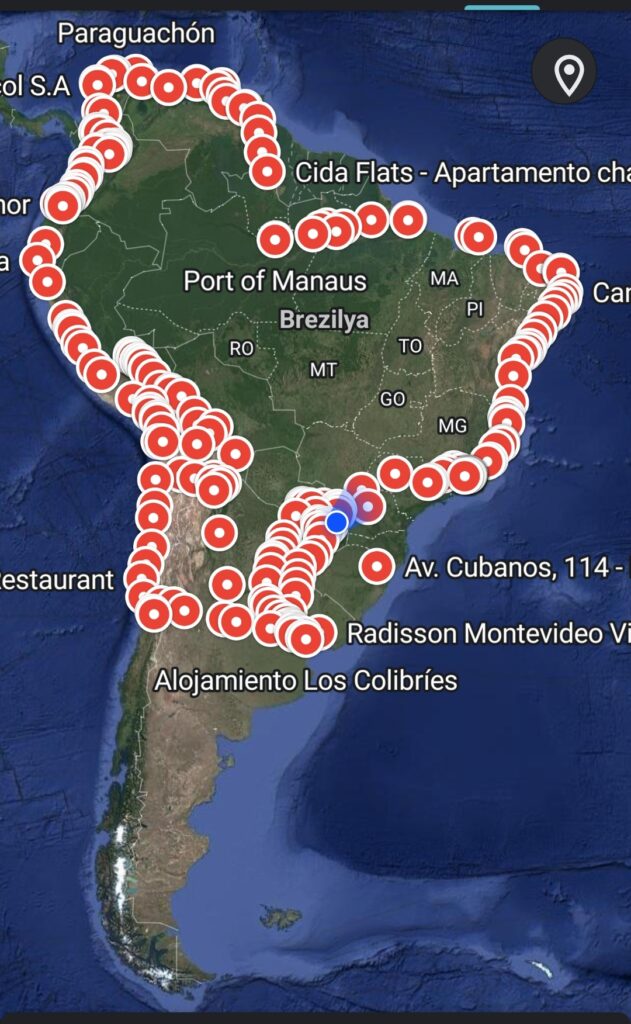

From the Andes to the Salt Sea: Our Unforgettable Journey from Sucre to Salar de Uyuni
In the heart of Latin America, perhaps the most magical page of our journey across the continent opened on the road from Sucre to Uyuni. As we left behind the White City of Sucre, the delicate textures of colonial architecture and its quiet streets, the engine of our Peugeot 408 carried us into a completely different world, challenging the altitude and curves of the Andes.
Sucre was already at an altitude of around 2,800 meters; but as the road continued, the elevation increased, the air became thinner and the scenery turned breathtaking. The sun fell on the slopes of the mountains, and with the altitude the silence grew deeper. Our curiosity grew a little more at every bend in the road. If you would like to see our other road stories from South America, you can also visit our English homepage and our English blog page.
Potosí: Catching Our Breath on the “Roof of the World”
When we reachedPotosí, under the golden evening light, we could immediately feel the city’s former grandeur. This was the place where the famous Cerro Rico mine was located, once feeding the wealth of the Spanish Empire. For centuries, silver was extracted from the heart of this mountain and carried to Europe; Potosí became, for a period, one of the cities where the empire’s heart beat.
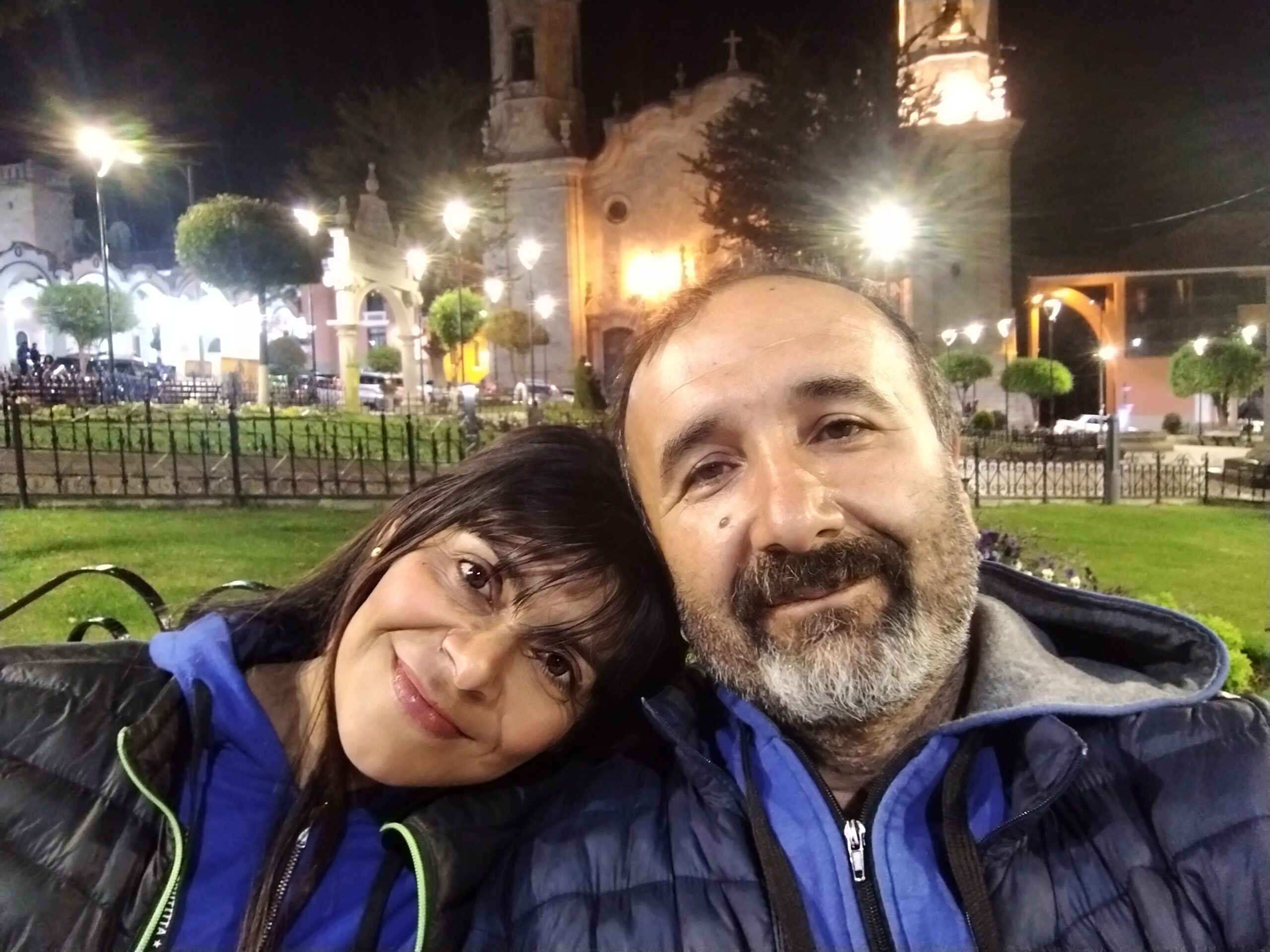
Today, however, one of the things that makes Potosí unforgettable — perhaps the most important — is its incredible altitude of 4,067 meters. This height immediately began to test our bodies. Özcan started to feel dizzy, breathing became harder; our steps grew heavy, as if we were breathing not air but a thin sheet of glass. This was one of the strongest truths the Andes remind you of: you are above nature, but still only a guest.
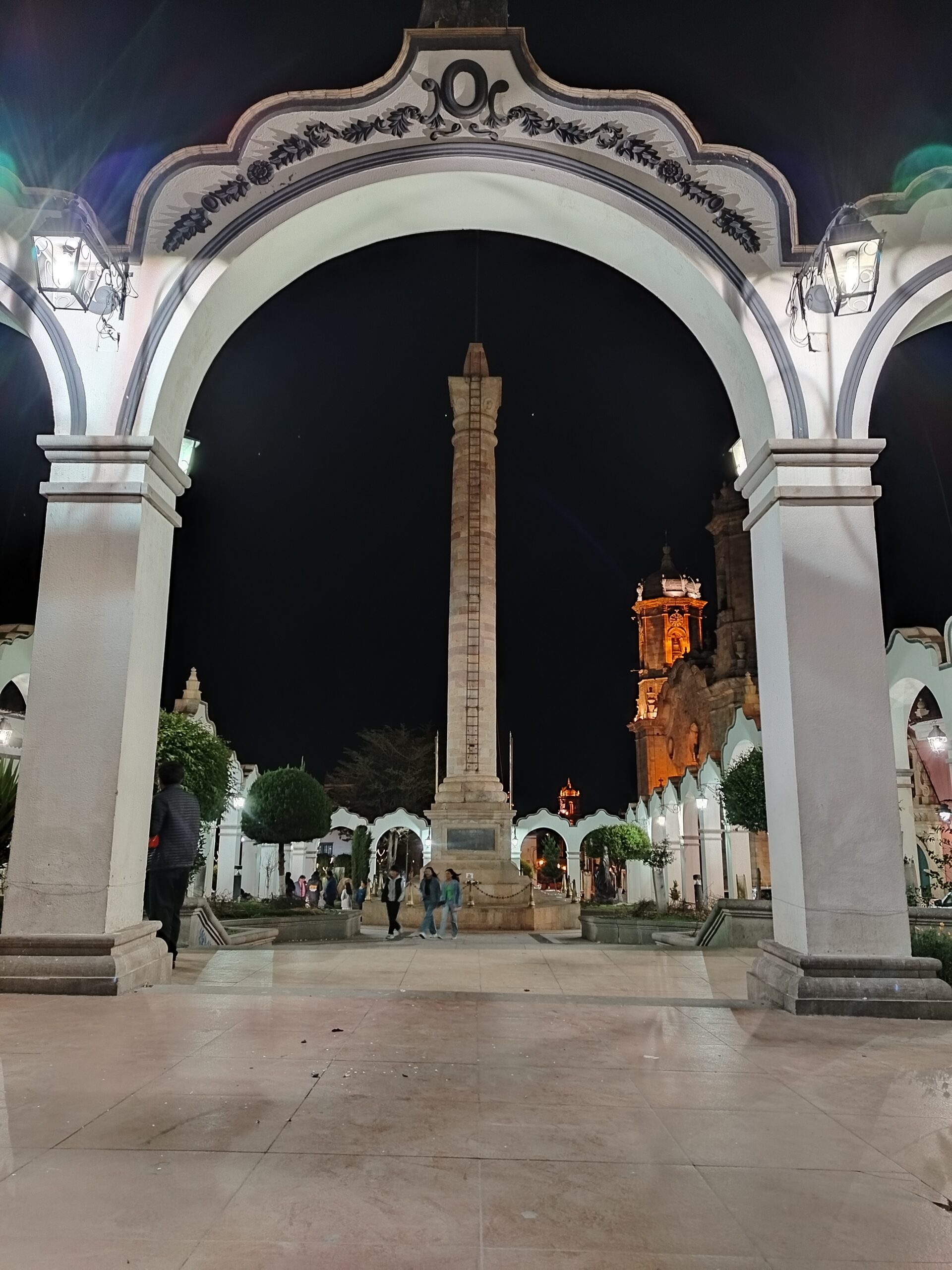
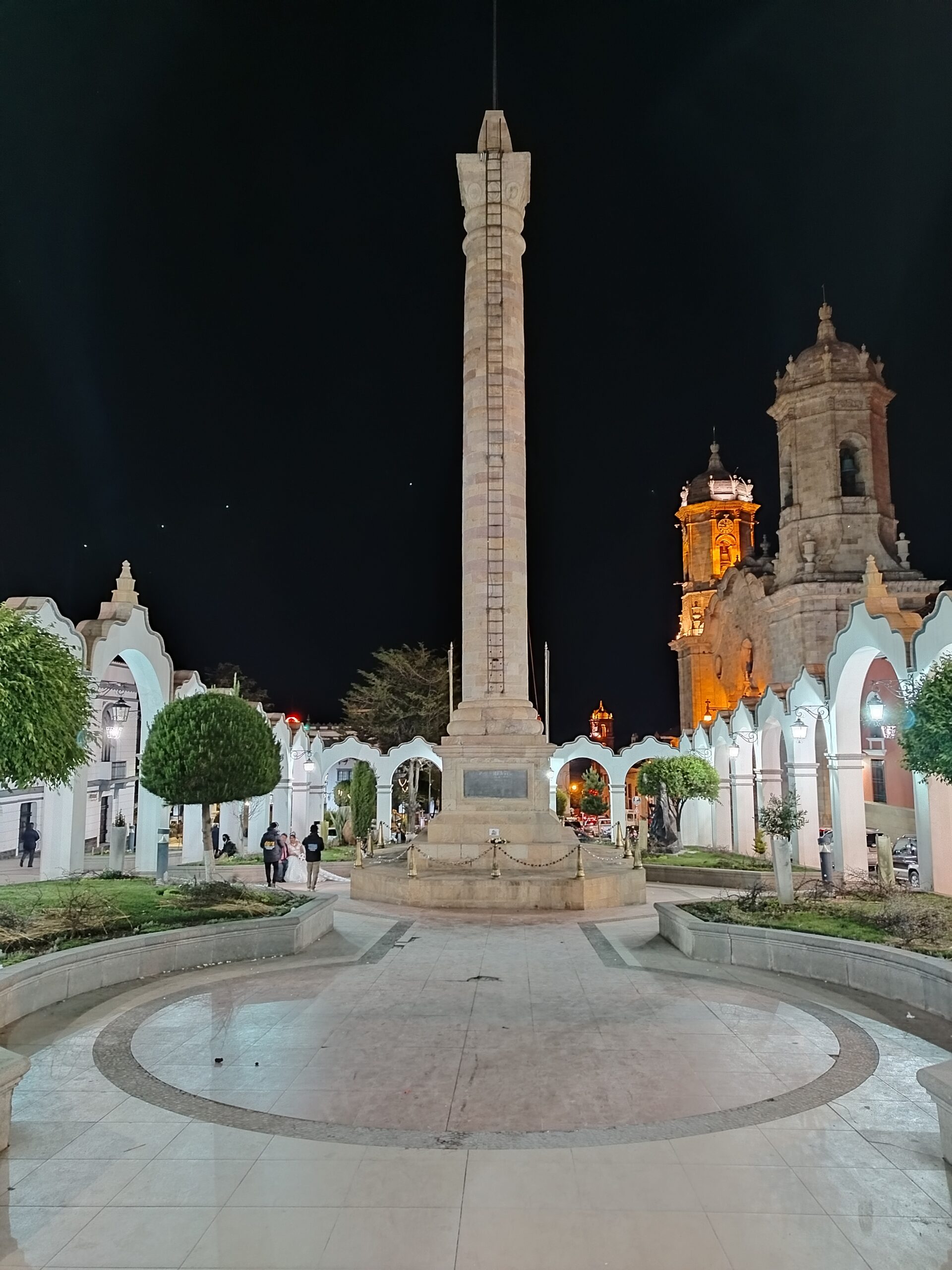
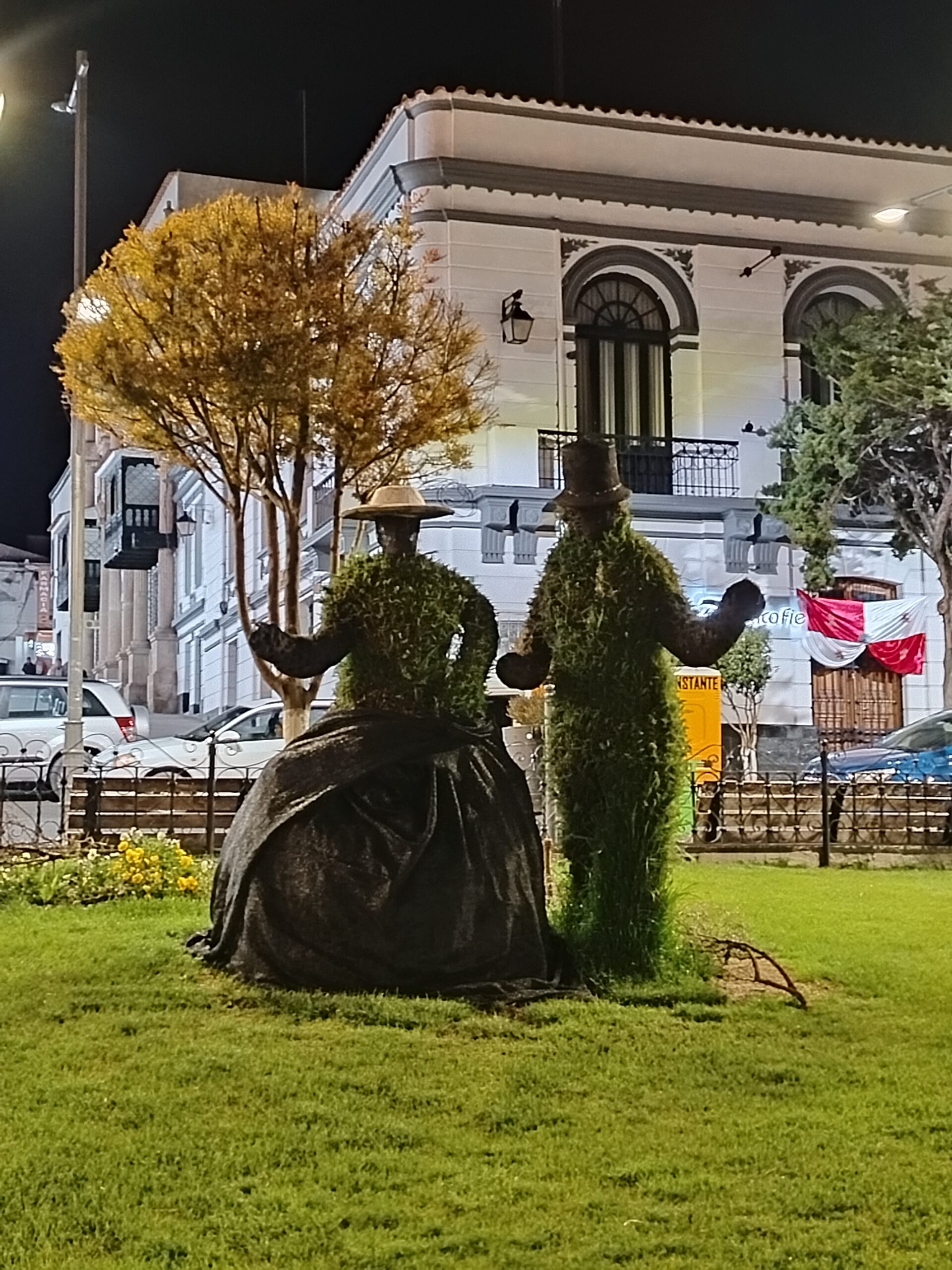
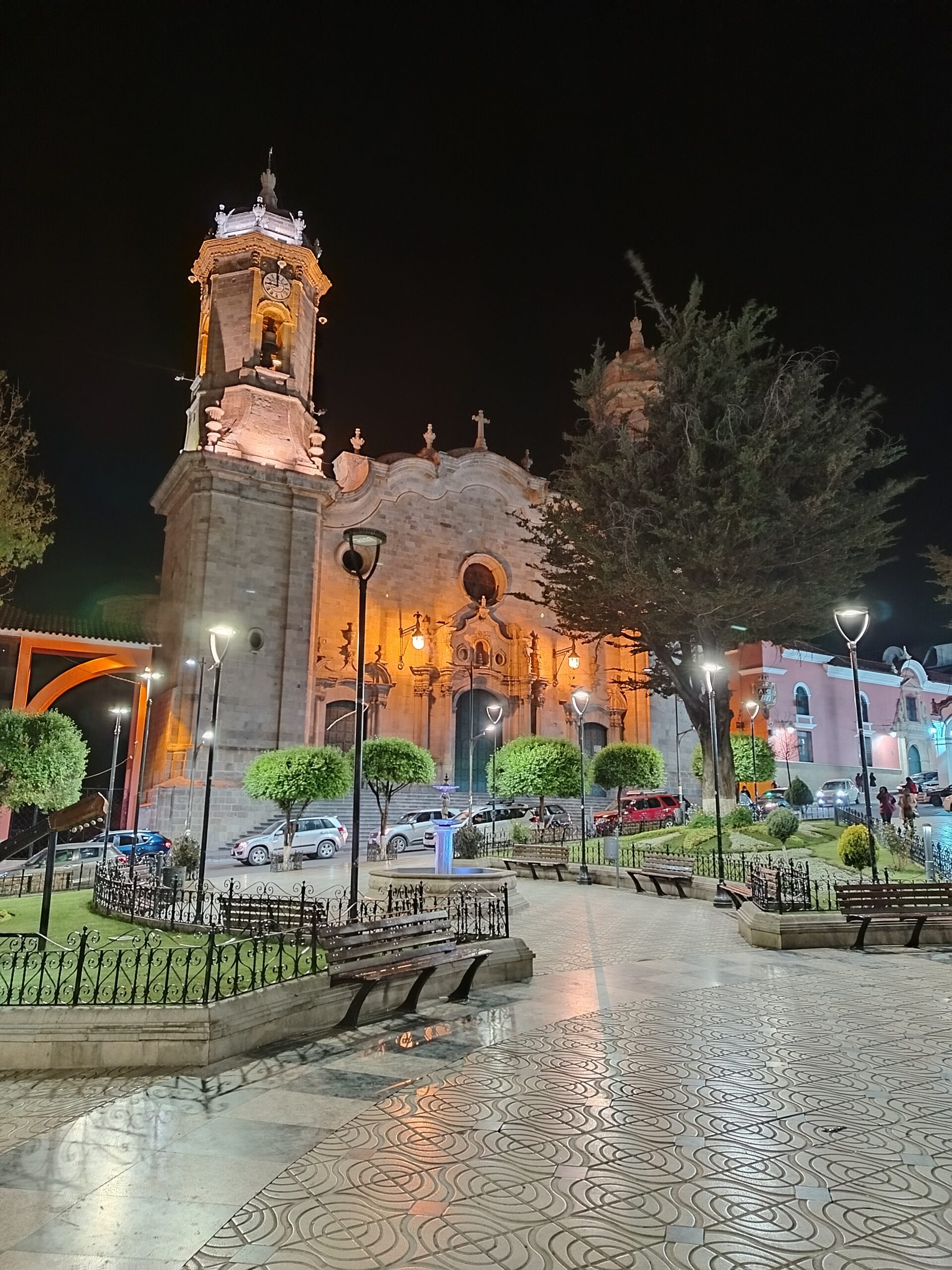
We went into a pharmacy and bought medicine to reduce the effects of altitude. After a short while, feeling a little better, we walked through the central streets of Potosí. With its colonial buildings, narrow streets and the slight dizziness brought by altitude, the city turned into a stage where time seemed to move slowly. After a short rest, a few photos and taking in the city’s quiet pride, we set off again.
Arrival in Uyuni: On the Edge of Another World
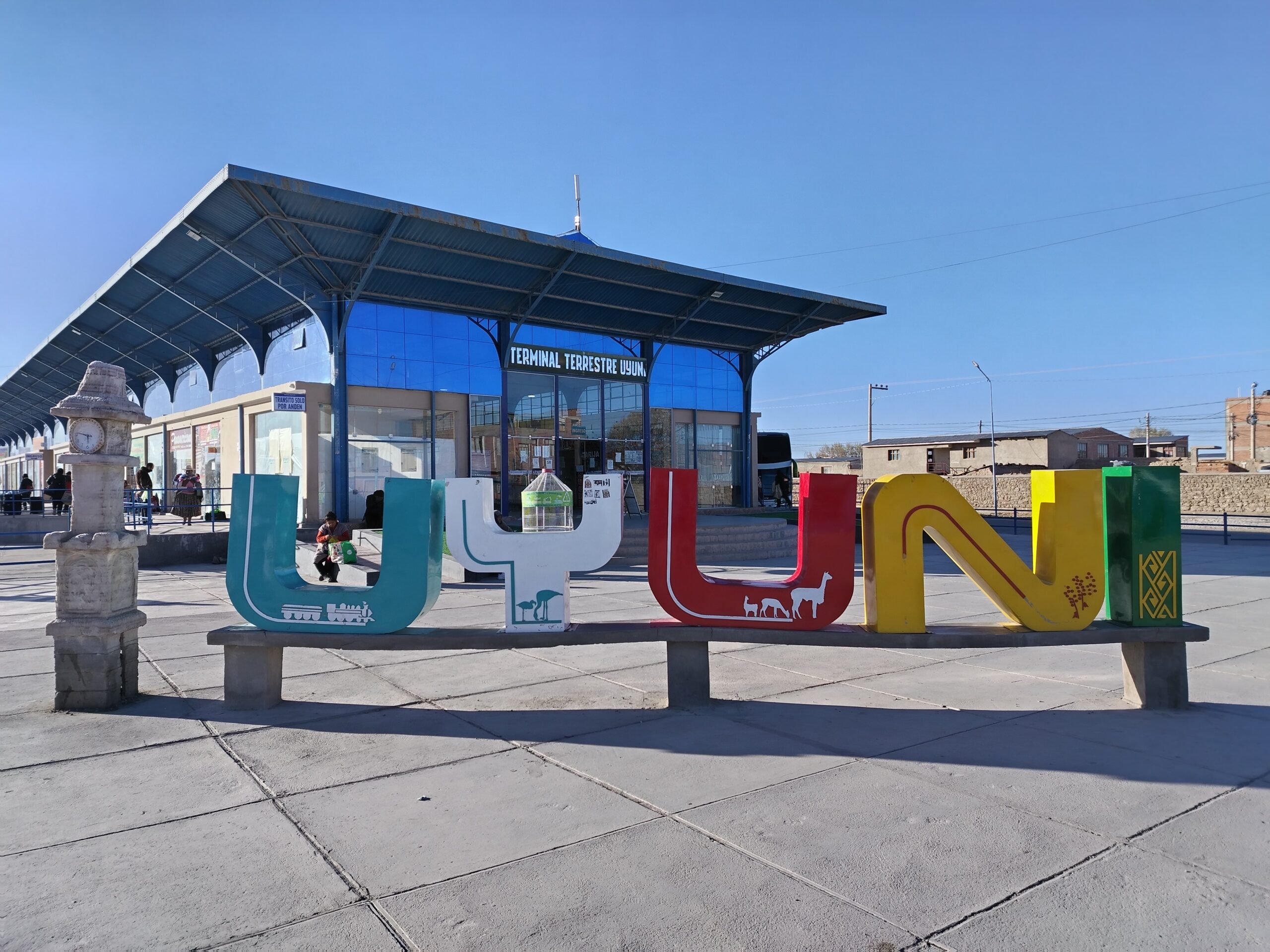
The next morning, at the end of our journey with our Peugeot 408, we reached the town of Uyuni. At around 3,670 meters above sea level, this small town was the gateway to one of the most extraordinary natural formations in the world:Salar de Uyuni.
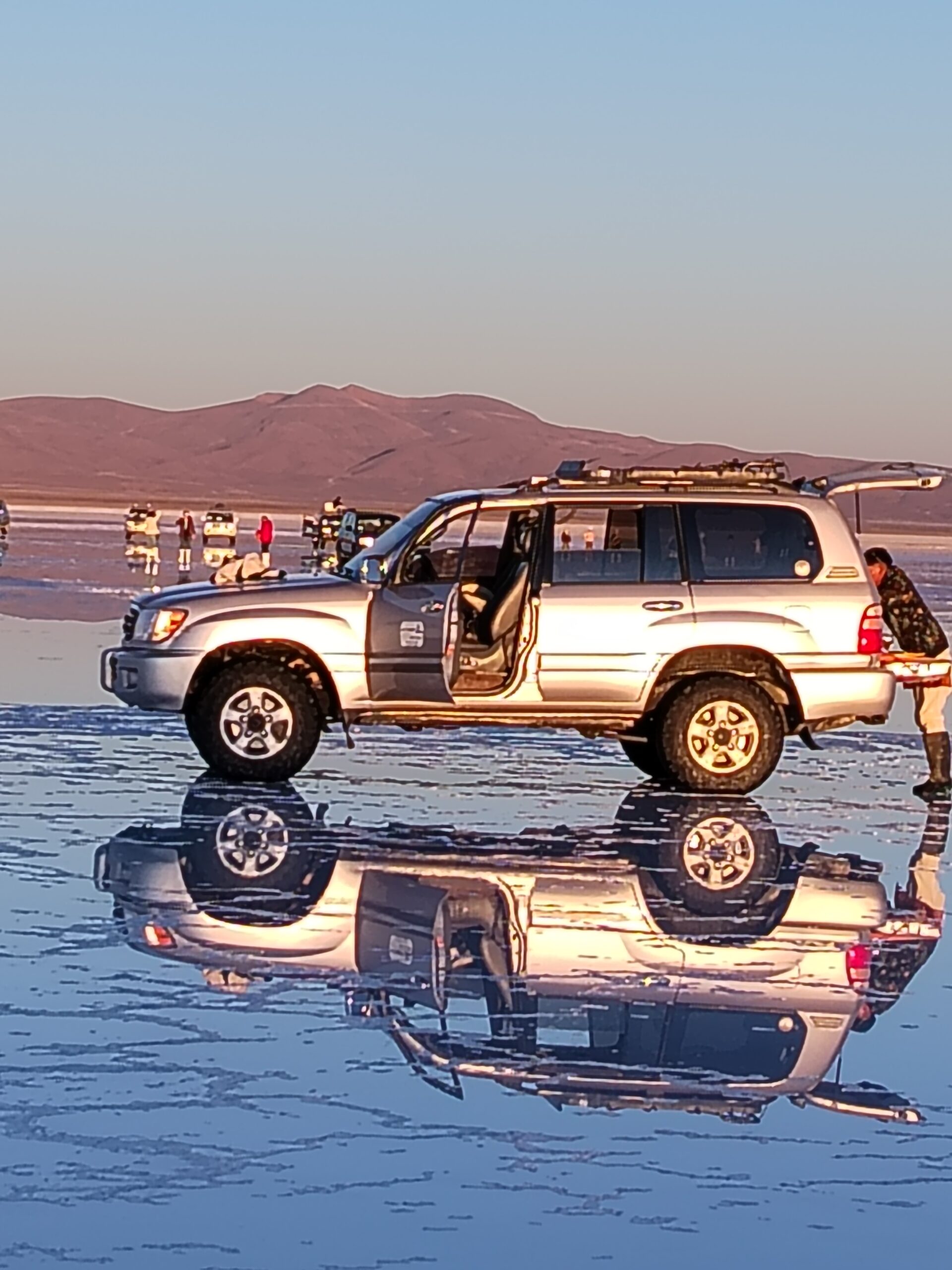
Our first task in Uyuni was to find out whether we could enter the Salt Flat with our own car. Everyone said the same thing: “Absolutely do not go in. The salt flat does not forgive.” Beneath the salt surface there were hidden holes, invisible cracks, water-filled areas and mud traps. Entering with our own vehicle would have been an irreversible risk. So we joined one of the region’s most popular 4×4 tours and chose a route where we could see all the beauties of the Salar — including Isla Incahuasi and the sunset.
The crowded but warm group traveling in the same vehicle became our companions for most of the day. These people from different countries would be both our silent witnesses and cheerful partners throughout the long day we would spend on the Salar.
Cementerio de Trenes: Locomotives Forgotten by Time
The first stop of the tour was the famous Train Cemetery just outside Uyuni, that is,Cementerio de Trenes. This place formed the abandoned heart of the great railway project built in the late 19th century to connect Bolivia’s mineral wealth to the world.
Steam locomotives that once carried silver and other minerals gradually became idle as mining declined and economic difficulties grew. Without maintenance, they were left to the mercy of the desert winds. Over the years, the metal bodies rusted, wooden parts rotted, some wagons tipped over and others were buried in the sand. Today these trains wait silently among Uyuni’s dry winds, like frames from a film where time has stopped.
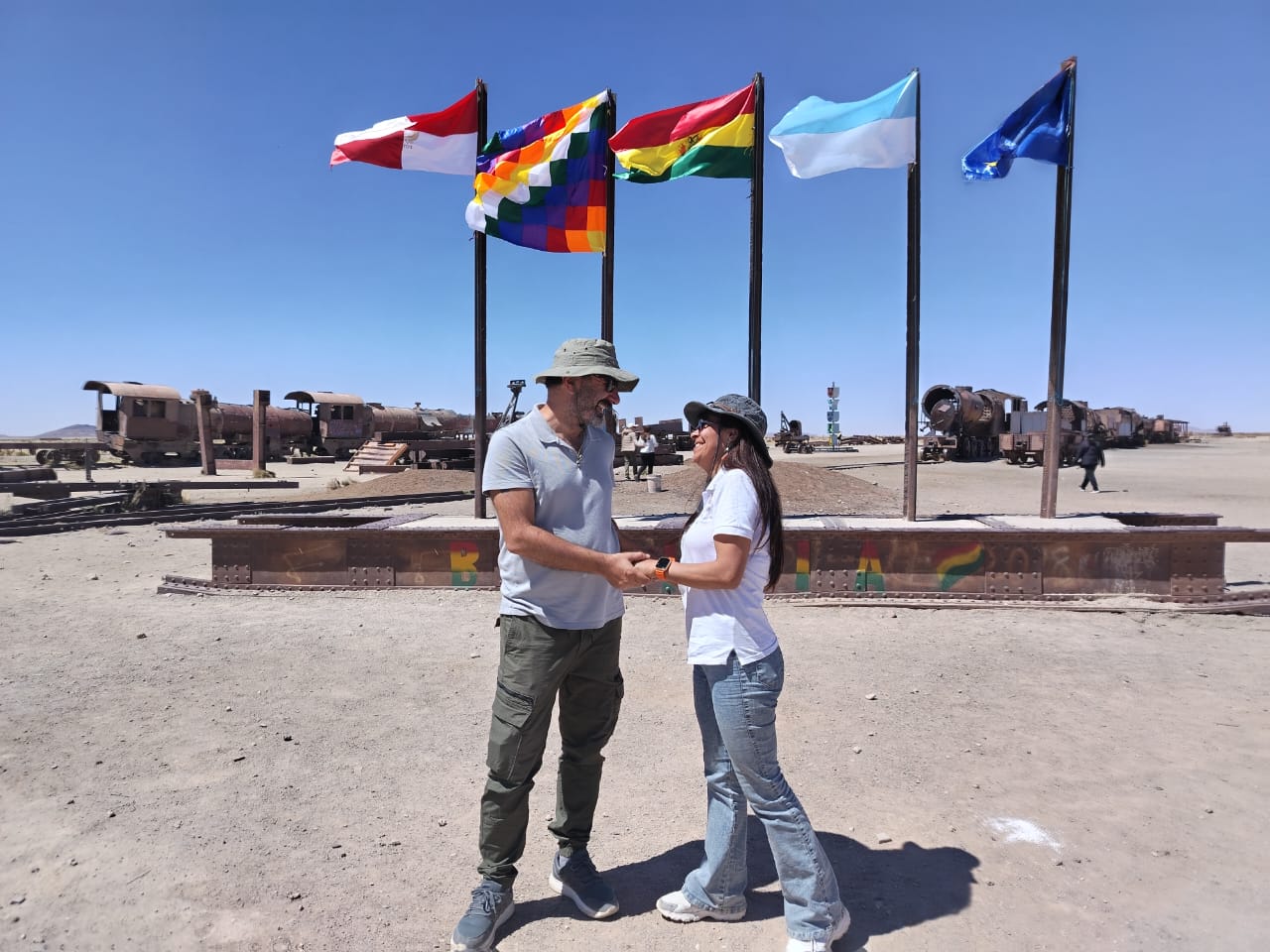
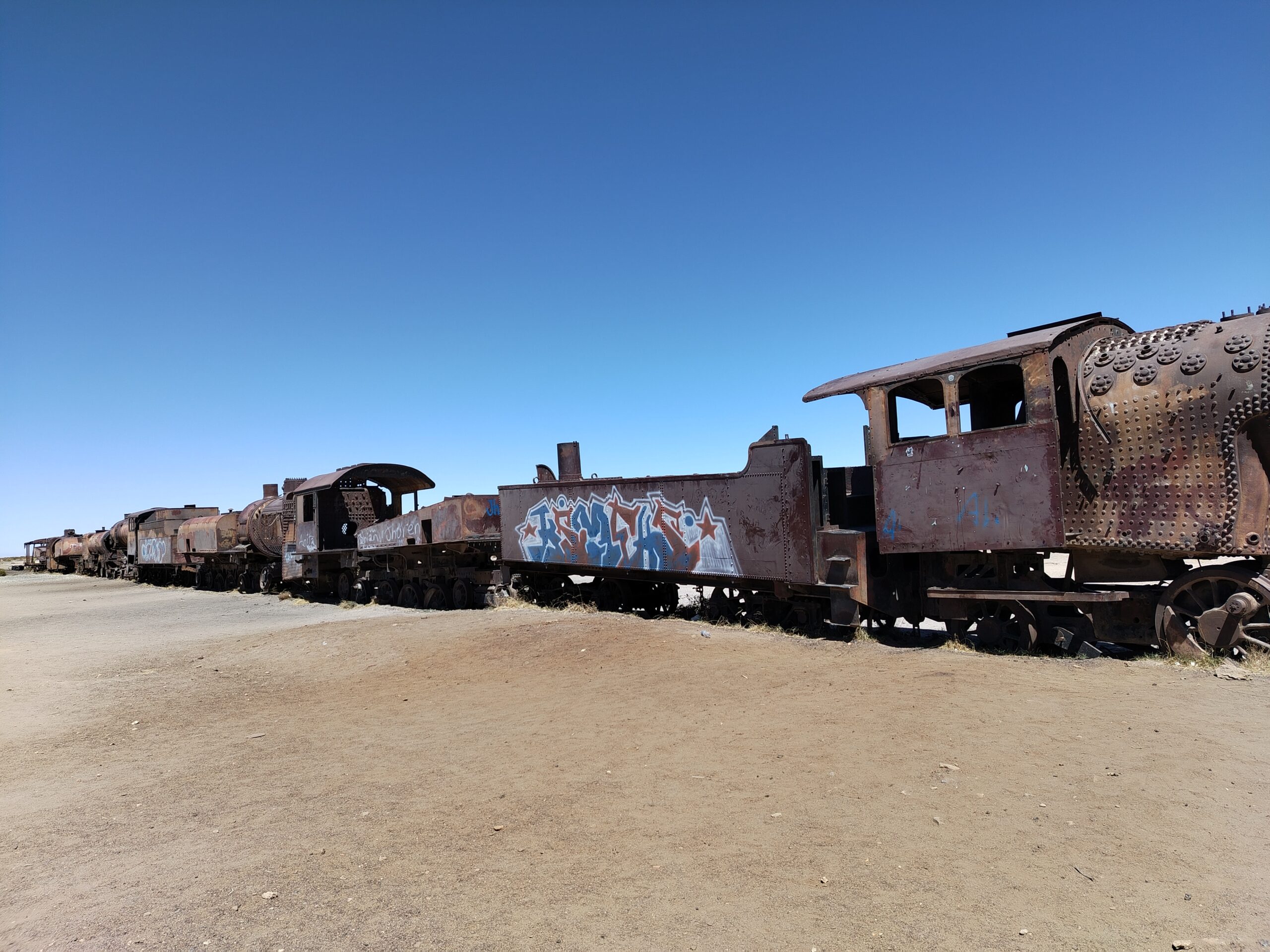

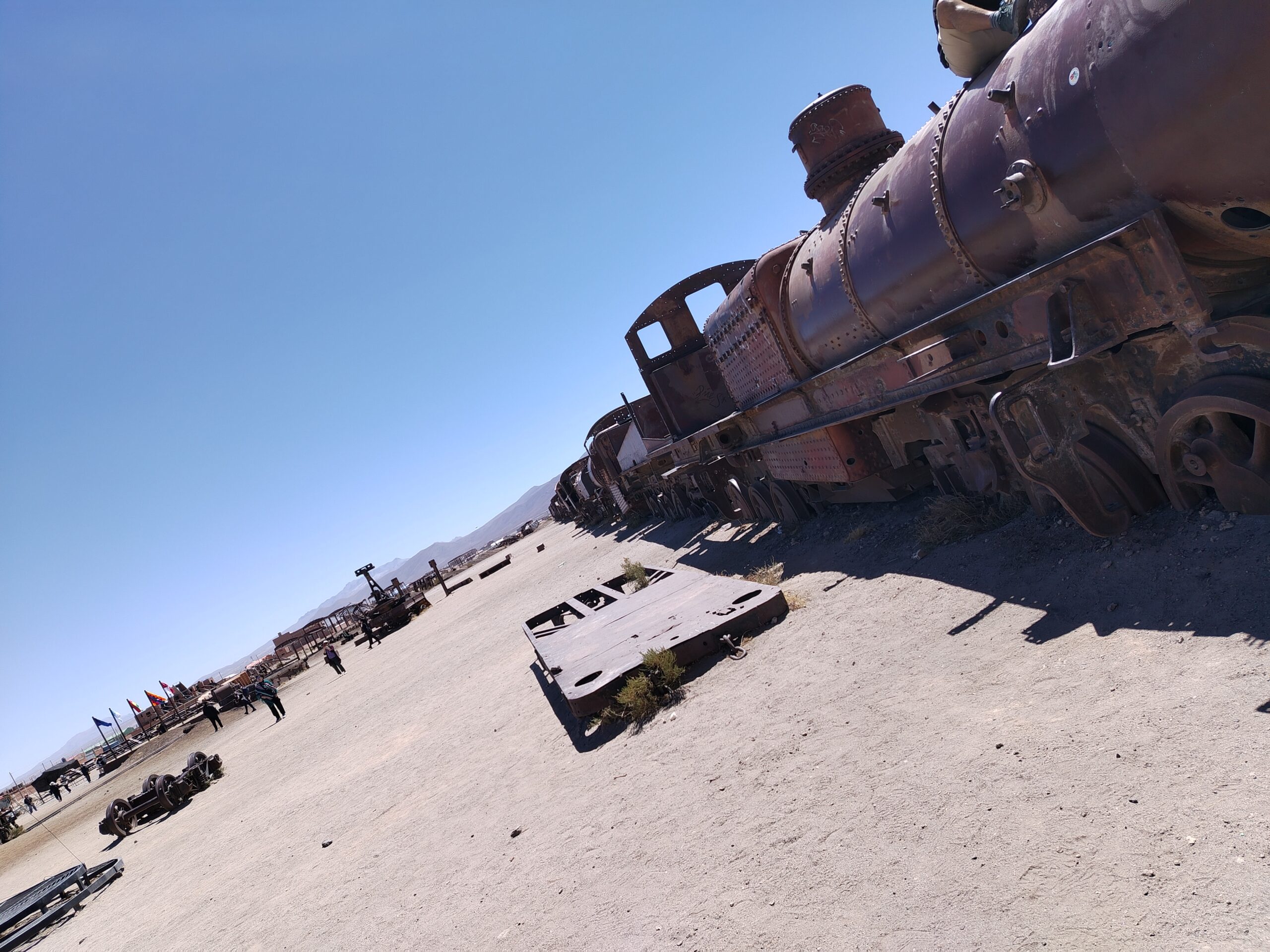
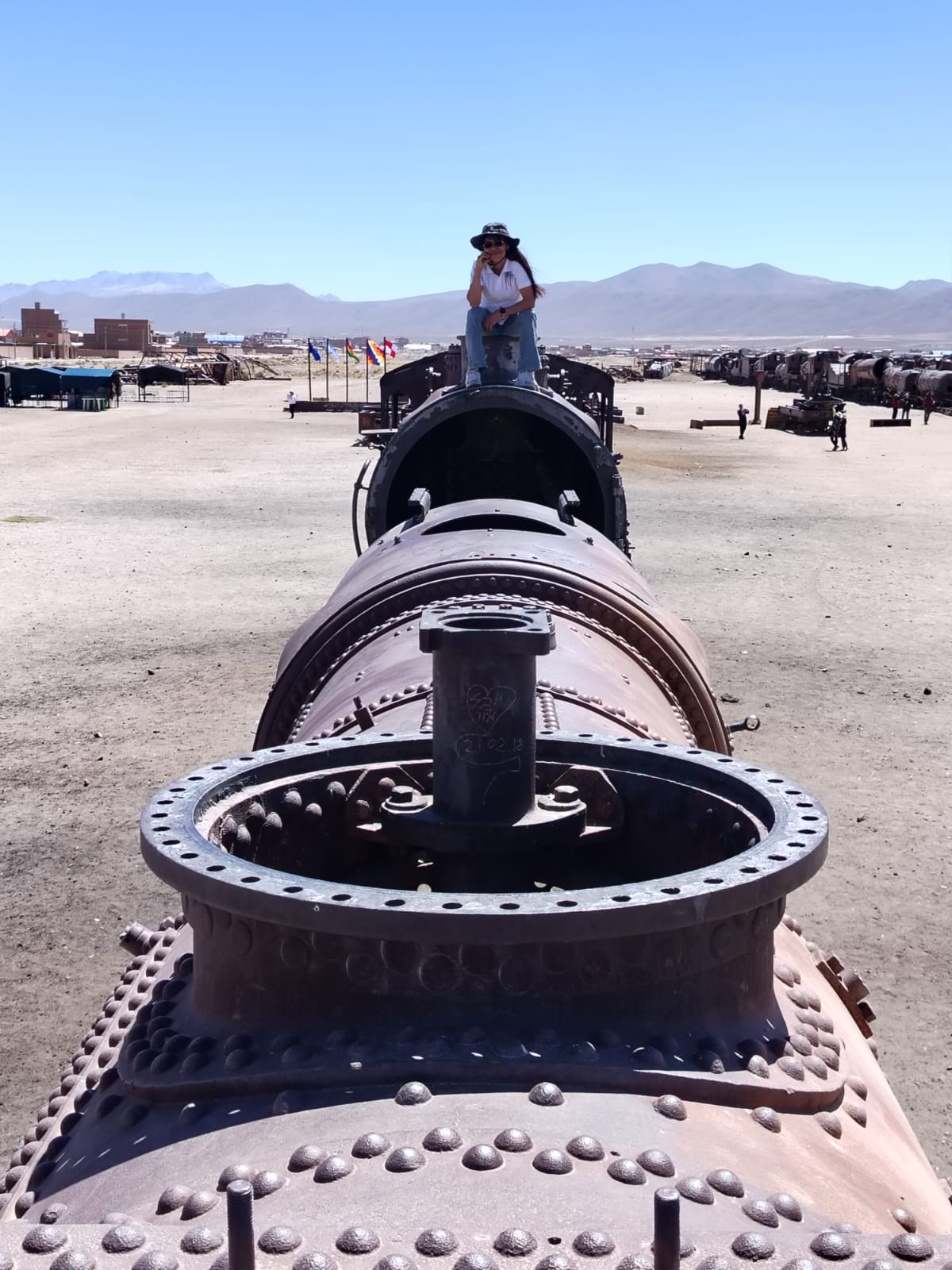
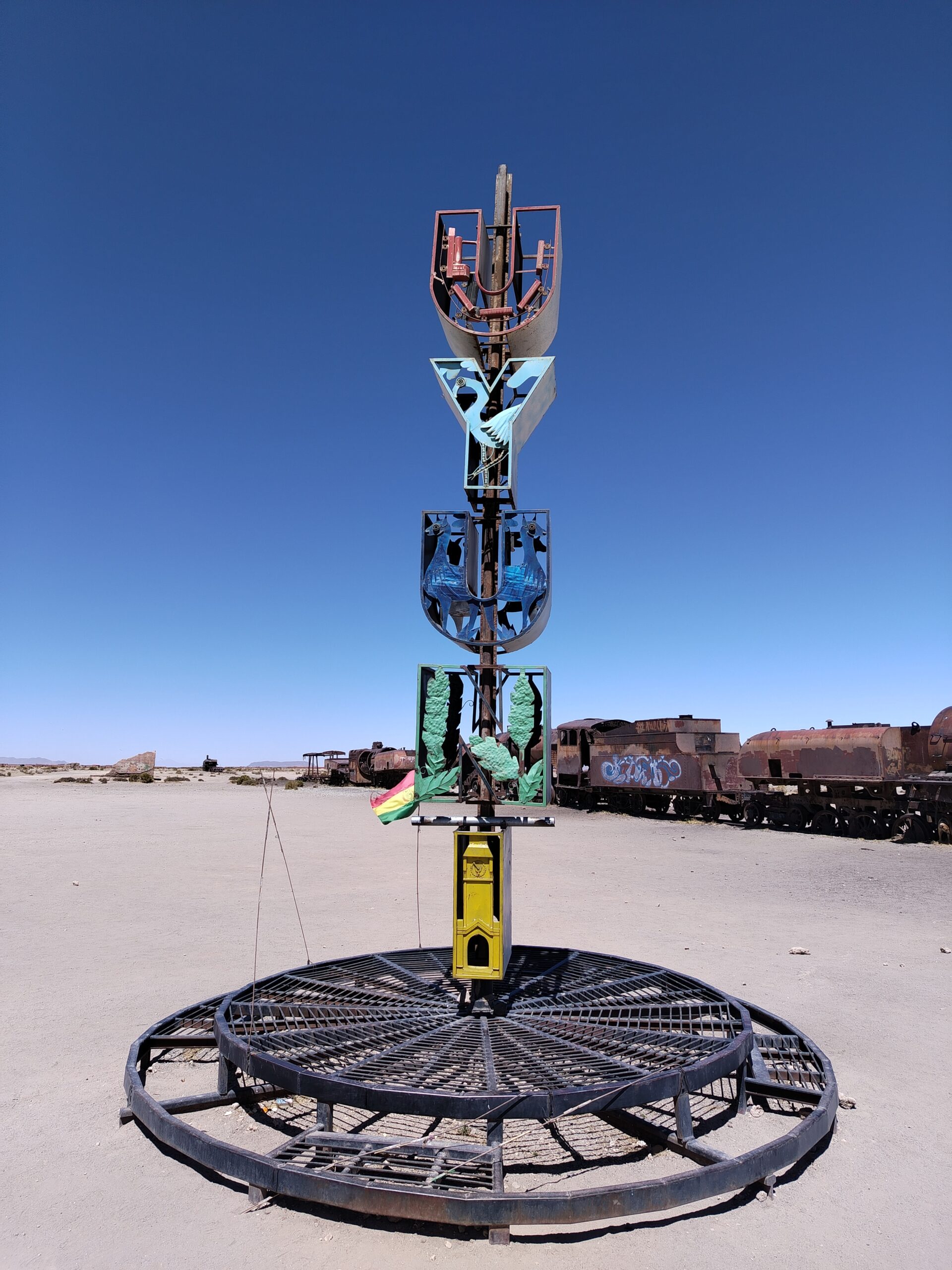
Walking on the rails, wandering among the rusty bodies, you find yourself suspended between history and melancholy. Steam boilers, decayed wagons, the shadows metal leaves in the desert… This place reminds you that even abandonment has a story. The graffiti on the trains, wagons turned into children’s playgrounds and tourists’ cheerful laughter add a strange vitality to this sorrowful landscape.
Entrance to the Salt Flat: The Gate Where Colors Open into White
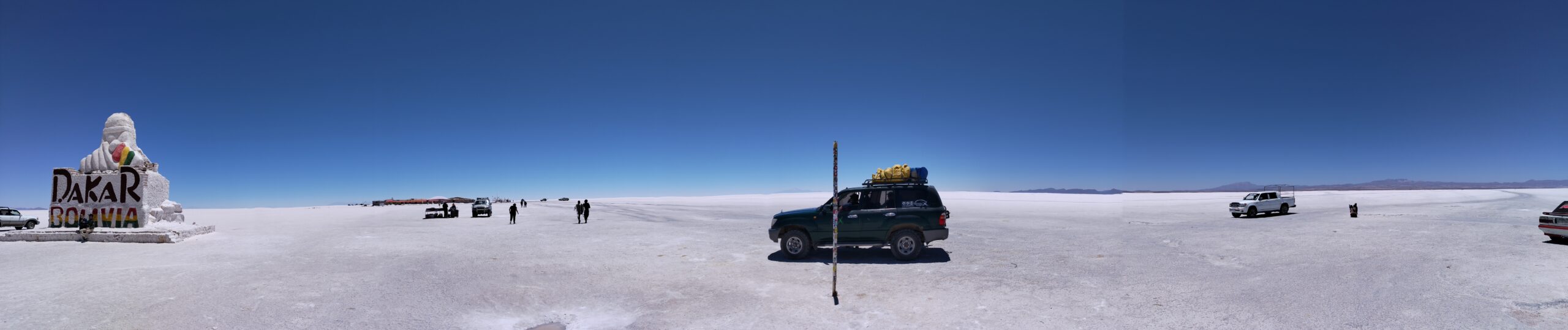
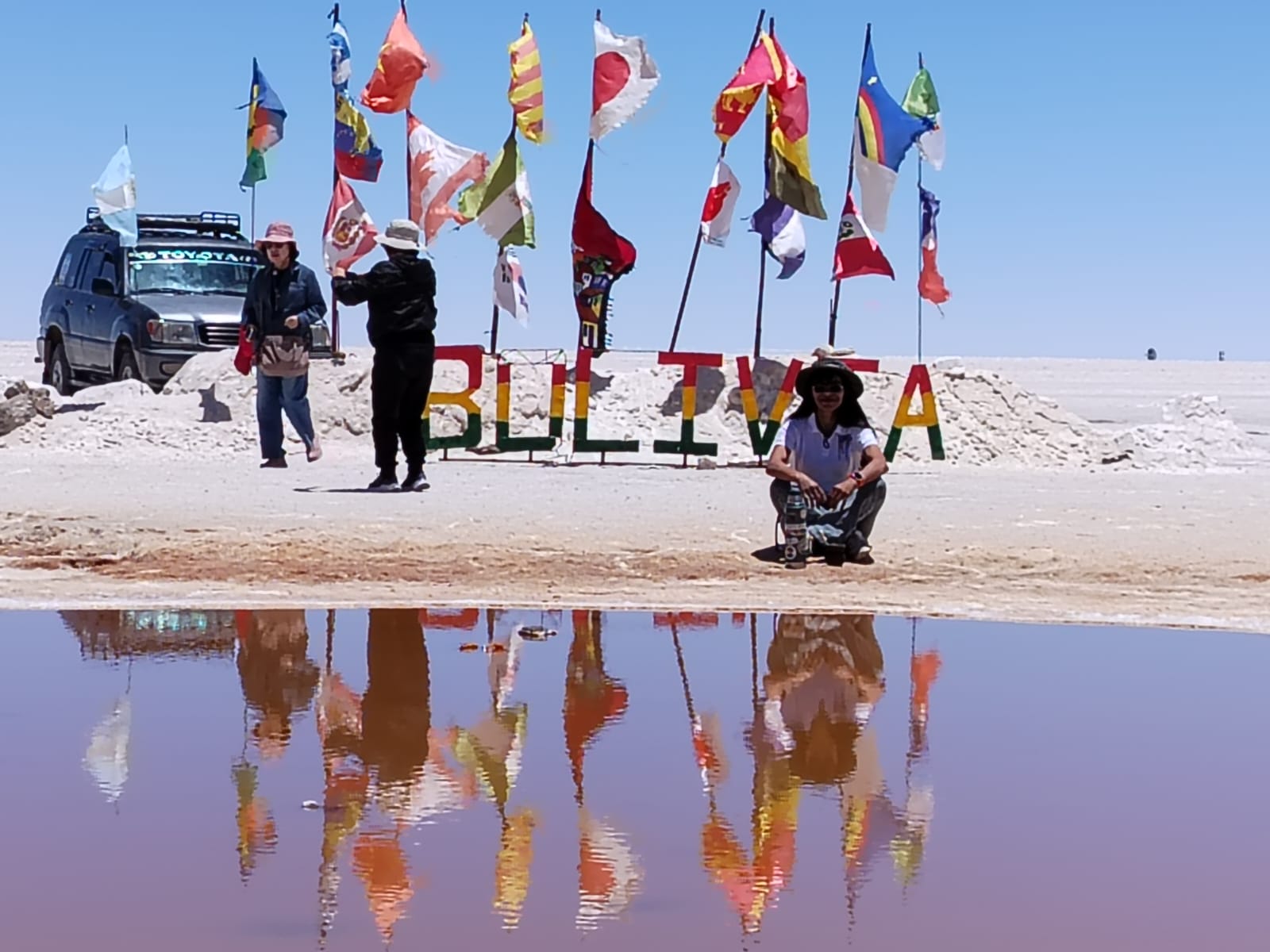
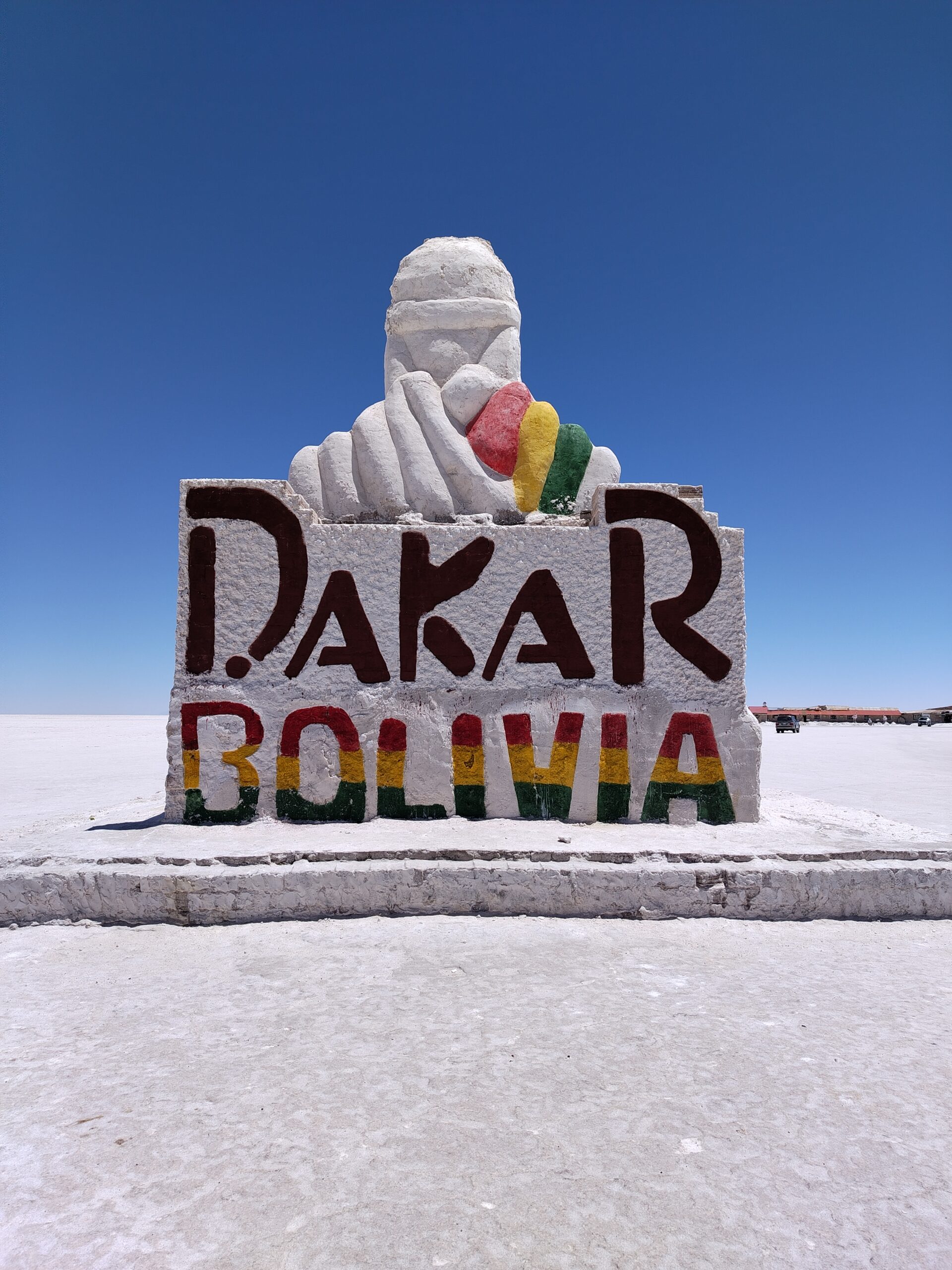
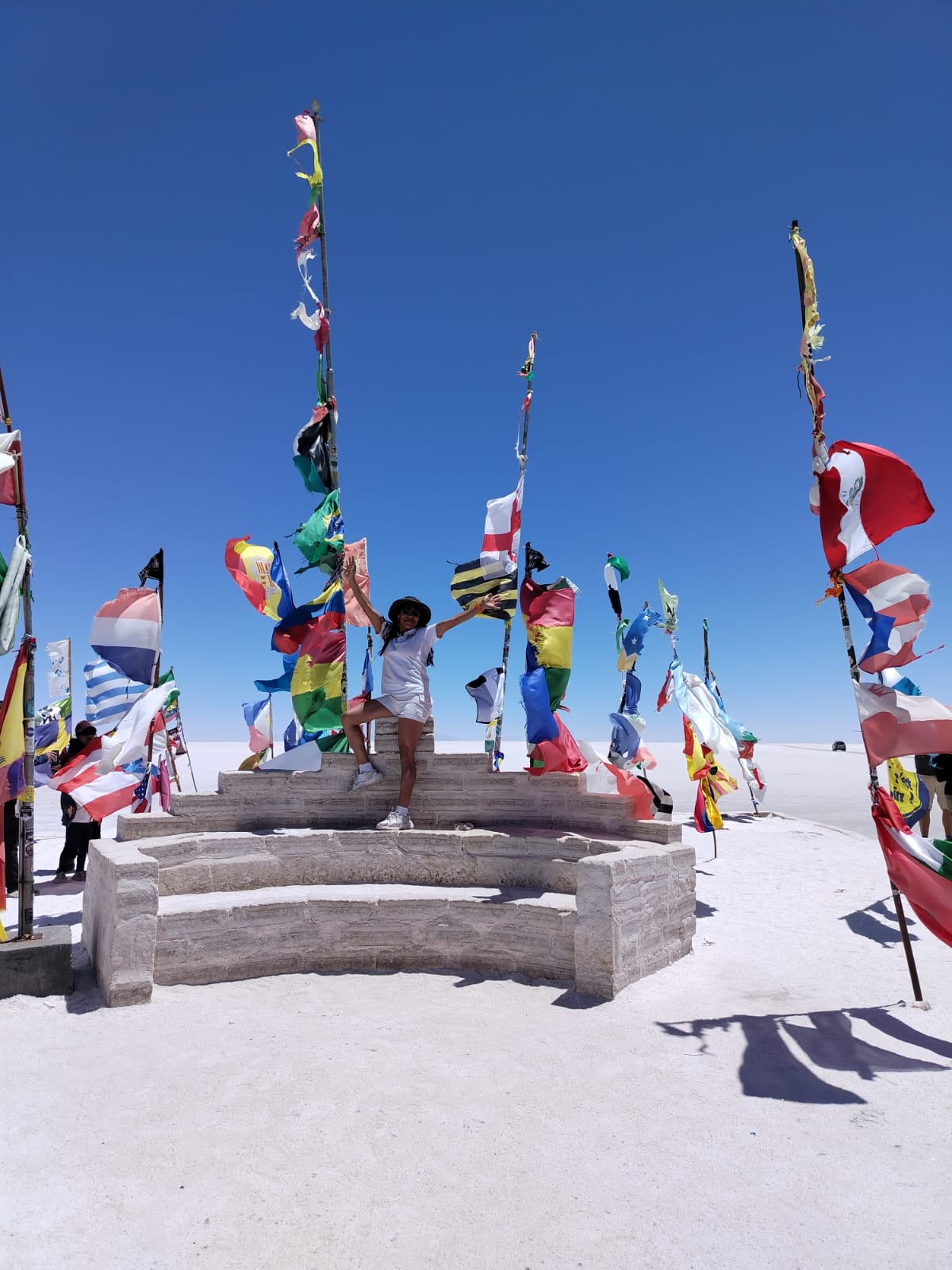
Shortly after leaving the train cemetery, we arrived at the entrance to the Salt Flat, where hundreds of flags rose toward the sky. These colors waving on the empty white ground of the Salar were like greetings extended to travelers from every corner of the world. The Andean wind shook the flags, and the colors seemed to fly in the middle of the whiteness.
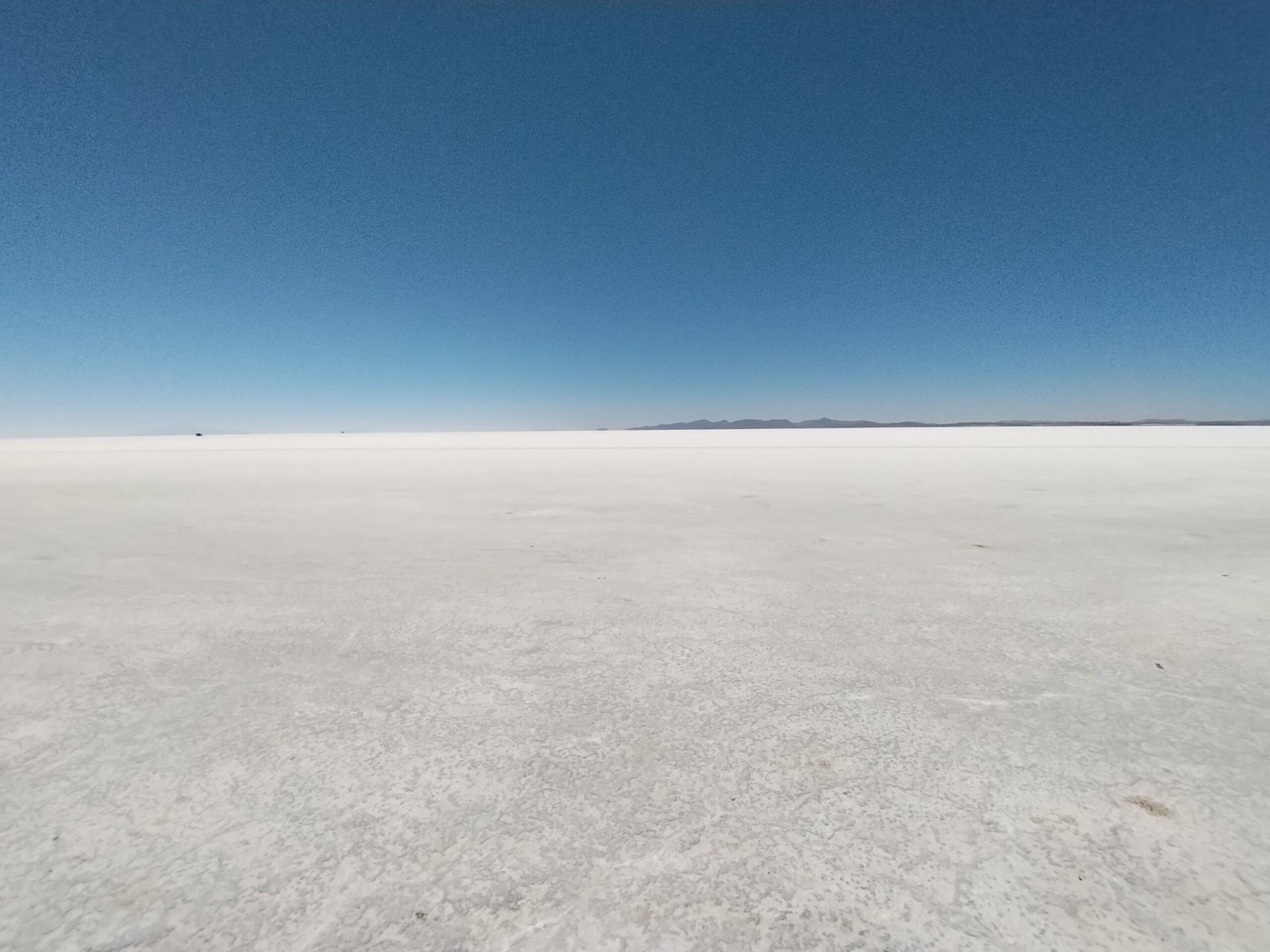
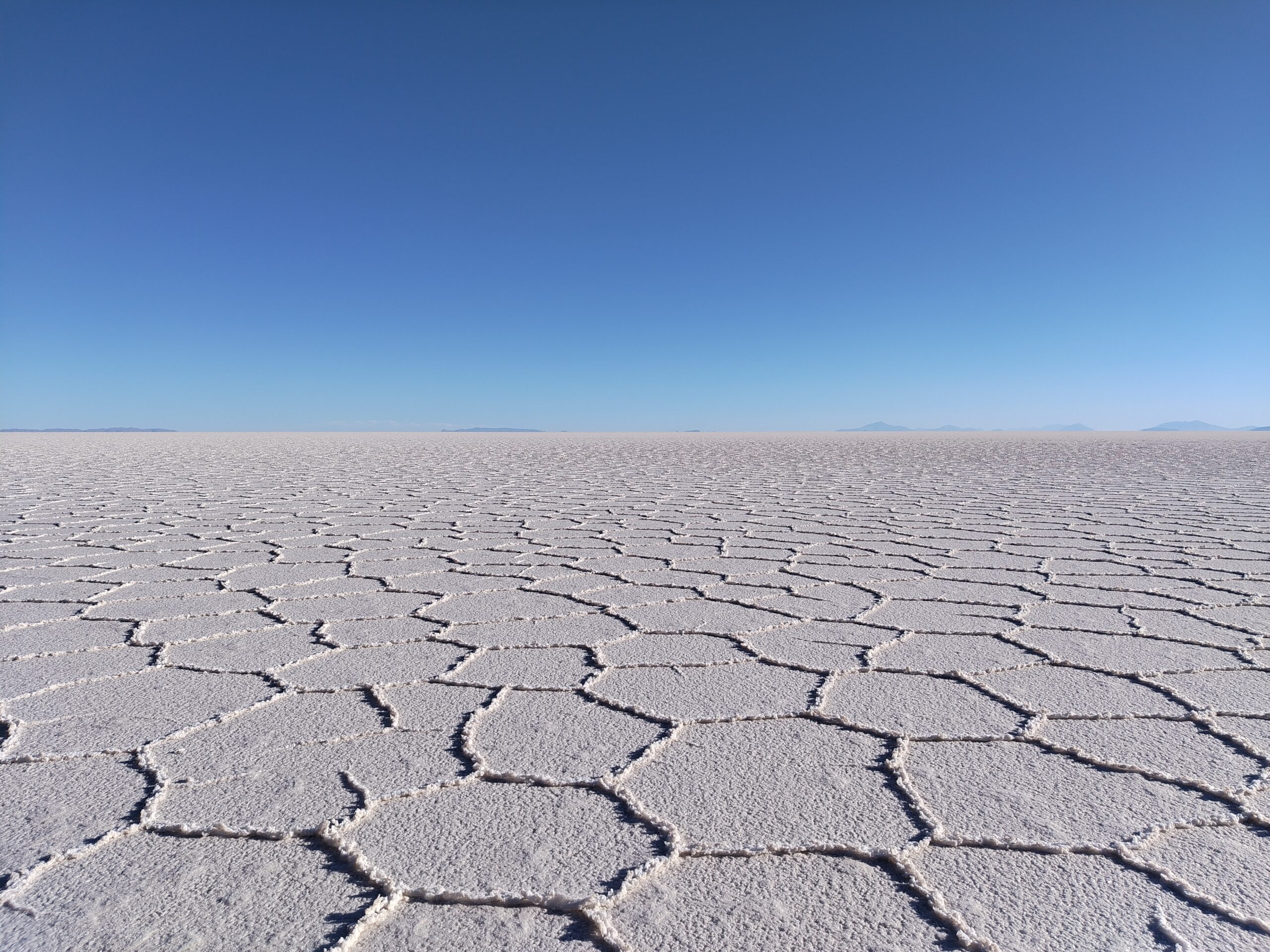
Here we met the hard texture of salt for the first time. When sunlight hit the surface, a dazzling brightness appeared and the horizon almost disappeared. We had now stepped onto the world’s largest salt flat. With its area of about 10,500 square kilometers, Salar de Uyuni stretched out like a giant white ocean. Walking on the hardened salt crust in the dry season, while knowing that in the rainy season this surface is covered by a thin layer of water and turns the sky into a mirror, made the magic of where we stood even stronger.
Salt Hotel: A Stop in the Middle of Whiteness
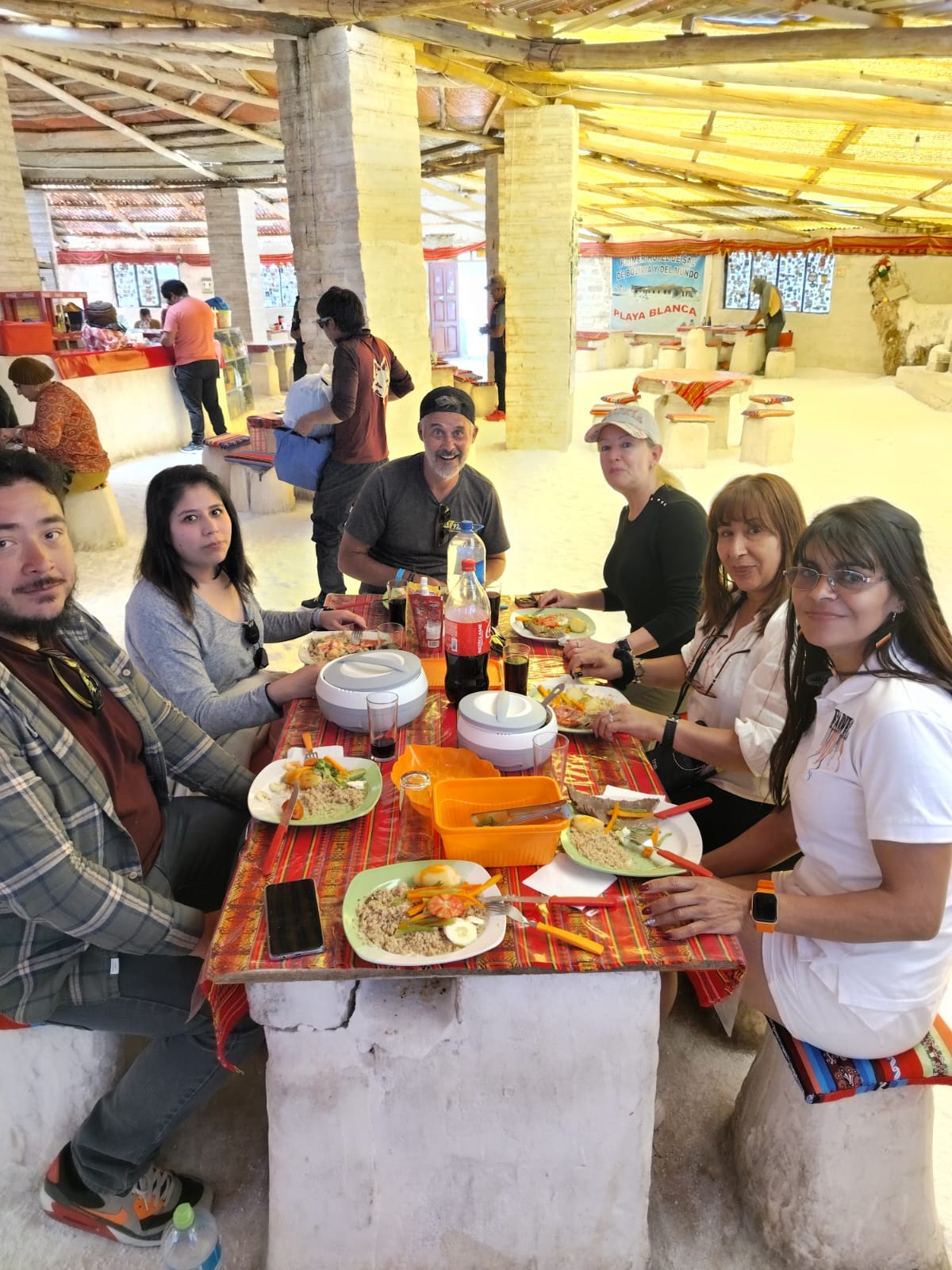
At noon we arrived at the salt hotel located in the middle of the Salar. Walls made entirely of salt blocks, columns carved from salt and the cool air inside showed that this was no ordinary building. The brightness outside under the burning sun, which made us squint, softened inside into a dim calm.
We sat down at our tables and had lunch with the companions who were traveling with us in the same vehicle. This table set in the middle of the vast Salar felt like a small break, a small family table. Outside there was the infinity of salt; inside, the warmth shared by people. As the fatigue of the journey eased a little, we gathered energy again for the long day we would spend on the Salar.
Isla Incahuasi: An Oasis in the Middle of the Salt Sea
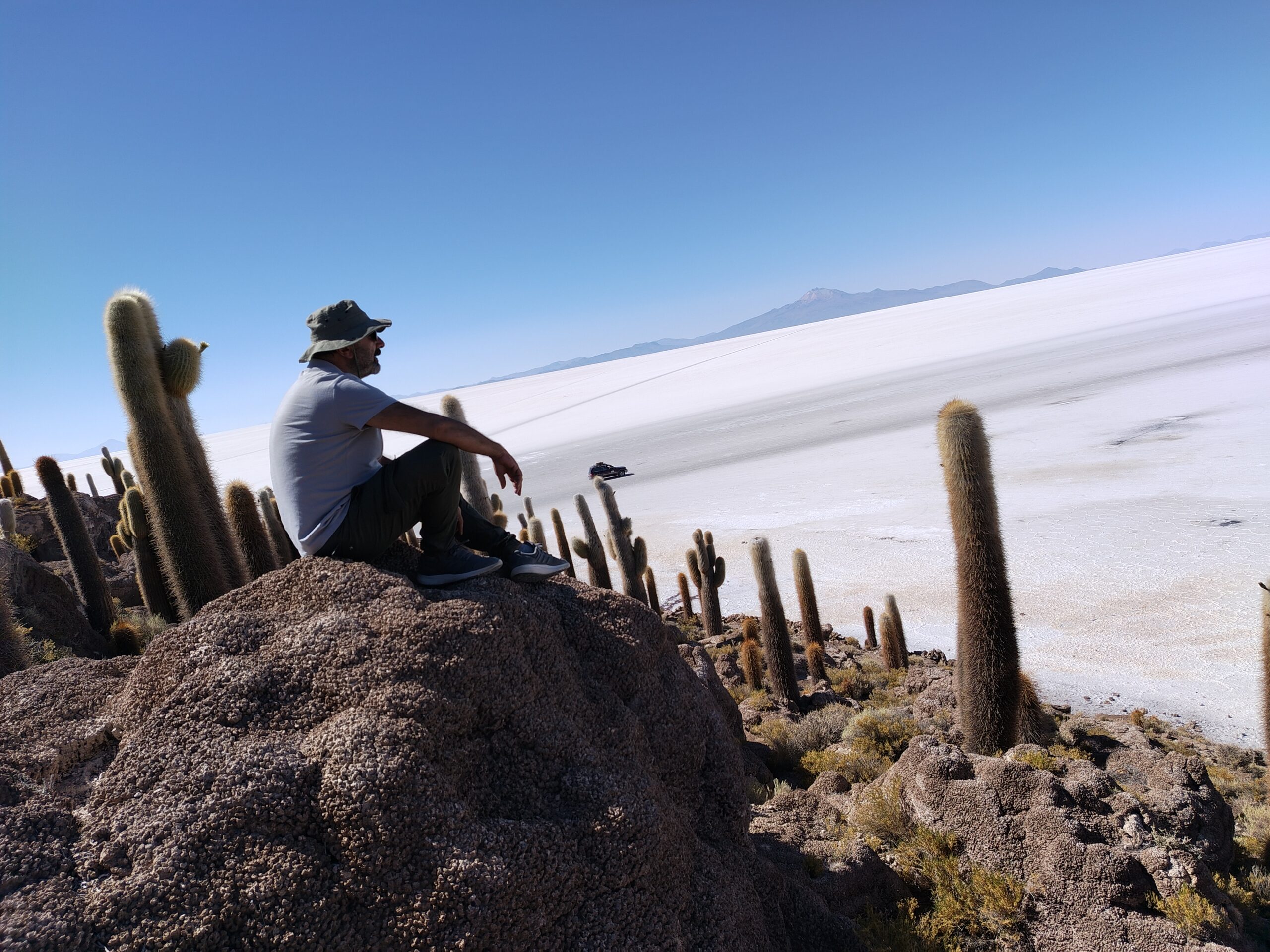
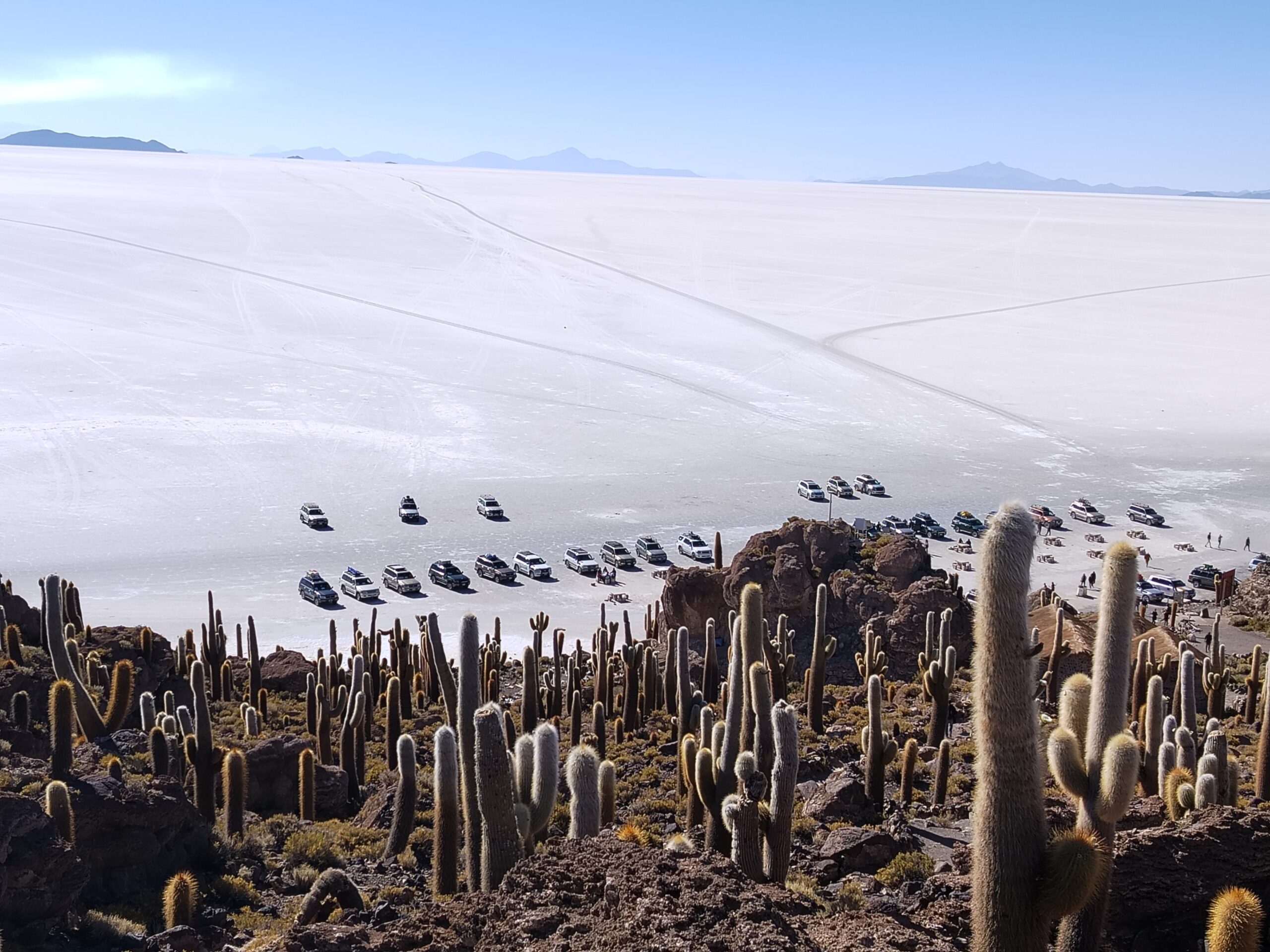
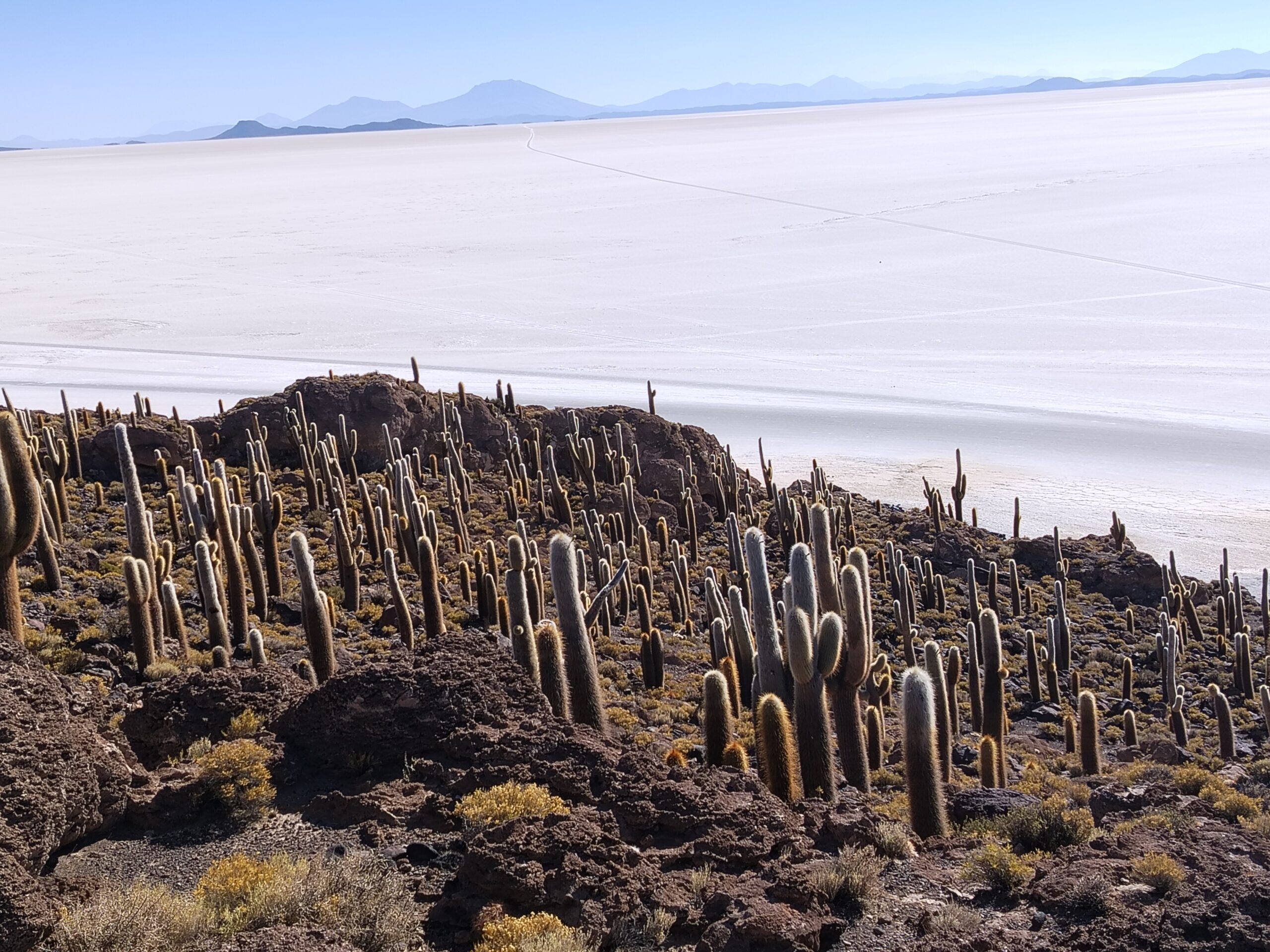
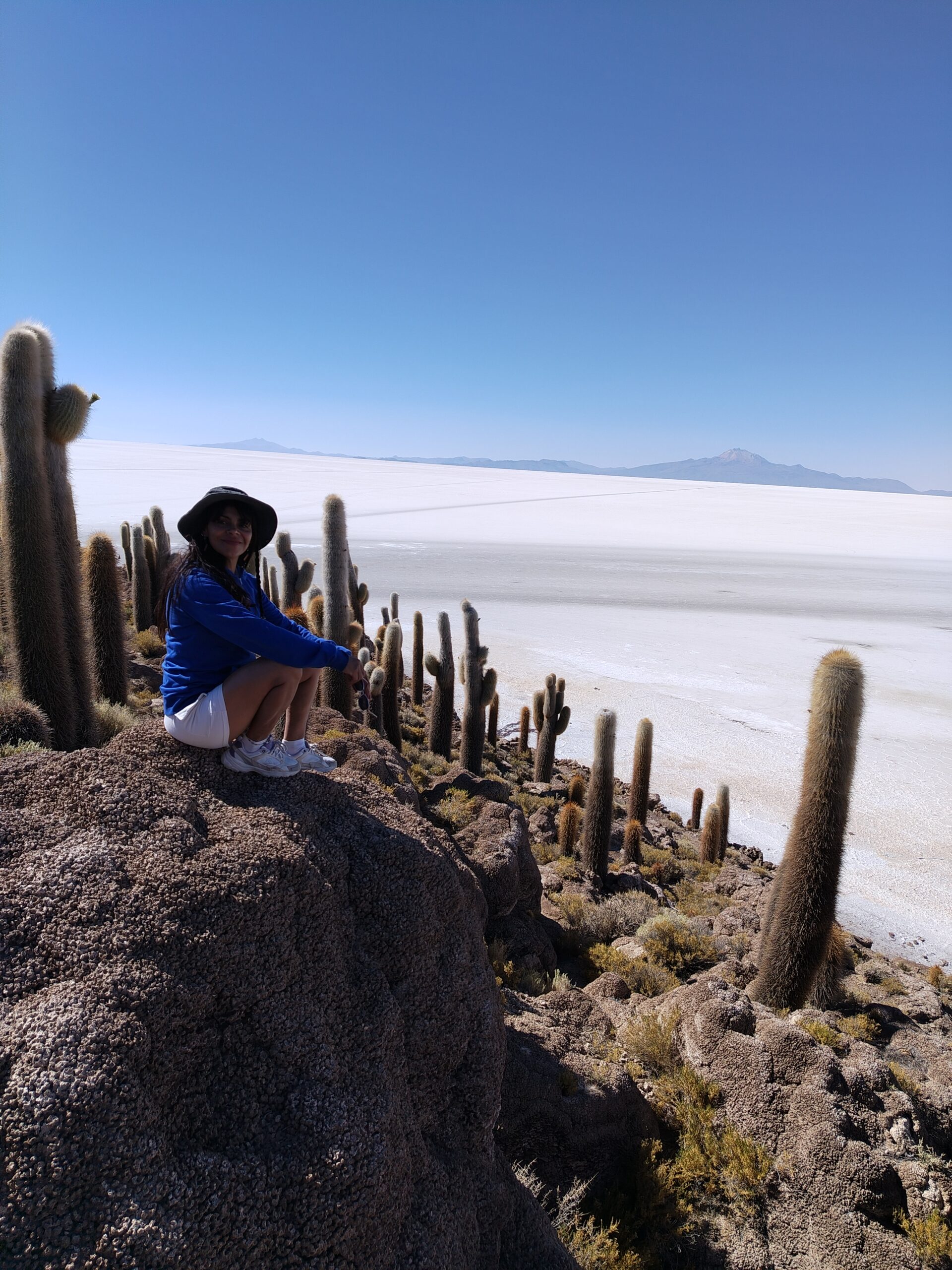
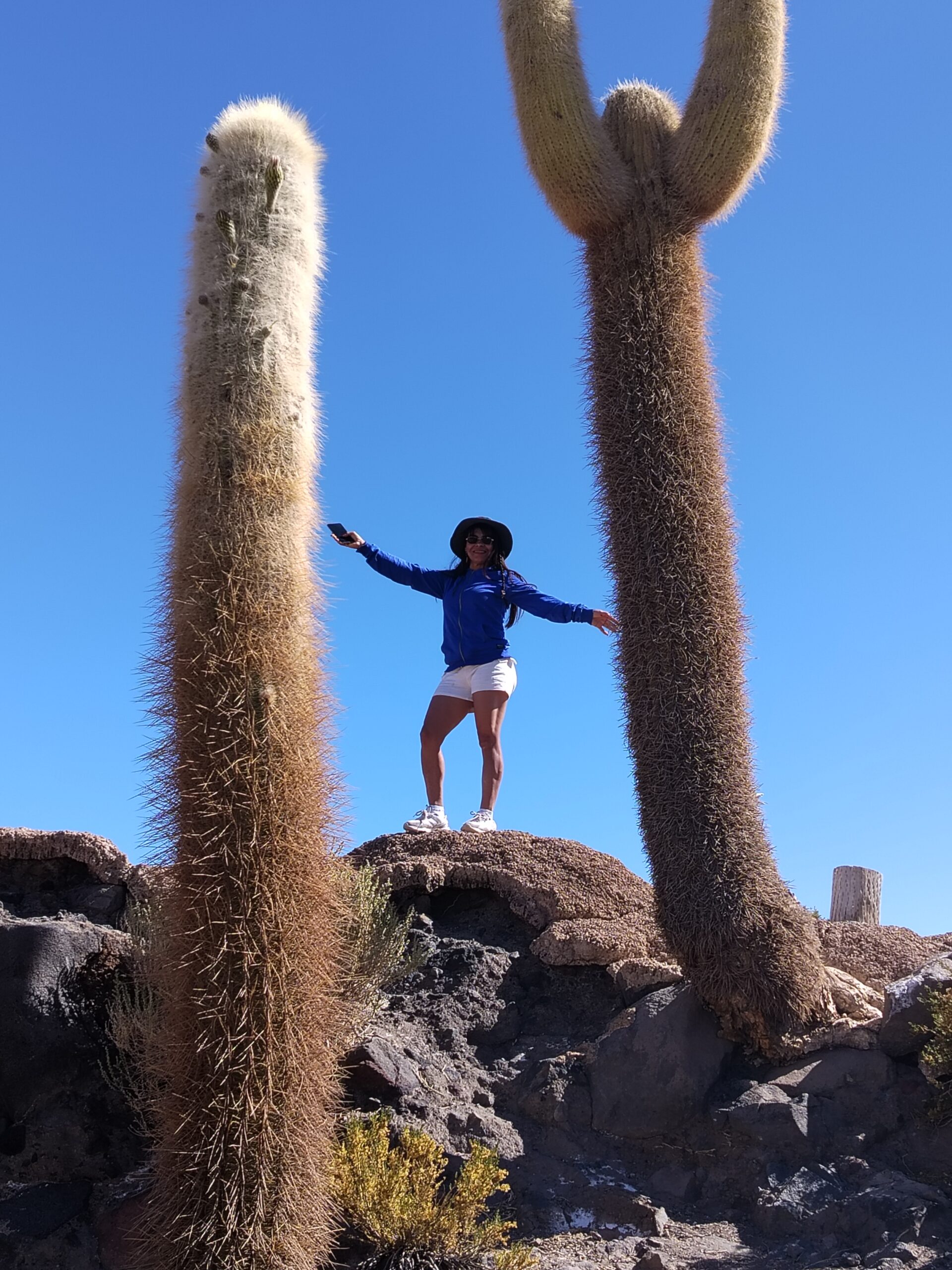
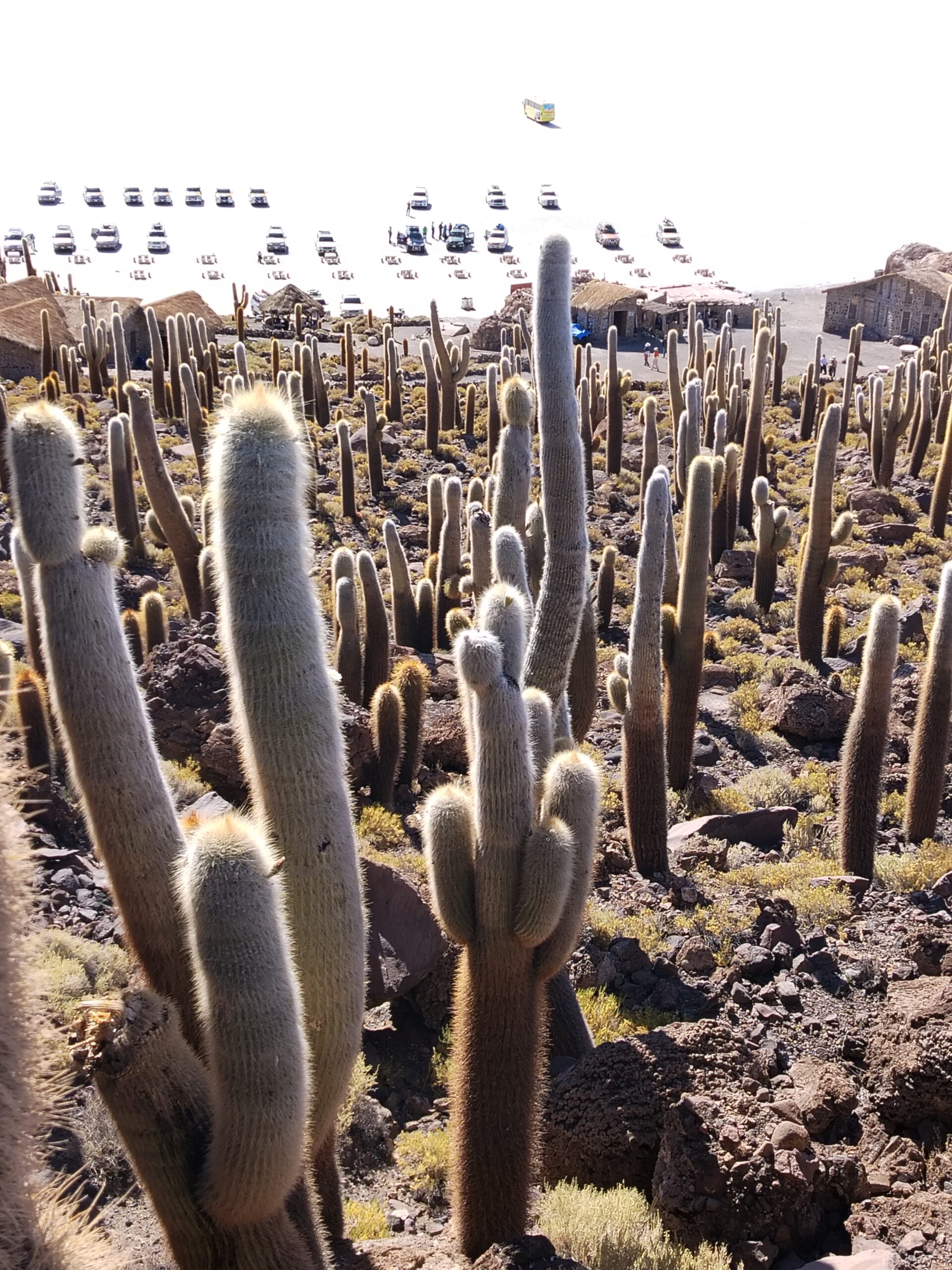
Our next stop was Isla Incahuasi, rising in the middle of the Salt Flat. This island of about 12 square kilometers was once a reef on the ocean floor millions of years ago. Over time the waters receded, leaving behind a vast plain covered with salt and, right in the middle, this island covered with cacti.
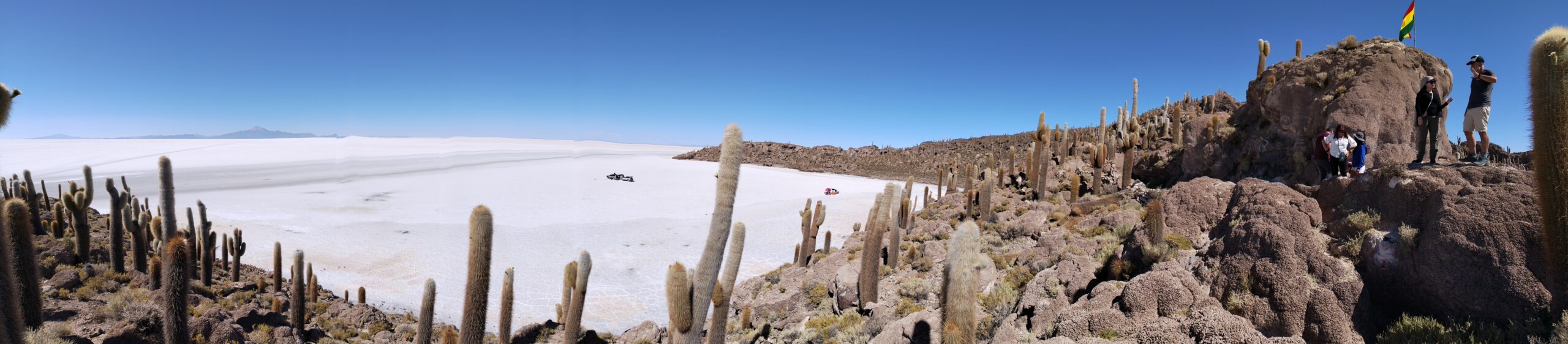
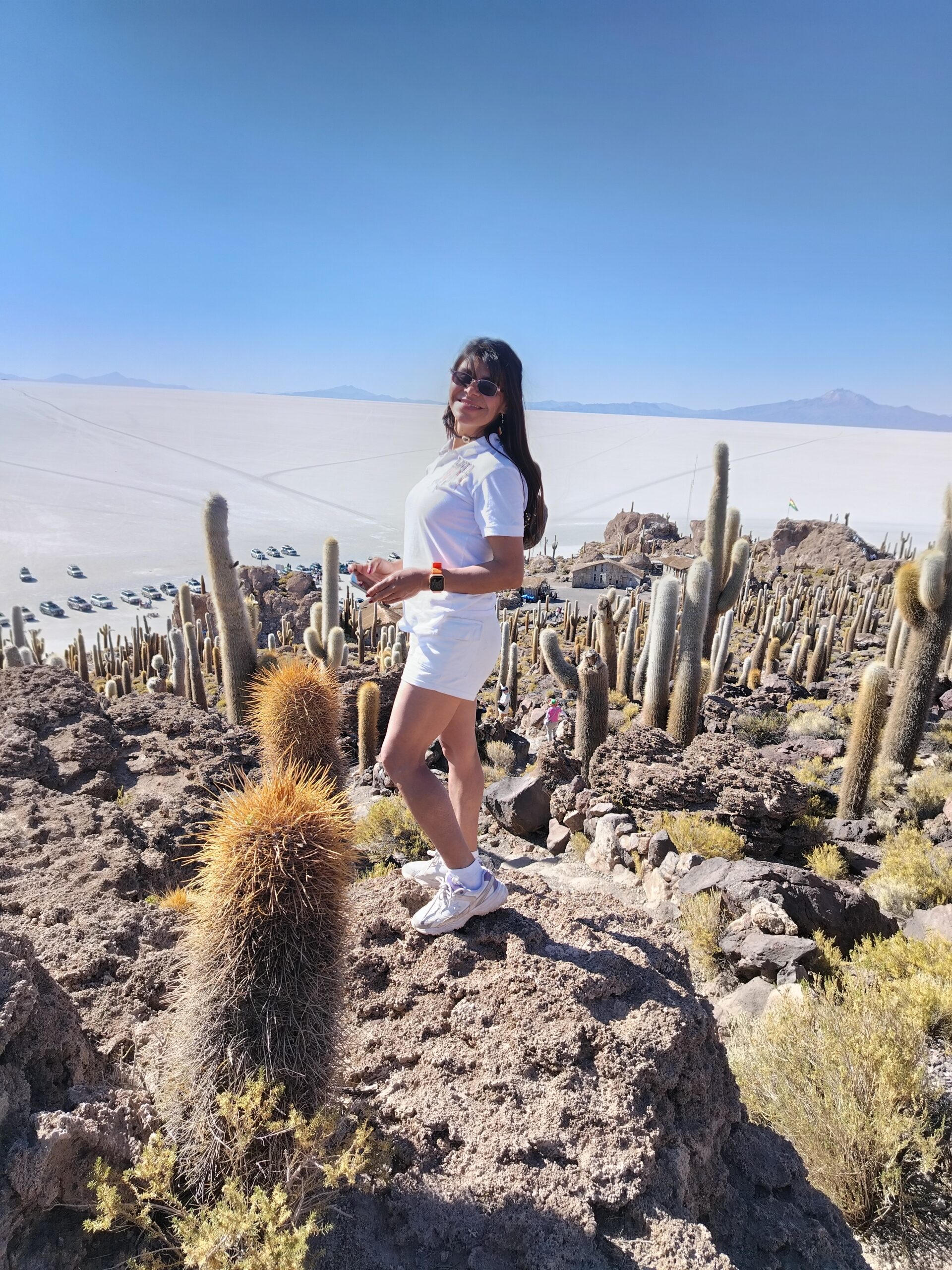
As we climbed the barren rocks of the island, there was desert silence on one side and the glitter of the salt sea on the other. As we went higher, the flat whiteness of the Salar merged with the sky, and here a person felt as if they were not on Earth but on another planet. The cacti were so large that some exceeded 10 meters, carrying the weight of centuries on their spines.
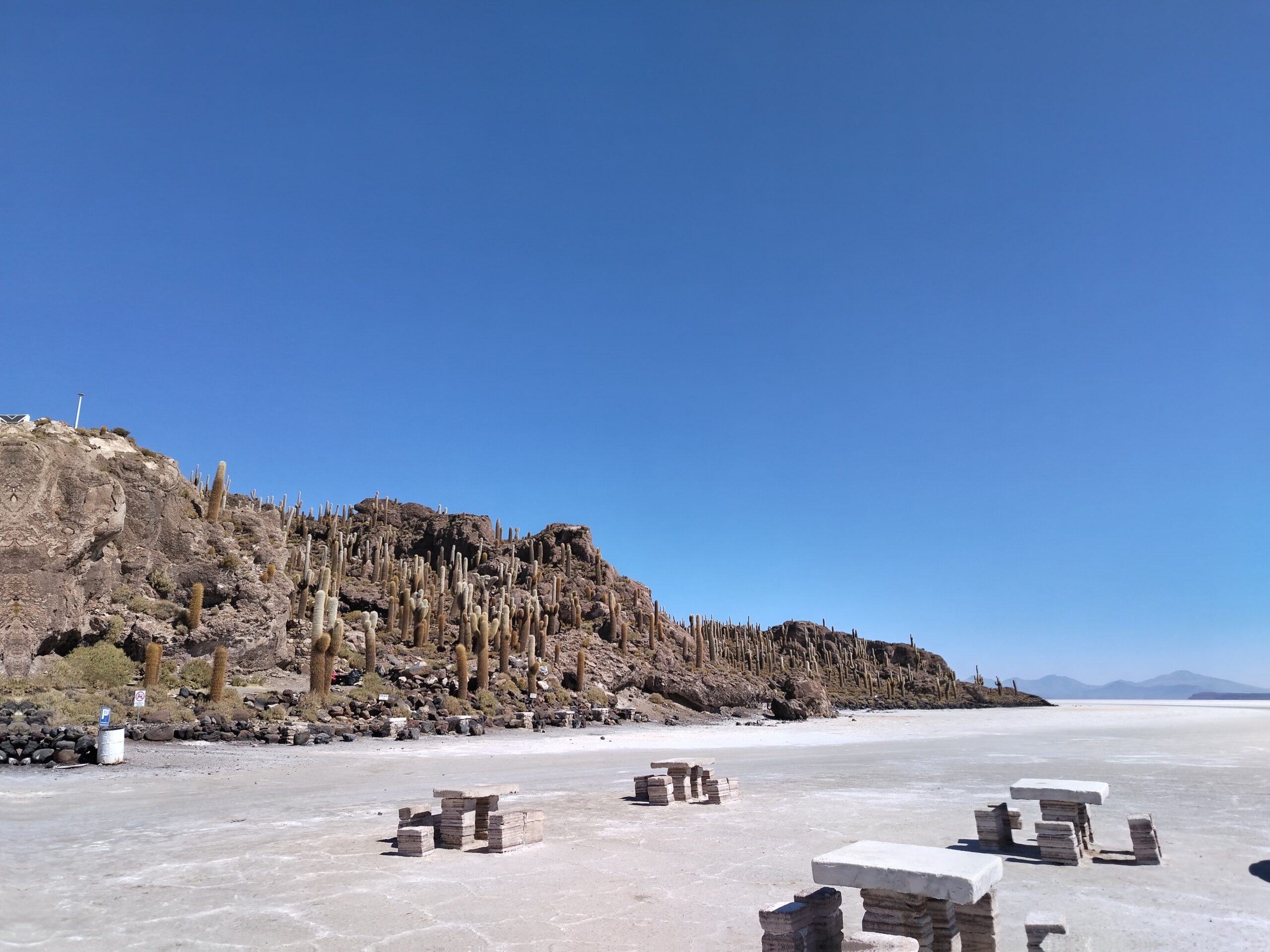
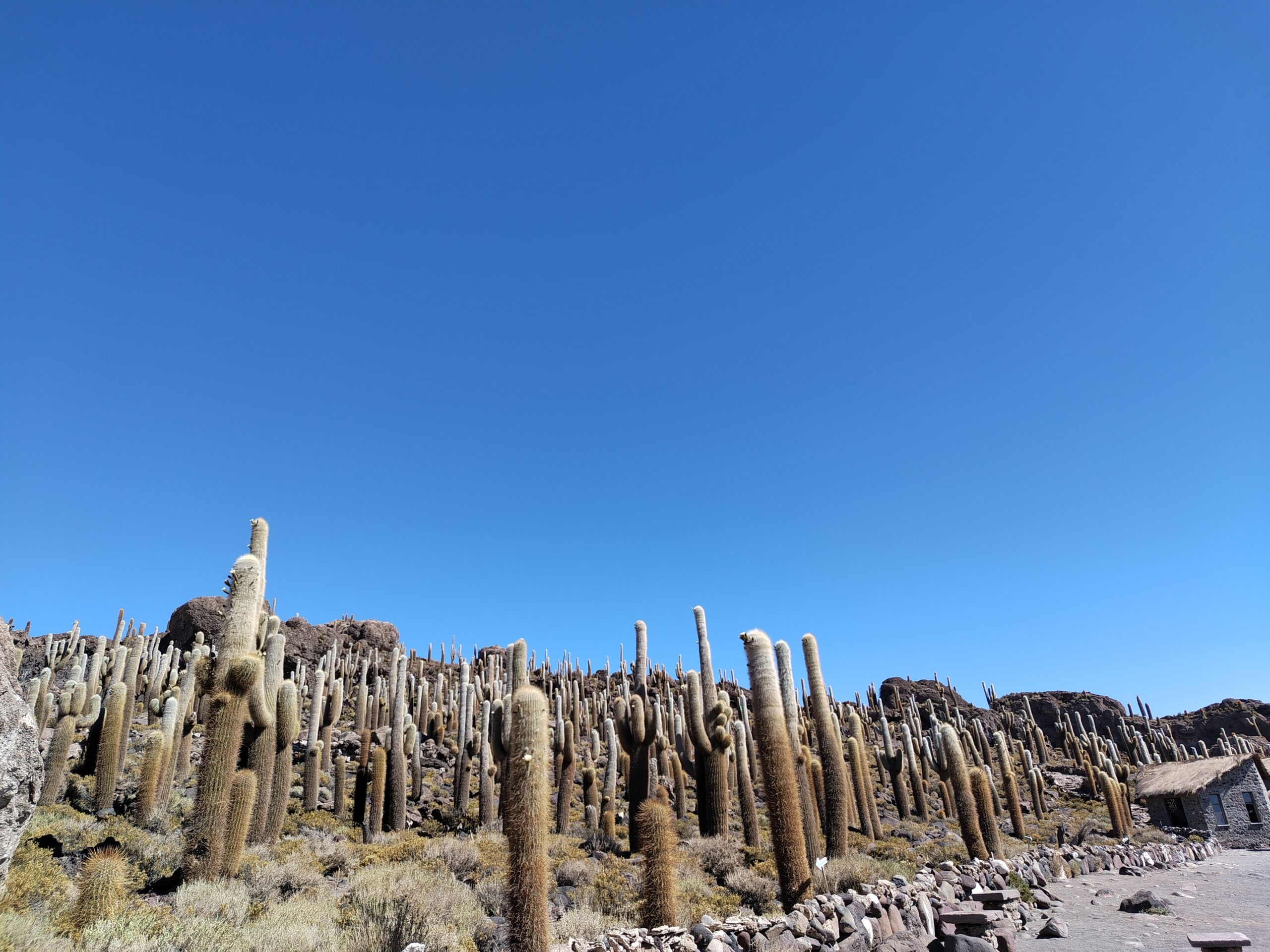
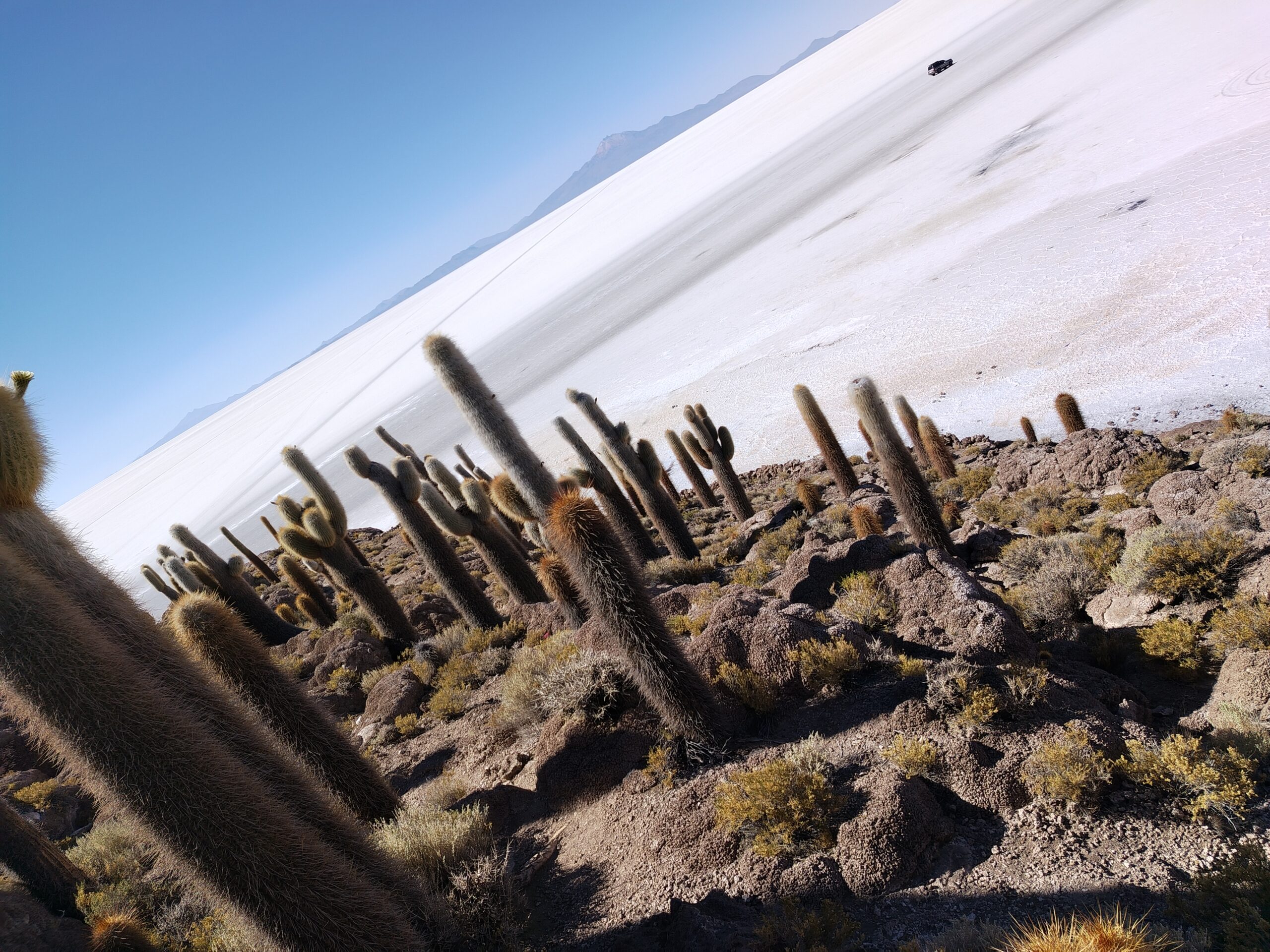
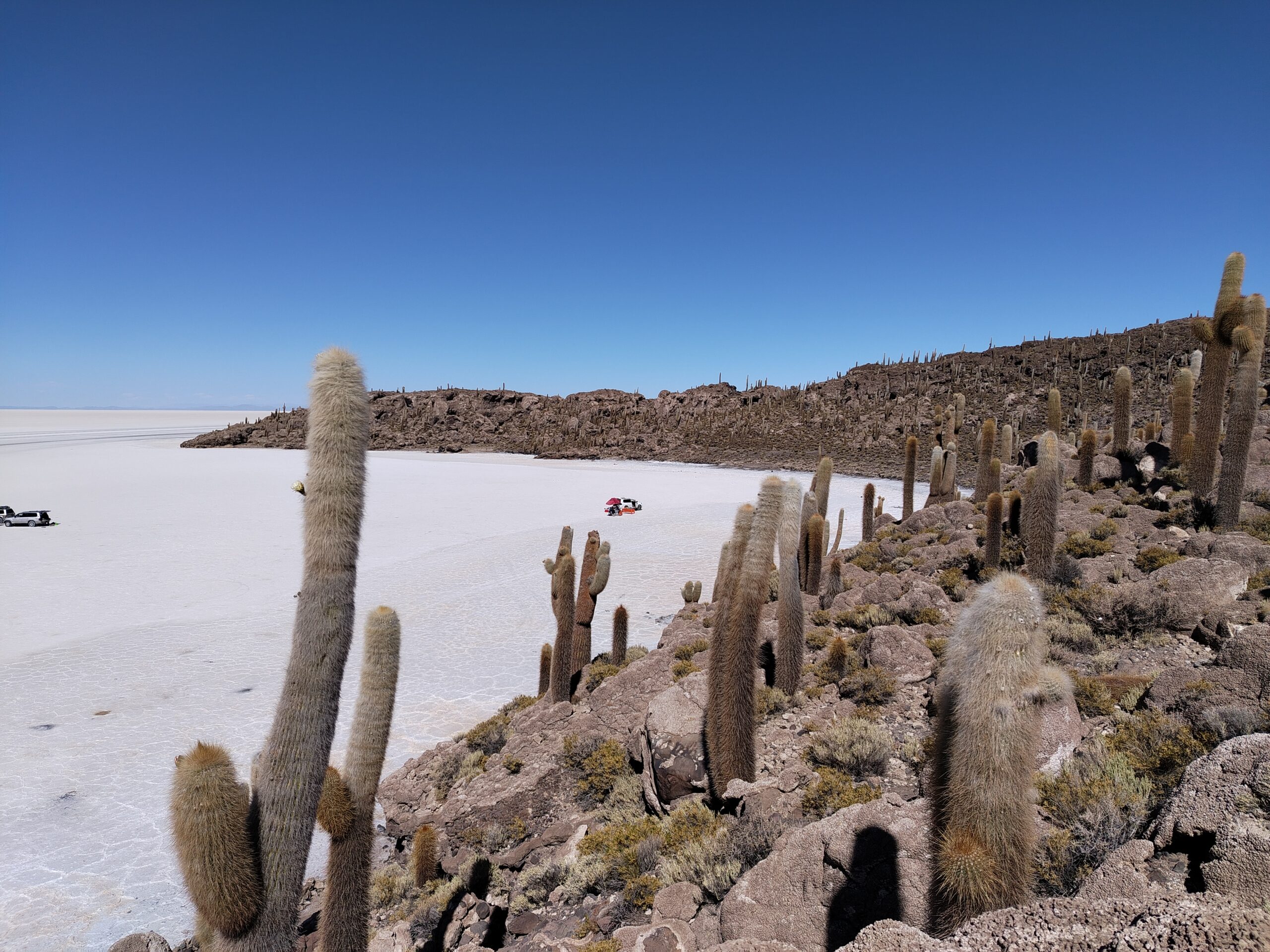
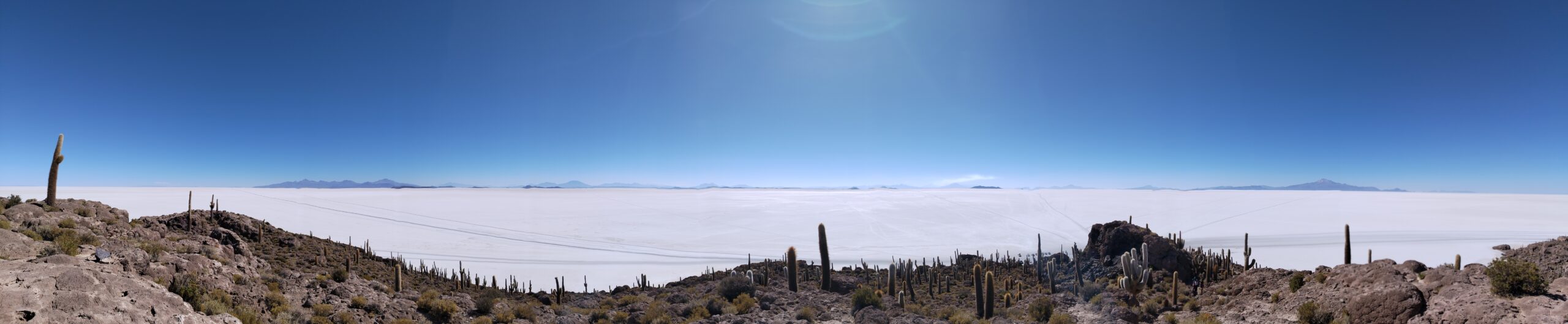
When we looked into the distance from Isla Incahuasi, we felt as if we were on a ship floating in whiteness. Below, dozens of 4×4 vehicles parked side by side on the salt looked like little toys. Nature reminded us here, at the same time, both of how small we are and how lucky we were to witness this miracle.

The Playful Face of the Salar: Perspective Photos
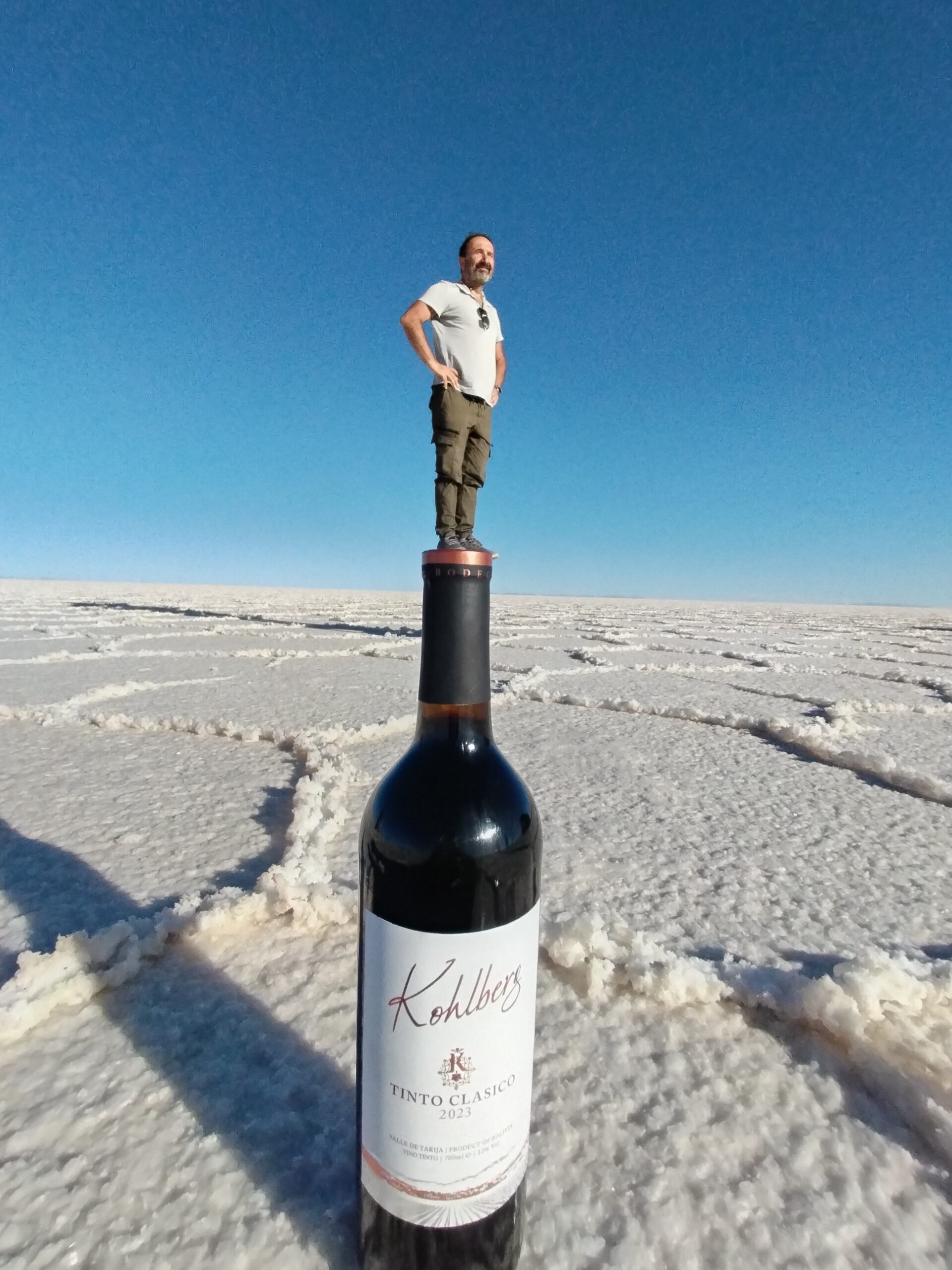
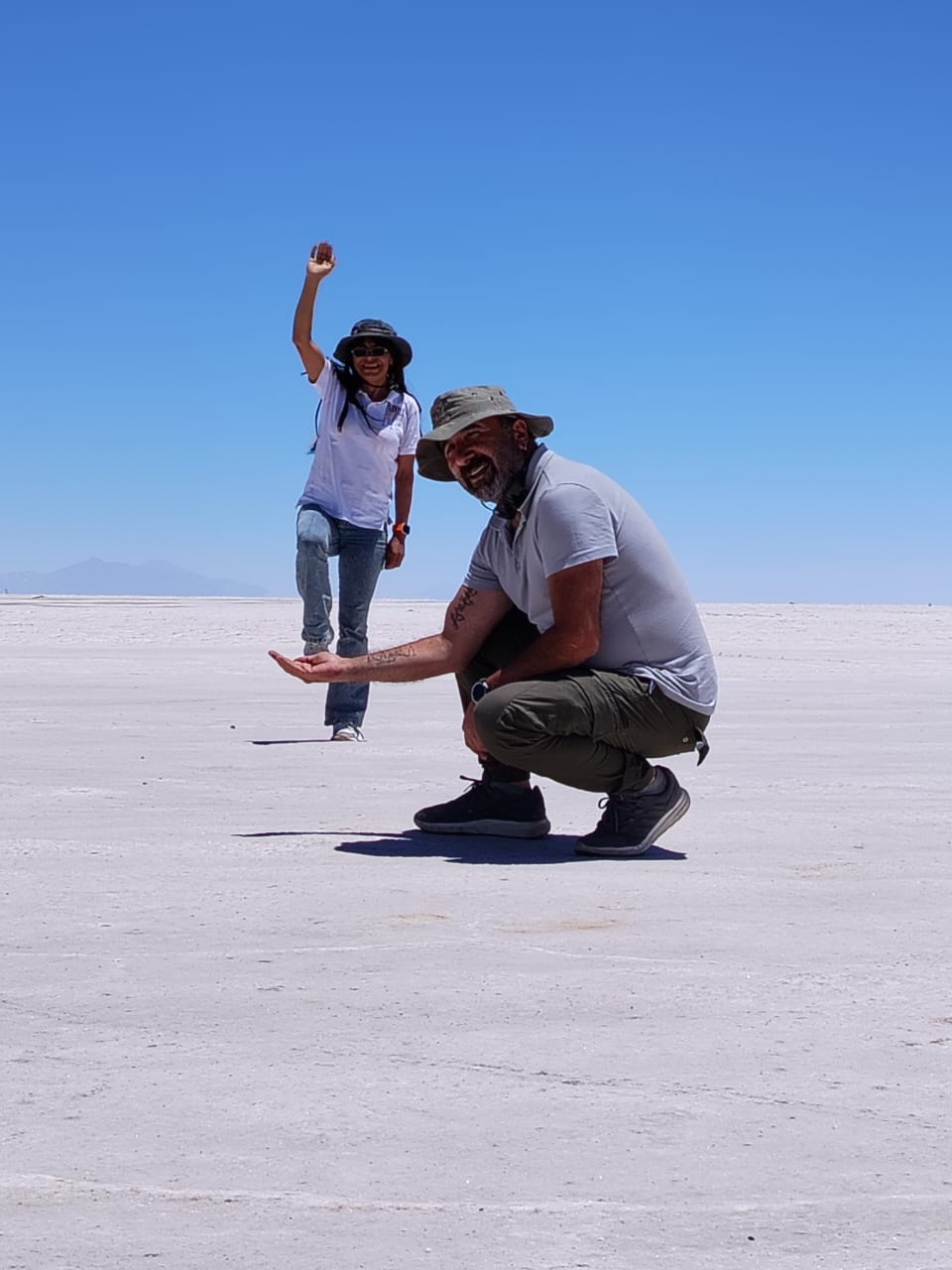
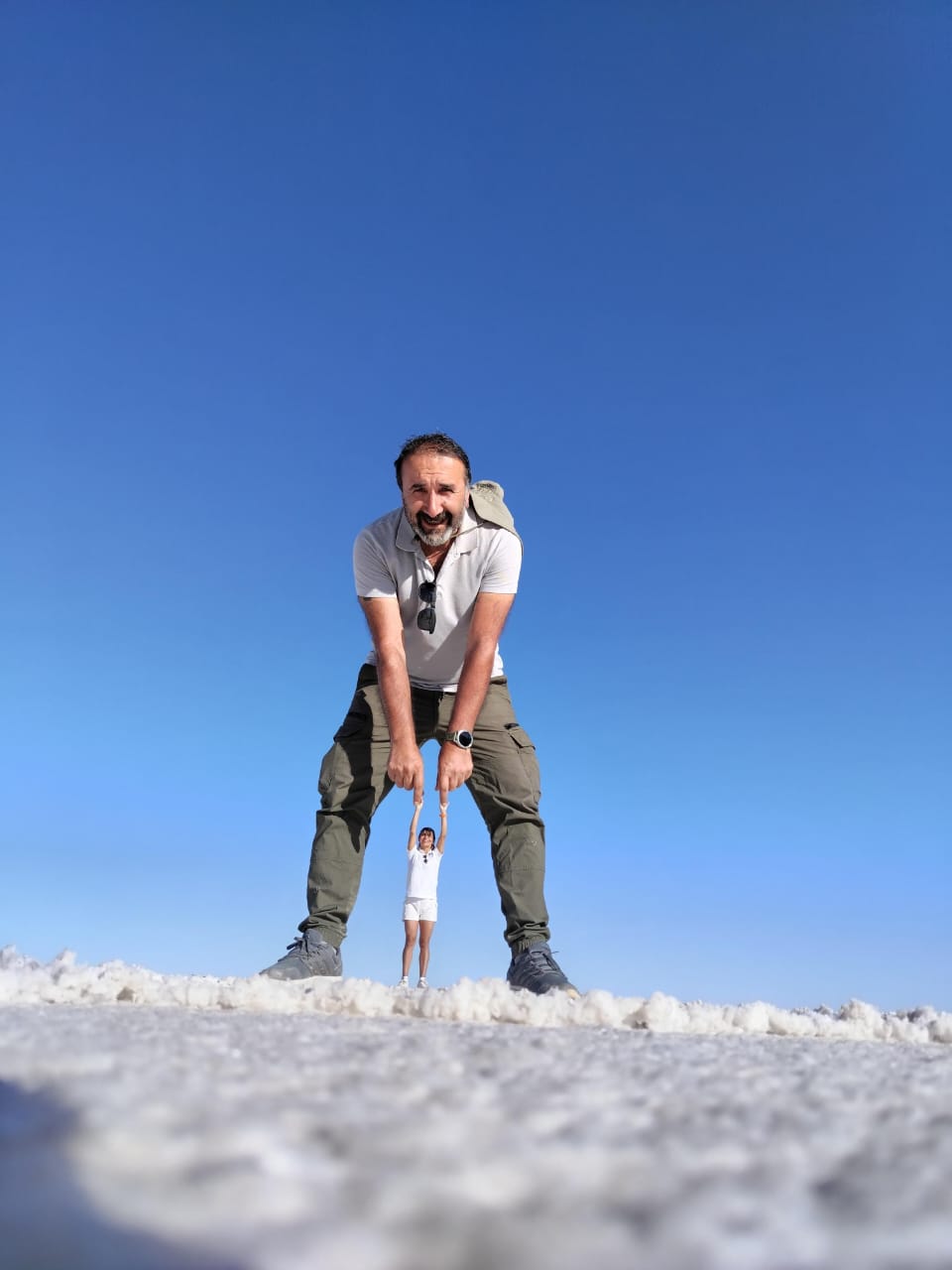
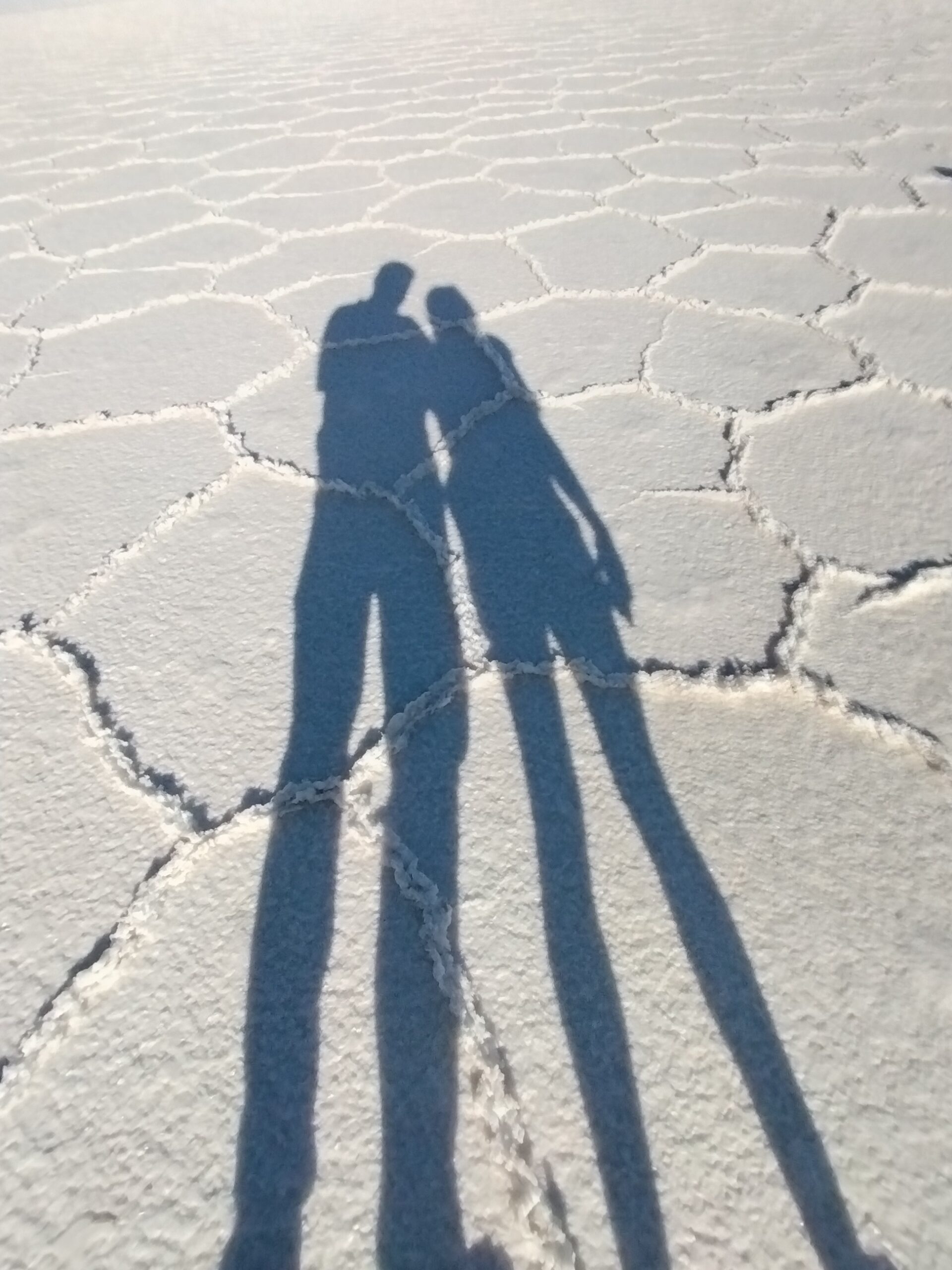
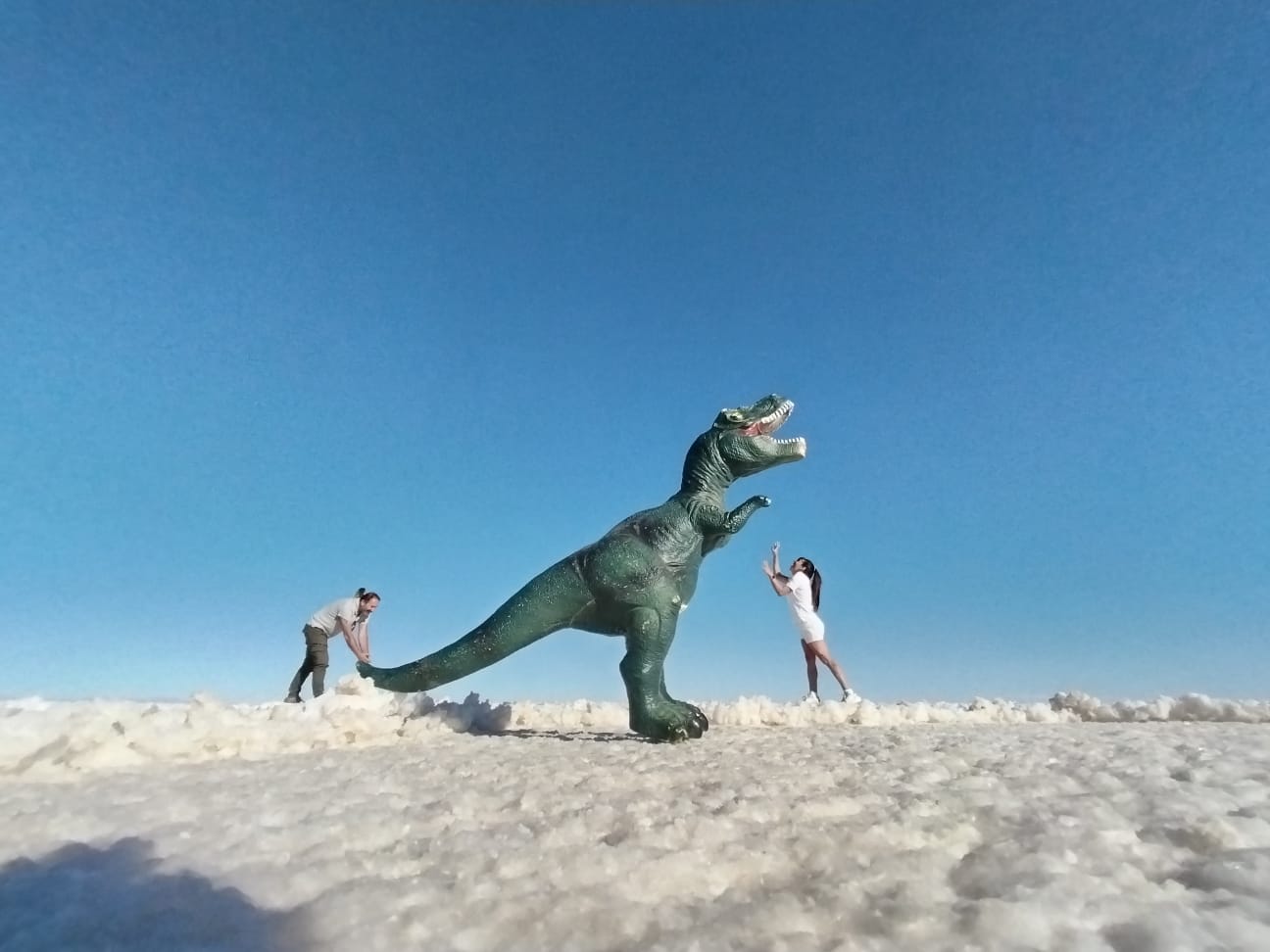
After leaving the island, we stopped in a wide and completely flat salt area. The ground, with its hexagonal patterns stretching to the horizon, looked like a giant mosaic. In this place where shadows were short and the horizon almost disappeared, the Salar turned into one of the most suitable stages in the world for perspective games. Together with our travel companions, we let ourselves become part of this game.
Laughter, cheerful shouts and the rapid clicks of cameras briefly broke the silence of the Salar. But even that silence was like a warm background accompanying the game.

The Magic of Sunset: The Moment When Sky and Earth Became One
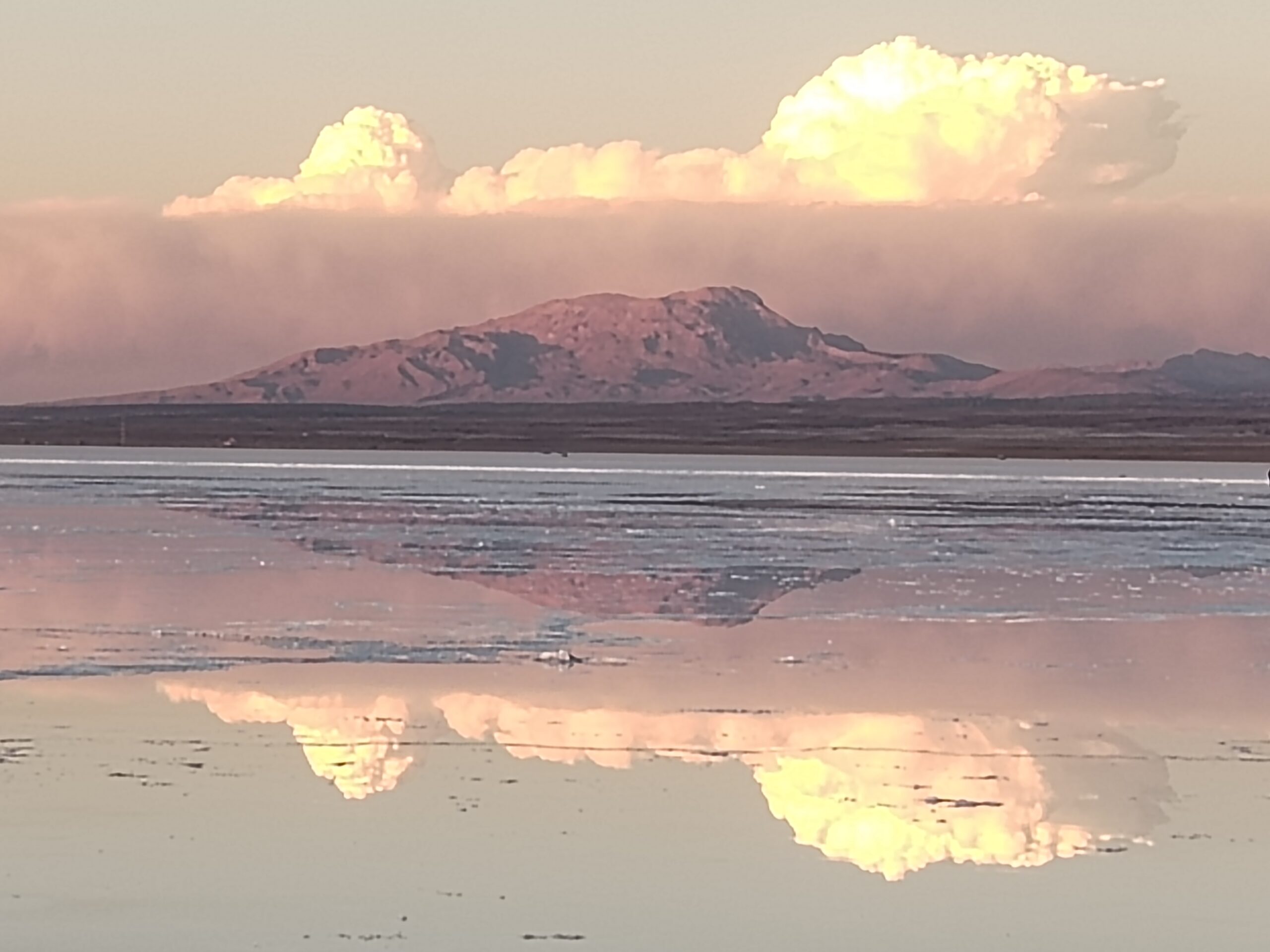
The last stop of the day was the area where the Salar shows its most magical face: the part covered by a thin layer of water, the part that turns the sky into a mirror. As the sun approached the horizon, the water over the salt began to reflect the sky like a mirror. Clouds, mountain silhouettes and the reddening face of the sun were reborn beneath our feet.
Here, time slowed down. Silence settled. You almost did not want to speak. Beneath our feet was the sky; above us, a second copy of the same sky. It was as if the clouds were floating on the water and we were walking among them. As the sun painted the horizon in flames, our shadows accompanied us as trembling reflections in the water.
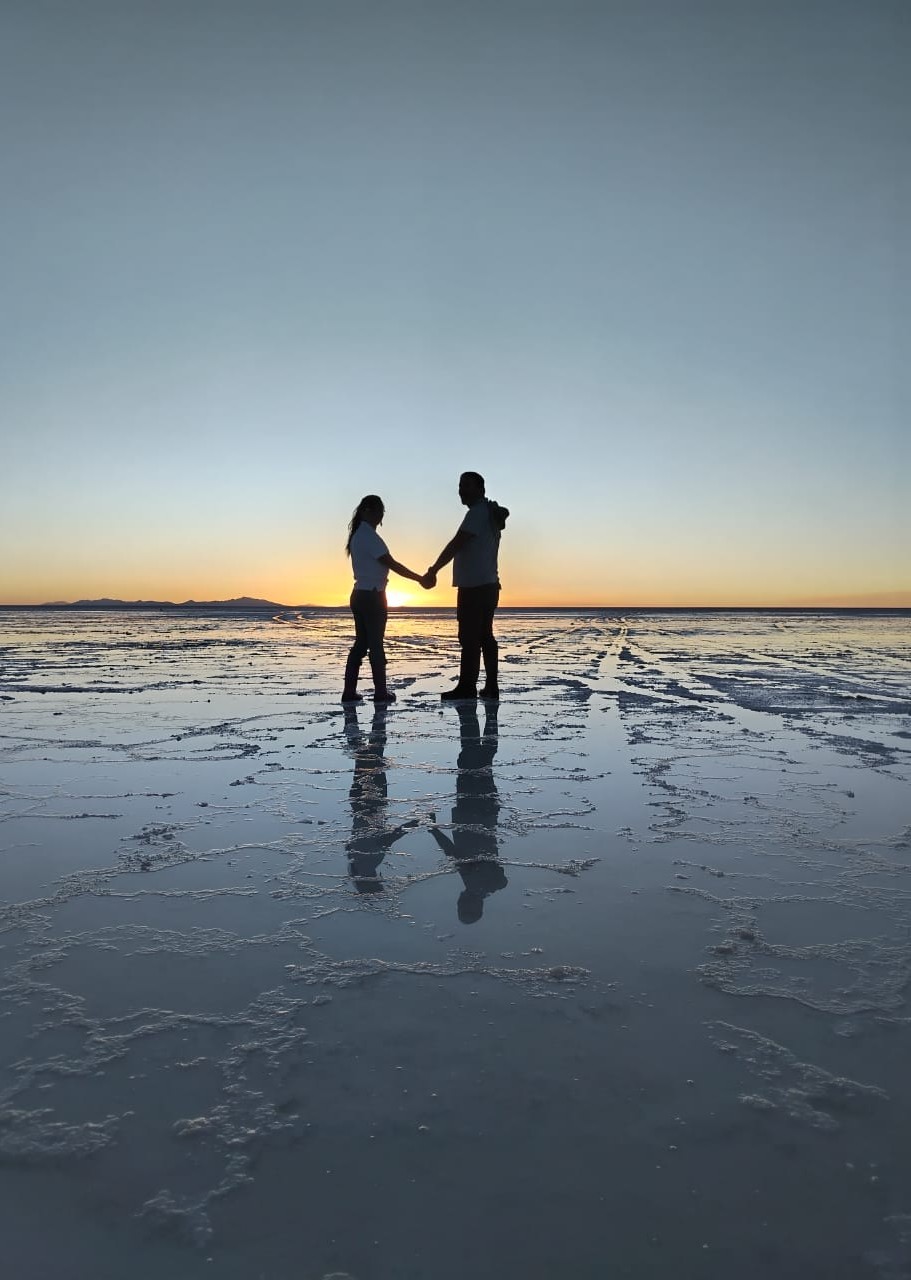
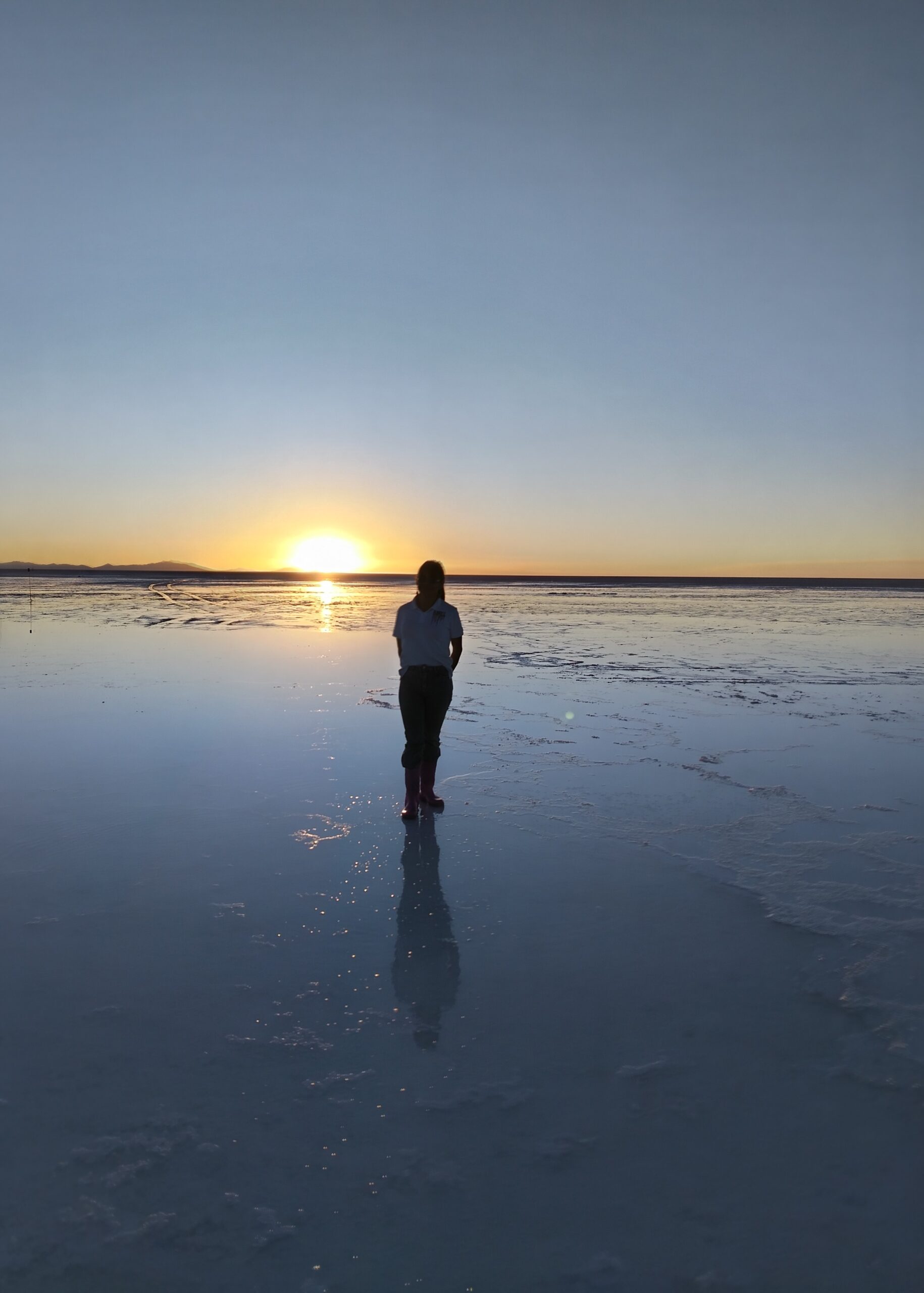
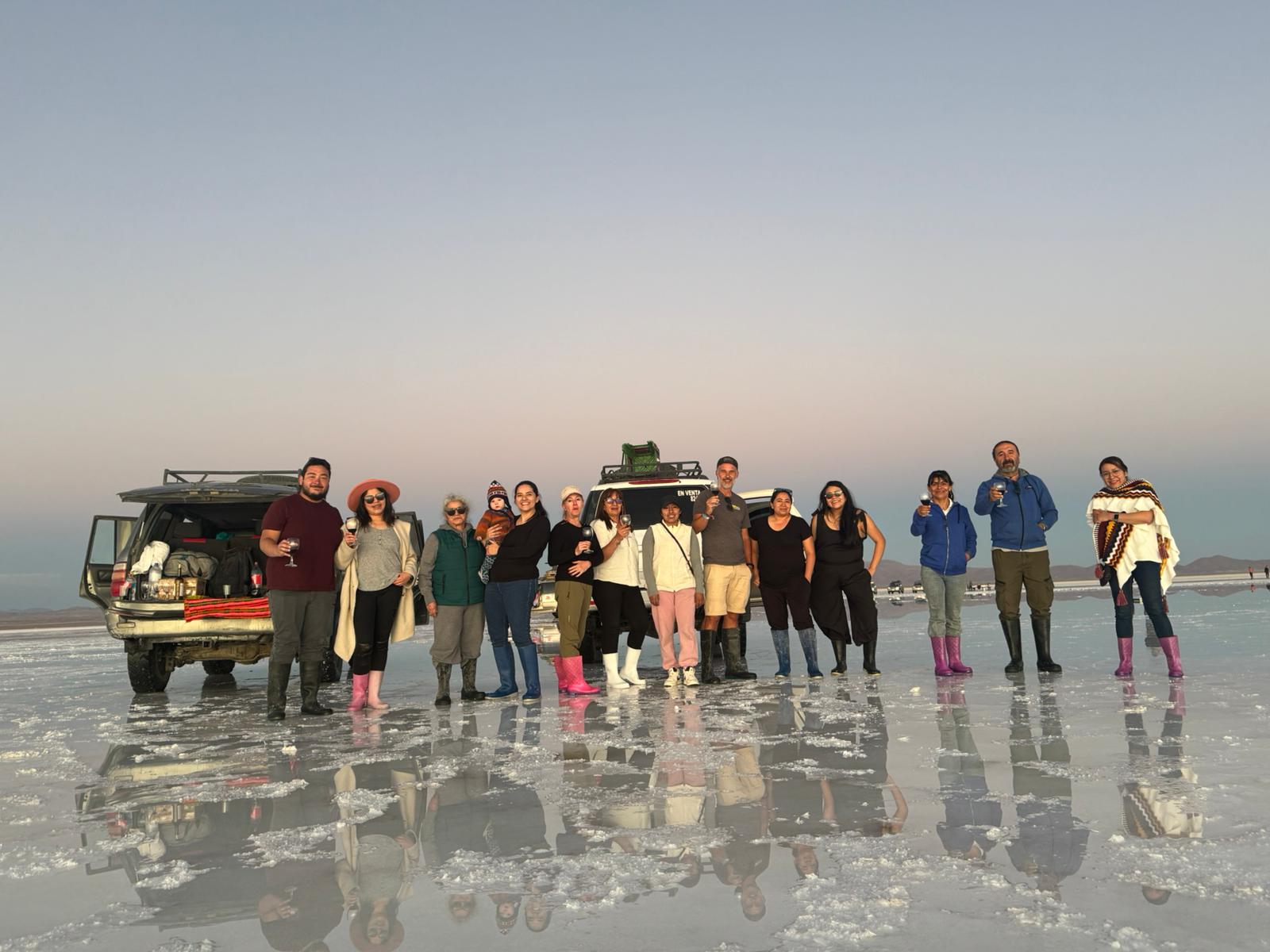
At the end of the day, we performed a small ritual: we raised our wine glasses on the Salar. This journey, this lake, this day… all became one of the most special memories of our lives. When the sun completely disappeared, the first stars began to shine in the sky. The water on the salt crust now reflected the stars, turning the Salar into a celestial mirror.
Return to Uyuni: A Quiet Closing That Settled Inside Us
As night fell, our 4×4 left the Salar and moved toward the lights of Uyuni. Our bodies were tired, but our souls were filled with an indescribable peace. This journey that began in Sucre had tested our breath in the cold and altitude of Potosí; confronted us with history at the train cemetery; and in the whiteness of the Salt Flat taught us both silence and infinity.
Uyuni left us not just a place but a feeling: the feeling of how vast and how full of miracles the world is. And that night we knew that this journey was not merely a route, but a memory etched into us. If you would like to learn more about our story, you can visit our About Us page, and if you would like to see our other travel and guide articles, you can visit our English blog page.
Follow us
You can also follow our social media accounts for short videos, photos and real-time posts from our journey.
- YouTube Shorts: Watch our short road videos
- Instagram: Photos and daily posts
- Facebook: Our Facebook page